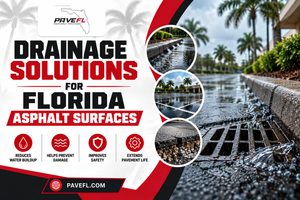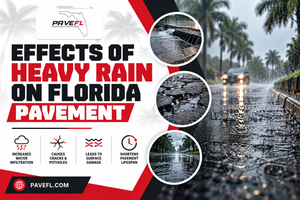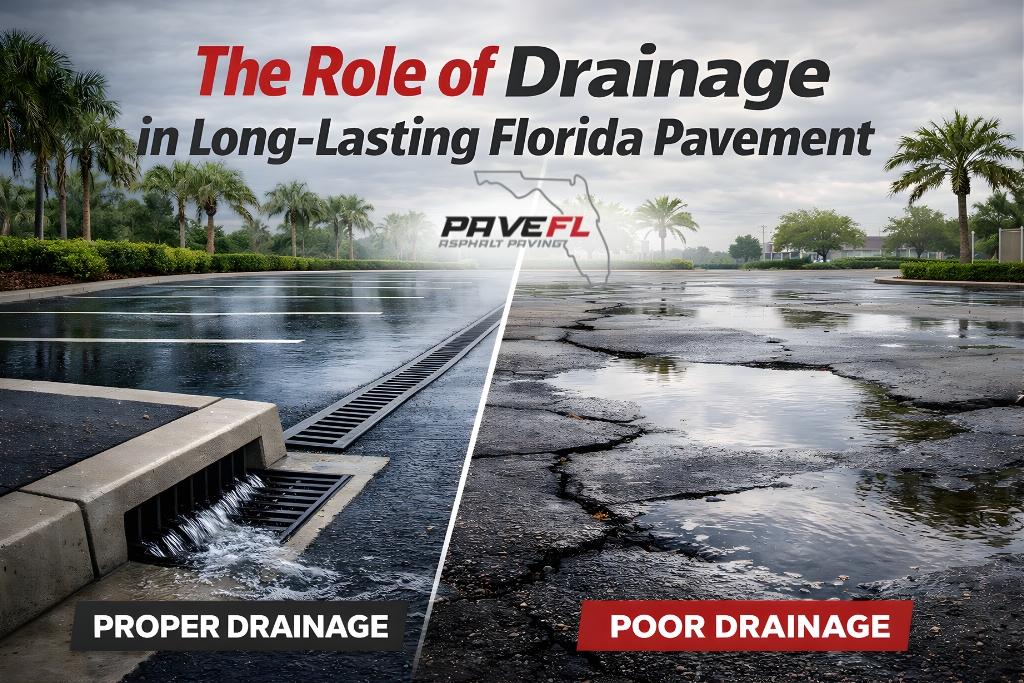
What happens to pavement in Florida when drainage is overlooked? In a climate defined by heavy rainfall, high humidity, and frequent storms, drainage is often the single most important factor affecting pavement longevity. Without effective water management, even high-quality asphalt can fail prematurely. For property owners concerned about pavement drainage in Florida, understanding how water interacts with paved surfaces is essential to protecting both performance and investment.
From heavy seasonal rainfall to sudden tropical storms, Florida pavements are constantly exposed to moisture. Poor drainage allows water to penetrate pavement layers, weaken the base, and accelerate deterioration. Proper drainage design ensures water is safely directed away from the surface and structure, preserving strength, safety, and lifespan. At Pave FL, drainage is considered a foundational design element — not an add-on — because Florida’s climate leaves little margin for drainage errors.
Why Drainage Is Critical for Pavement Longevity in Florida
Water is asphalt’s greatest enemy. While asphalt is designed to be flexible and durable, prolonged moisture exposure compromises its internal structure. In Florida, where rainfall totals are among the highest in the country, pavement without effective drainage is vulnerable to rapid decline.
When water infiltrates pavement layers, it weakens the subbase, reduces load-bearing capacity, and creates conditions for cracking, potholes, and surface deformation. Over time, these issues compound, turning minor drainage flaws into major repair costs.
How Water Damages Pavement from the Inside Out
Drainage failures rarely cause immediate collapse. Instead, damage occurs gradually beneath the surface, making it harder to detect until repairs become unavoidable.
Water intrusion can lead to:
- Softened base layers
- Loss of compaction
- Asphalt stripping (binder separation from aggregate)
- Accelerated cracking and rutting
Once the pavement structure is compromised, surface repairs alone are no longer effective. Long-term durability depends on preventing water entry from the start.
Florida’s Unique Climate Makes Drainage Non-Negotiable
Florida pavements face challenges that differ significantly from those in cooler or drier climates:
- Frequent heavy rain events
- High water tables
- Saturated soils
- Sudden storms with intense runoff
- Extended periods of humidity
These conditions require drainage systems that can handle large volumes of water quickly. Standard designs used in other regions often fail when applied without modification in Florida.
Surface Drainage: The First Line of Defense
Surface drainage controls how water flows across pavement. Proper grading ensures water moves toward designated outlets rather than pooling.
Effective surface drainage includes:
- Correct slope design
- Smooth transitions without low spots
- Strategic placement of drains and inlets
Even minor surface depressions can trap water, leading to premature wear and safety hazards such as slippery surfaces and hydroplaning.
Subsurface Drainage: Protecting the Pavement Foundation
While surface drainage is visible, subsurface drainage works silently beneath the pavement. Its role is to remove water that penetrates through cracks or joints before it reaches the base.
Subsurface drainage systems may include:
- Permeable base layers
- Drainage pipes
- Filter fabrics to prevent soil migration
Without subsurface drainage, water accumulates beneath the pavement, undermining structural integrity and accelerating failure.
The Connection Between Drainage and Pavement Cracking
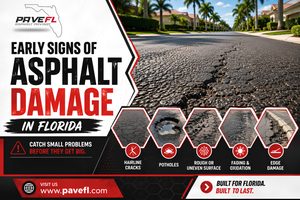
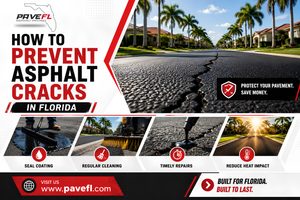
Cracking is often blamed on age or traffic, but drainage is frequently the root cause. Water trapped beneath pavement expands and contracts with temperature changes, stressing the asphalt layer above.
This leads to:
- Alligator cracking
- Longitudinal and transverse cracks
- Edge deterioration
Effective drainage reduces internal stress, significantly slowing crack development.
Drainage and Pothole Formation in Florida
Potholes form when water weakens the pavement base and traffic pressure breaks through the surface. In Florida, potholes often develop after repeated rain events saturate poorly drained areas.
Preventing potholes starts with:
- Keeping water out of pavement layers
- Ensuring base stability
- Maintaining consistent compaction
Drainage isn’t just a performance issue—it’s a safety concern.
How Drainage Improves Pavement Load Capacity
A dry base is a strong base. When water is removed efficiently, pavement can support heavier loads without deformation.
Good drainage:
- Preserves load-bearing strength
- Reduces rutting under traffic
- Extends service life
This is especially important for commercial lots, access roads, and high-traffic areas.
Drainage and Pavement Maintenance Costs
Poor drainage dramatically increases maintenance expenses. Repeated water damage leads to frequent patching, resurfacing, or reconstruction.
Proper drainage:
- Reduces repair frequency
- Lowers long-term maintenance costs
- Maximizes return on investment
Preventive drainage design is far more cost-effective than reactive repairs.
Common Drainage Mistakes in Florida Pavement Projects
Many pavement failures can be traced to avoidable drainage errors, including:
- Insufficient slope
- Ignoring soil conditions
- Inadequate outlet placement
- Poor base material selection
Avoiding these mistakes requires experience, planning, and site-specific design.
Drainage and Safety Considerations
Standing water creates hazards for both vehicles and pedestrians. Poor drainage increases the risk of:
- Slips and falls
- Vehicle skidding
- Reduced visibility
- Accelerated surface breakdown
Well-designed drainage improves safety by keeping surfaces dry and stable.
Drainage Considerations During Pavement Design
Drainage should be integrated during the planning phase—not added later. Designers must evaluate:
- Rainfall intensity
- Soil permeability
- Traffic patterns
- Surrounding structures
Early planning ensures drainage systems function efficiently throughout the pavement’s life.
Drainage Maintenance: An Ongoing Responsibility
Even the best drainage systems require maintenance. Debris, sediment, and vegetation can block water flow over time.
Regular inspections help:
- Maintain proper runoff
- Prevent backups
- Extend pavement life
Drainage maintenance is a key part of long-term pavement care.
Drainage Features That Support Long-Lasting Pavement
| Drainage Feature | Purpose | Long-Term Benefit |
|---|---|---|
| Proper Surface Slope | Directs runoff | Prevents pooling |
| Catch Basins | Collect surface water | Reduces erosion |
| Subsurface Drains | Remove trapped moisture | Protects pavement base |
| Permeable Layers | Allow controlled water flow | Enhances structural stability |
| Drainage Outlets | Discharge excess water | Prevents saturation |
Why Professional Drainage Design Matters in Florida
Drainage isn’t a one-size-fits-all solution. Florida’s climate demands customized designs that account for rainfall volume, soil behavior, and usage demands.
Professional planning ensures:
- Compliance with local conditions
- Long-term pavement performance
- Reduced risk of premature failure
Final Thoughts: Drainage Is the Foundation of Pavement Longevity
Long-lasting pavement in Florida starts below the surface. Without effective drainage, even new pavement is at risk of early deterioration. For property owners focused on pavement drainage Florida, investing in proper design and water management is essential.
We design Florida pavement projects with the understanding that surface performance depends heavily on what happens beneath it. Poor drainage allows water to penetrate the pavement structure, weakening the base and accelerating cracking, rutting, and surface failure—regardless of how new the pavement may be. Our team at Pave FL evaluates grading, runoff patterns, and subsurface conditions to ensure water is directed away from the pavement, not trapped beneath it.
By treating drainage as an integral part of pavement design rather than an afterthought, we help Florida property owners protect durability, safety, and long-term value. Through climate-aware planning and proper water management, Pave FL delivers pavement systems that perform reliably while reducing maintenance costs and premature replacement.