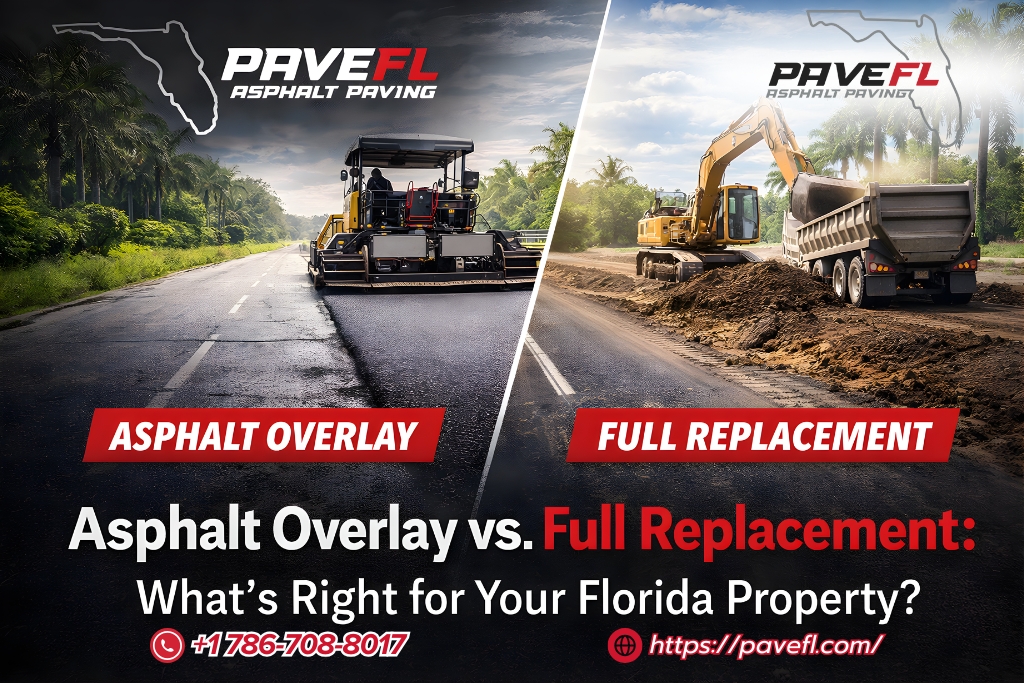
Is your aging asphalt better suited for an overlay or is full replacement the smarter investment? When asphalt surfaces begin to show signs of wear, Florida property owners are often faced with a critical decision: repair the pavement with an overlay or invest in a complete replacement. Choosing the right option has a direct impact on project cost, surface longevity, and overall performance, especially in Florida’s heat- and moisture-intensive climate.
For properties maintained by Pave FL, understanding when asphalt overlay Florida solutions are appropriate versus when full replacement is necessary can prevent premature failure and unnecessary expenses. While overlays can restore appearance and functionality for structurally sound pavements, deeper base failures and drainage issues often require full reconstruction to ensure long-term durability.
Florida’s intense heat, heavy rainfall, and high humidity accelerate asphalt deterioration, making it essential to select the correct restoration method based on pavement condition, not just appearance.
Understanding the Difference Between Overlay and Replacement
Before comparing benefits, it’s important to understand what separates asphalt overlay from full replacement. While both methods restore pavement surfaces, they address damage at very different levels.
An asphalt overlay adds a new layer of asphalt over existing pavement, while full replacement removes and rebuilds the pavement structure from the base up. The right choice depends on structural integrity, drainage, and underlying conditions.
What Is an Asphalt Overlay?
An asphalt overlay involves placing a new layer of hot-mix asphalt over an existing surface after minor repairs are completed. This method restores smoothness, improves appearance, and extends pavement life when the base remains structurally sound.
Overlay applications are best suited for pavements with:
- Surface cracking
- Minor raveling
- Oxidation and fading
- Stable base layers
Overlays offer a cost-effective solution when damage is mostly superficial.
What Is Full Asphalt Replacement?
Full replacement involves removing the existing asphalt and repairing or rebuilding the base before installing new pavement. This option is necessary when structural failure is present.
Signs replacement may be required include:
- Widespread alligator cracking
- Deep potholes
- Persistent drainage issues
- Uneven or sinking surfaces
Replacement addresses foundational issues that overlays cannot correct.
How Florida’s Climate Affects the Decision
Florida’s climate plays a major role in determining whether overlay or replacement is appropriate. Heat softens asphalt, moisture weakens the base, and UV exposure accelerates oxidation.
Climate-related considerations include:
- Heavy rainfall causing base erosion
- Constant humidity trapping moisture
- Extreme heat leading to surface deformation
Ignoring these factors can lead to premature pavement failure after an overlay.
Cost Comparison: Overlay vs. Replacement
Cost is often the biggest factor for property owners, but focusing solely on upfront price can be misleading. Long-term performance and future repairs must also be considered.
| Factor | Asphalt Overlay | Full Replacement |
|---|---|---|
| Initial Cost | Lower | Higher |
| Installation Time | Faster | Longer |
| Base Repair | Not included | Included |
| Lifespan Extension | Moderate | Long-term |
| Best for Structural Damage | No | Yes |
An overlay saves money upfront, but replacement may offer better value for severely damaged pavement.
Lifespan Expectations in Florida Conditions
In Florida, an asphalt overlay typically extends pavement life by 8–15 years when applied over a stable base. Full replacement can provide 20–30 years of service with proper maintenance.
Factors affecting lifespan include:
- Traffic volume
- Drainage performance
- Maintenance practices
Choosing the wrong option can cut these timelines in half.
Drainage and Structural Integrity Considerations
Drainage is a critical deciding factor. Overlaying pavement with unresolved drainage problems traps moisture beneath the surface, accelerating failure.
Poor drainage leads to:
- Base saturation
- Surface cracking
- Premature potholes
Full replacement allows drainage corrections that overlays cannot address.
Impact on Property Operations
Overlays are faster and less disruptive than full replacement. For commercial properties, minimizing downtime is often essential.
Overlay benefits include:
- Shorter project timelines
- Faster reopening to traffic
- Reduced business interruption
Replacement projects require longer closures but deliver comprehensive solutions.
Curb Appeal and Surface Performance
Both overlays and replacements improve curb appeal, but the quality of the result depends on underlying conditions.
Overlays:
- Improve appearance quickly
- Smooth surface irregularities
- Refresh faded pavement
Replacements:
- Correct long-standing defects
- Improve grading and drainage
- Deliver like-new performance
Visual improvement alone should not drive the decision.
Maintenance After Overlay or Replacement
Regardless of the method chosen, maintenance determines long-term success. Florida pavement requires proactive care to withstand environmental stress.
Essential maintenance includes:
- Crack sealing
- Sealcoating
- Drainage inspections
Proper maintenance protects both overlays and replacements from premature deterioration.
When an Overlay Is the Right Choice
An asphalt overlay is ideal when:
- Damage is surface-level
- The base remains strong
- Drainage functions properly
- Budget constraints exist
This option balances cost savings with performance when conditions allow.
When Full Replacement Is Necessary
Full replacement is the right solution when:
- Structural failure is evident
- Pavement shows widespread deformation
- Drainage problems persist
- Long-term durability is the priority
In these cases, overlays are at best temporary fixes.
Final Thoughts
Choosing between asphalt overlay and full replacement in Florida requires a performance-based evaluation rather than a simple cost comparison. Factors such as existing pavement condition, base stability, drainage effectiveness, and climate exposure must all be assessed before determining the right solution. Our team carefully analyzes these variables to identify whether an overlay can restore function or if structural replacement is the wiser long-term choice.
By making decisions grounded in technical evaluation and climate awareness, property owners can protect durability, safety, and overall pavement value. With guidance from experienced professionals like Pave FL, selecting the appropriate strategy today helps prevent premature failure and costly corrective work in the future.