How long should asphalt really last in Florida’s extreme climate? In a state known for intense heat, humidity, and heavy rainfall, understanding pavement durability is critical to protecting your investment. The typical asphalt lifespan Florida property owners experience depends heavily on several factors, including weather exposure, traffic volume, installation quality, and ongoing maintenance practices. Prolonged UV exposure can accelerate oxidation, while frequent rain and moisture infiltration weaken the base and contribute to cracking or surface breakdown.
Without proactive maintenance, even high-quality asphalt can deteriorate faster than expected. With guidance from our paving service in Florida, property owners can implement smart strategies—such as timely sealcoating, crack repair, and proper drainage planning—that help asphalt surfaces perform reliably for many years, even in South Florida’s demanding environmental conditions.
Florida’s Climate Plays a Major Role
Florida’s environment is one of the biggest factors affecting asphalt longevity. Intense UV exposure, prolonged heat, heavy rain, and occasional tropical storms all contribute to faster asphalt aging compared to cooler regions. High temperatures soften asphalt binder, making surfaces more vulnerable to rutting and deformation under traffic loads.
Frequent rain and humidity also allow moisture to penetrate small surface openings. Once water reaches the base layer, structural weakening begins. Over time, this combination of heat and moisture accelerates cracking and surface wear.
Climate-related stressors include:
- UV oxidation and fading
- Heat-related softening
- Heavy rainfall infiltration
- Stormwater exposure
Quality of Installation Determines the Starting Point
Even the best maintenance plan cannot compensate for poor installation. Proper grading, base preparation, compaction, and asphalt thickness all directly influence how long pavement will last. When shortcuts are taken during installation, problems tend to appear much sooner.
A well-prepared foundation distributes weight evenly and prevents premature settling. Proper compaction reduces air voids that allow moisture intrusion. Thickness appropriate for the expected traffic load also plays a critical role.
Installation factors that impact lifespan:
- Base stability and grading
- Proper compaction levels
- Correct asphalt thickness
- Smooth, even surface finishing
Traffic Volume and Load Weight
Not all asphalt surfaces experience the same wear patterns. Driveways, parking lots, and commercial loading areas face very different traffic stresses. In Florida, heavy vehicles combined with heat-softened asphalt can accelerate rutting and surface fatigue.
Passenger vehicle traffic typically causes gradual wear, but repeated heavy truck loads can shorten pavement life significantly. Areas with turning traffic, braking zones, and loading docks are especially vulnerable.
Traffic-related wear factors:
- Heavy truck frequency
- Turning and braking zones
- Parking concentration areas
- Daily traffic volume
The Importance of Routine Maintenance
Routine maintenance is the single most effective way to extend asphalt lifespan. Without sealcoating, crack sealing, and periodic inspections, small issues quickly grow into major failures. Florida’s moisture-rich environment makes preventive maintenance even more critical.
Sealcoating protects against UV rays and water penetration. Crack sealing prevents moisture from reaching the base. Regular inspections allow property owners to address problems early while repairs are still affordable.
Key maintenance practices:
- Sealcoat every 2–3 years
- Seal cracks promptly
- Schedule routine inspections
- Address drainage problems early
Drainage Conditions Around the Pavement
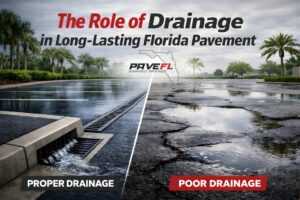
Water is one of asphalt’s biggest enemies in Florida. Poor drainage allows standing water to weaken the surface and underlying layers. Even well-installed asphalt can deteriorate quickly if water consistently pools on the surface.
Proper slope design, functioning storm drains, and well-maintained edges help move water away efficiently. Without these features, moisture infiltration accelerates structural breakdown and shortens pavement life.
Drainage risks to watch:
- Standing water after rain
- Edge erosion
- Clogged drains
- Improper pavement slope
Expected Asphalt Lifespan in Florida
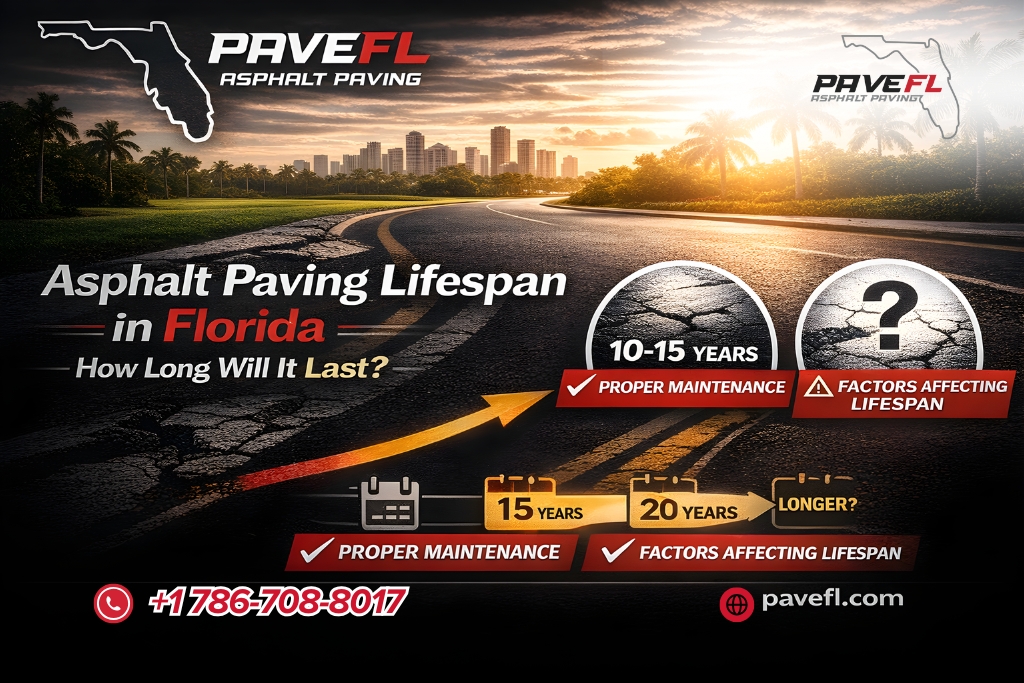
Under typical Florida conditions, asphalt pavement generally lasts between 12 and 20 years. However, this range varies widely depending on maintenance quality, traffic load, and environmental exposure. Well-maintained surfaces often reach the upper end of the lifespan range.
Neglected pavement, on the other hand, may require major repairs in less than a decade. Understanding realistic lifespan expectations helps property owners budget appropriately and plan future resurfacing.
Typical Asphalt Lifespan by Surface Type
| Surface Type | Average Lifespan (Florida) | With Proper Maintenance |
|---|---|---|
| Residential driveway | 12–15 years | 18–20 years |
| Light-use parking lot | 10–14 years | 15–18 years |
| Heavy commercial lot | 8–12 years | 12–15 years |
| High-traffic roadway | 7–10 years | 10–14 years |
Signs Your Asphalt Is Nearing the End of Its Life
Recognizing early warning signs allows property owners to plan resurfacing before full failure occurs. As asphalt ages, visual and structural indicators become more obvious. Addressing problems early can sometimes extend usable life through overlays.
Common warning signs include widespread cracking, surface raveling, fading color, and recurring potholes. When these symptoms appear across large areas, the pavement may be approaching the end of its service life.
End-of-life indicators:
- Extensive alligator cracking
- Frequent potholes
- Severe fading and brittleness
- Drainage-related depressions
Conclusion
Multiple performance factors, including climate intensity, construction quality, traffic stress, and ongoing maintenance practices, shape asphalt longevity in Florida. Prolonged UV exposure, high temperatures, and heavy rainfall can shorten pavement life if surfaces are not properly installed and maintained. Our approach emphasizes climate-conscious construction and structured maintenance to counteract these environmental pressures.
When proactive care becomes part of a long-term pavement strategy, service life can be extended well beyond expectations. By working with experienced professionals like Pave FL, Florida property owners can protect structural integrity, maintain safety, and maximize the return on their asphalt investment year after year.