How can Florida property owners control paving costs without sacrificing long-term performance? Managing paving costs in Florida requires more than choosing the lowest bid—especially in a climate that accelerates pavement wear. Intense heat, heavy rainfall, and challenging soil conditions can quickly turn a short-term savings decision into an expensive long-term problem. Poor material selection or inadequate base preparation often leads to premature cracking, drainage issues, and frequent repairs.
That’s why Pave FL emphasizes smart planning over cutting corners. By selecting climate-appropriate materials, ensuring proper site preparation, and investing in preventive maintenance, Florida property owners can balance upfront costs with long-term durability and reduced maintenance expenses—keeping total ownership costs under control.
Key focus areas:
- Smart budgeting strategies
- Climate-aware paving decisions
- Long-term cost control
Start With a Clear Project Scope
Defining your paving project scope early helps avoid surprise expenses later. Knowing the surface size, traffic load, and usage type allows contractors to recommend appropriate materials and construction methods. Vague planning often leads to unnecessary upgrades or rework that increases overall paving cost.
Why scope matters:
- Prevents change orders
- Controls material quantities
- Aligns expectations with budget
Choose the Right Asphalt Thickness
Many Florida property owners overspend by installing thicker asphalt than necessary. Thickness should match traffic demand, not assumptions. Residential driveways and light commercial areas require different structural designs, and overbuilding wastes money without improving performance.
Smart thickness planning:
- Match load requirements
- Avoid unnecessary material use
- Reduce installation costs
Prioritize Proper Base Preparation
A strong base minimizes long-term repair costs. Poorly prepared bases lead to cracking, rutting, and premature failure, forcing early resurfacing. Investing in proper grading and compaction upfront significantly lowers lifetime paving cost by extending surface durability.
Base preparation benefits:
- Improves load distribution
- Reduces surface movement
- Extends pavement lifespan
Schedule Paving During Optimal Weather
Florida weather plays a major role in paving efficiency. Scheduling projects during dry seasons improves asphalt compaction and reduces delays. Weather-related interruptions increase labor costs and material waste, directly impacting paving budgets.
Timing advantages:
- Faster project completion
- Better asphalt curing
- Lower labor overruns
Use Preventive Maintenance Instead of Repairs
Routine maintenance is far more cost-effective than major repairs. Sealcoating, crack sealing, and minor patching protect asphalt from moisture and UV damage. These small investments delay costly resurfacing and preserve pavement performance.
Maintenance savings include:
- Slower deterioration
- Reduced repair frequency
- Lower lifecycle costs
Address Drainage Early
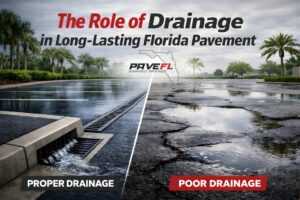
Water damage is one of the most expensive paving problems in Florida. Poor drainage weakens the base and causes structural failure. Designing proper slopes and drainage systems prevents water buildup and reduces long-term repair expenses.
Drainage cost benefits:
- Prevents base erosion
- Reduces cracking
- Extends pavement life
Compare Long-Term Value, Not Just Price
The lowest bid often leads to higher lifetime costs. Evaluating warranties, materials, and construction methods helps identify true value. Paying slightly more upfront can significantly reduce future maintenance and replacement expenses.
Value-focused decisions:
- Consider lifecycle cost
- Review material quality
- Evaluate workmanship standards
Plan for Future Expansion
Anticipating future traffic or expansion saves money long-term. Designing pavement to accommodate growth prevents the need for full reconstruction later. Strategic planning allows staged upgrades instead of costly replacements.
Future-proofing benefits:
- Avoids rework
- Reduces disruption
- Controls expansion costs
Avoid Emergency Repairs
Emergency paving work is always more expensive. Proactive inspections identify minor issues before they become structural failures. Planned repairs allow better pricing, scheduling, and material efficiency.
Preventive planning helps:
- Lower labor premiums
- Reduce downtime
- Improve budget predictability
Conclusion
Getting the most out of your paving budget in Florida means making informed, climate-smart decisions from planning through maintenance. Strategic material choices, proper preparation, and preventive care reduce overall paving cost while improving durability. Stretching a paving budget in Florida requires more than minimizing upfront costs—it depends on making informed decisions that account for climate impact and long-term performance. Our team focuses on selecting materials suited to Florida’s heat and moisture, ensuring proper site preparation, and recommending preventive maintenance that slows deterioration. These measures reduce repair frequency and extend pavement life, lowering overall ownership costs.
By focusing on long-term value instead of short-term savings, Pave FL helps Florida property owners maximize performance without overspending. The emphasis is on smart planning and cost-efficient strategies that deliver reliable pavement performance while keeping budgets under control.