What message does your parking lot send before anyone enters your business? In Florida, a commercial parking lot is often the first physical interaction customers, tenants, employees, and delivery drivers have with a property. Cracked asphalt, potholes, faded striping, and standing water can quickly create a negative impression — signaling neglect, safety concerns, and poor property management long before a storefront or sign is noticed.
Florida’s climate makes asphalt deterioration inevitable without proactive care. Intense UV exposure, extreme heat, heavy rainfall, high humidity, and frequent storms accelerate pavement aging far faster than in many other regions. Without a structured maintenance plan, minor surface issues can escalate rapidly into costly liabilities.
Commercial asphalt maintenance in Florida is not optional—it is a necessity. While asphalt pavement can last 25 to 30 years under ideal conditions, Florida’s harsh environment can reduce that lifespan to 7–10 years if maintenance is ignored. Regular upkeep protects structural integrity, preserves appearance, ensures safety, and ultimately safeguards the long-term value of commercial properties.
Understanding the Impact of Florida’s Climate on Asphalt
Florida’s climate is uniquely aggressive toward asphalt surfaces. Each environmental factor contributes to deterioration in a different way, and together they create a perfect storm for pavement failure.
1. The Battle Against UV Oxidation
Florida consistently ranks among the states with the highest UV index levels in the United States. Prolonged exposure to ultraviolet radiation triggers a chemical process known as oxidation, which is one of the most destructive forces affecting asphalt pavement.
Asphalt is held together by a liquid binder that provides flexibility and strength. UV radiation breaks down this binder over time, causing the asphalt to lose its elasticity. As the binder dries out, the pavement becomes brittle and unable to expand and contract with temperature changes.
The Visible Warning Signs
- The pavement color fades from rich black to dull gray
- The surface becomes chalky or powdery
- Small cracks begin forming across the surface
Why This Matters
Once oxidation progresses, the asphalt becomes far more vulnerable to cracking, water intrusion, and surface raveling. Oxidized pavement deteriorates exponentially faster than protected asphalt.
The Preventive Solution
Sealcoating acts as a protective barrier, much like sunscreen for your parking lot. It blocks UV rays, restores surface oils, and preserves flexibility. Regular sealcoating dramatically slows oxidation and extends pavement life.
2. UV Radiation Combined with Extreme Heat
Florida’s asphalt does not just endure UV exposure—it also absorbs extreme heat. During peak summer months, asphalt surface temperatures can exceed 140°F, placing enormous stress on pavement materials.
At these temperatures:
- Asphalt softens
- Heavy vehicle loads cause surface deformation
- Tire friction accelerates surface wear
This heat-induced softening often leads to rutting, which is wheel-path depressions caused by repeated traffic from delivery trucks, buses, and service vehicles. Once rutting forms, water begins to collect in these low areas, further accelerating damage.
Without maintenance, heat damage compromises both the surface layer and the structural integrity of the pavement, making repairs more complex and expensive.
3. Tropical Rainfall and Base Erosion
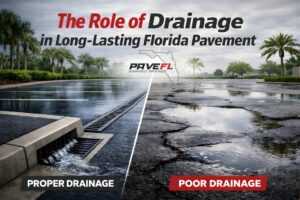
Florida experiences some of the heaviest rainfall in the country, particularly in South and Central Florida, where afternoon downpours are common for much of the year. While asphalt is designed to shed water, it is only effective when the surface remains intact.
Even the smallest hairline crack allows water to penetrate beneath the surface.
The Hidden Risk
Once water reaches the limerock base underneath the asphalt:
- The base becomes saturated and soft
- Load-bearing capacity is reduced
- Pavement begins to flex under traffic
This leads to:
- Potholes
- Alligator cracking
- Surface collapse
Why Base Failure Is So Dangerous
Surface repairs alone cannot fix a compromised base. Once erosion begins below the asphalt, failure spreads rapidly.
The Maintenance Solution
Crack sealing prevents water from entering the pavement system in the first place. By sealing cracks early, water stays on the surface and is directed toward proper drainage systems instead of weakening the foundation.
4. High Traffic Loads and Daily Wear
Florida’s commercial properties experience exceptionally high traffic volumes. From delivery trucks and service vehicles to rental cars and tourist traffic, asphalt surfaces endure constant pressure.
Heavy loads combined with turning movements cause:
- Surface abrasion
- Aggregate loss
- Accelerated cracking
Without routine maintenance, the surface layer gradually wears away, exposing the pavement to moisture and heat damage.
Safety Considerations
High-traffic wear also impacts safety. Faded lines, unclear pedestrian crossings, and worn fire lanes increase accident risks and legal liability.
Routine maintenance includes:
- Line striping
- Crosswalk repainting
- ADA-compliant markings
Clear, visible markings protect both pedestrians and property owners.
5. The Financial “Multiplier” Effect of Neglect
The economics of asphalt maintenance are straightforward: preventive care costs far less than reconstruction.
Preventive Maintenance Costs
- Sealcoating
- Crack filling
- Minor surface repairs
These services typically cost pennies per square foot.
Reactive Repair Costs
- Milling
- Resurfacing
- Full-depth reclamation
These repairs cost dollars per square foot and often disrupt business operations.
The Long-Term Reality
A well-maintained commercial parking lot in Florida can last 20 to 25 years. A neglected lot may require major reconstruction in 7–10 years. Maintenance multiplies the return on your pavement investment.
6. High Humidity and Its Effect on Asphalt Repairs
Florida’s consistently high humidity levels introduce additional challenges to asphalt maintenance. Moisture in the air affects:
- Cure times for sealants
- Adhesion of repair materials
- Long-term durability of patches
Improper timing or materials can result in repairs that fail prematurely. This is why Florida asphalt maintenance requires specialized products and experienced application techniques designed for humid environments.
Professional maintenance ensures repairs cure properly and perform as intended despite challenging conditions.
Key Benefits of Regular Asphalt Maintenance for Commercial Properties
Cost Savings Through Preventive Care
Routine maintenance dramatically reduces long-term expenses. Small, proactive repairs prevent structural damage that would otherwise require expensive reconstruction. Property owners who invest in maintenance avoid emergency repairs and unplanned capital expenditures.
Improved Safety and Reduced Liability
Cracked pavement, potholes, and uneven surfaces are serious trip hazards. Vehicle damage claims and slip-and-fall incidents can result in costly lawsuits. Regular maintenance ensures:
- Smooth driving surfaces
- Clear pedestrian paths
- Visible safety markings
This reduces accident risk and protects property owners legally.
Enhanced Curb Appeal and Property Value
A clean, jet-black parking lot creates a strong first impression. Well-maintained pavement communicates professionalism, reliability, and attention to detail. This directly impacts:
- Tenant retention
- Customer confidence
- Property resale value
Curb appeal is not cosmetic—it is a business asset.
Recommended Asphalt Maintenance Schedule for Florida
To protect pavement from Florida’s harsh environment, professionals recommend a consistent maintenance timeline:
Sealcoating
Every 2–3 years to protect against UV exposure and water penetration.
Crack Sealing
At least once per year or immediately when cracks appear.
Drainage Inspections
After major storms or hurricanes to ensure water flows away from pavement.
Parking Lot Striping
Every 1–2 years to maintain safety, visibility, and ADA compliance.
Following this schedule significantly extends pavement life and minimizes costly repairs.
Conclusion: Asphalt Maintenance Is Asset Protection
Pave FL approach commercial asphalt maintenance in Florida as a long-term asset protection strategy, not a cosmetic upgrade. Proper maintenance safeguards the structural integrity of paved surfaces, helps control repair and replacement costs, supports safe vehicle and pedestrian movement, and preserves overall property value. Given Florida’s intense heat, high moisture levels, and frequent storm activity, proactive care is essential for maintaining consistently performing asphalt surfaces over time.
When maintenance is deferred, minor defects such as cracks and drainage issues can quickly progress into widespread structural damage. Our team focuses on routine inspections, timely repairs, and preventative treatments that stop deterioration early. By investing in ongoing upkeep, property owners can ensure their parking lots remain functional, safe, and valuable assets rather than costly liabilities for years to come.