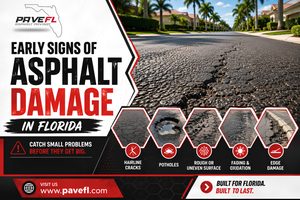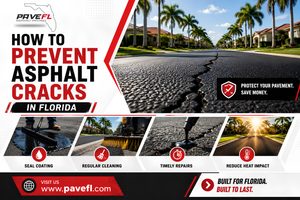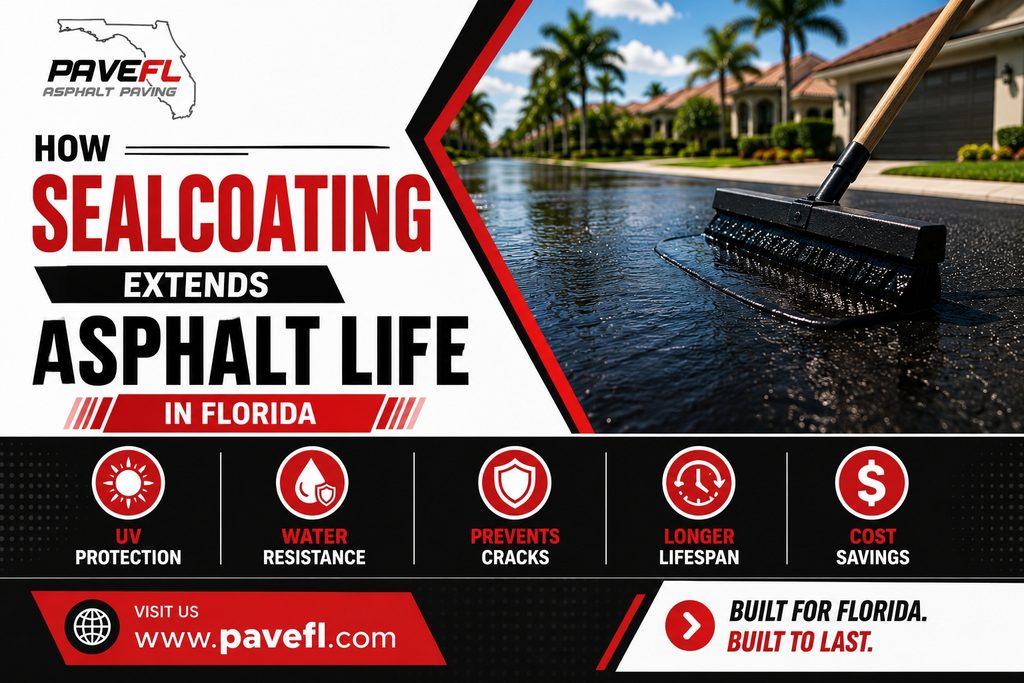
Can sealcoating really help florida asphalt last longer? Yes sealcoating can help extend the service life of asphalt by creating a protective barrier against some of Florida’s most damaging environmental conditions. Intense sunlight, UV radiation, heavy rainfall, humidity, and frequent vehicle traffic can accelerate asphalt aging. Over time, unprotected pavement can become faded, dry, brittle, cracked, and more vulnerable to moisture infiltration. Sealcoating helps protect the asphalt surface from these stresses while also restoring a darker, cleaner appearance. Pave FL describes sealcoating as an important preventative maintenance treatment for South Florida asphalt, particularly because the region experiences intense UV exposure and frequent moisture.
For homeowners, commercial property managers, and business owners, the biggest advantage of sealcoating is that it focuses on preventing deterioration before major pavement repairs become necessary. It is not a replacement for proper paving or structural repairs, but when applied to asphalt that is in suitable condition, it can become an important part of a long-term maintenance plan.
Why Florida Asphalt Needs Extra Protection
Florida asphalt faces a different set of challenges than pavement in colder states. There are no regular harsh freeze-thaw cycles in most of South Florida, but the pavement receives prolonged exposure to heat, sunlight, moisture, and storms.
Pave FL explains that South Florida’s combination of UV radiation, high temperatures, humidity, heavy rainfall, and tropical storms can continuously stress asphalt.
Major environmental stresses include:
- Intense UV radiation
- Extreme pavement temperatures
- Heavy rainfall
- High humidity
- Tropical storms
- Standing water
- Vehicle traffic
- Oil and chemical exposure
- Natural pavement aging
Because these conditions occur repeatedly, preventative maintenance is particularly important.
What Is Asphalt Sealcoating?
Sealcoating is a protective coating applied over an existing asphalt surface.
Rather than replacing the pavement, sealcoating creates a protective layer over asphalt that is still structurally sound.
Pave FL’s sealcoating process includes inspection, surface cleaning, crack and pothole repair, sealant application, curing, and final inspection.
The process is generally intended to:
- Protect the asphalt surface
- Reduce exposure to UV radiation
- Limit moisture penetration
- Slow oxidation
- Protect against certain surface contaminants
- Improve appearance
- Support preventative maintenance
However, sealcoating is not a structural repair. Major potholes, extensive alligator cracking, severe settlement, and failed pavement should be repaired or reconstructed rather than simply covered with sealant.
How Sealcoating Helps Extend Asphalt Life
The asphalt sealcoating benefits Florida property owners experience are largely connected to protecting the asphalt binder and reducing exposure to environmental stresses.
1. Protects Against UV Radiation
Florida receives intense sunlight throughout much of the year.
UV radiation contributes to oxidation, which gradually changes the properties of the asphalt binder. As the binder ages, the pavement can become less flexible and more susceptible to cracking.
Pave FL explains that prolonged UV exposure can cause asphalt to oxidize, lose flexibility, fade, and become more vulnerable to cracking.
Sealcoating provides a protective surface layer that helps reduce direct exposure to these damaging elements.
Why this matters
Without protection, the pavement surface gradually becomes more weathered.
You may notice:
- Black asphalt becoming gray
- A dry-looking surface
- Increased surface cracking
- Rougher texture
- Loose aggregate
Maintaining a protective coating can help slow this progression.
2. Helps Reduce Water Penetration
Water is one of the biggest enemies of asphalt pavement.
Rainwater can enter through cracks and other openings. Once moisture reaches underlying pavement layers, it can contribute to weakening, erosion, and other forms of deterioration.
Pave FL identifies water infiltration and poor drainage as significant contributors to asphalt damage in Florida.
Sealcoating helps create a more resistant surface that limits moisture penetration through small surface pores and imperfections.
But drainage still matters
Sealcoating should never be considered a substitute for proper drainage.
If water is repeatedly pooling on pavement, the underlying problem may involve:
- Poor grading
- Blocked drains
- Settlement
- Inadequate runoff
- Edge erosion
These issues need to be corrected separately.
3. Slows Asphalt Oxidation
Oxidation is a natural aging process, but Florida’s intense sunlight can accelerate it.
Asphalt binder gradually becomes harder and less flexible as it oxidizes.
Pave FL describes common signs of oxidation as fading, a chalky or powdery appearance, and small cracks developing across the pavement.
Sealcoating can slow this process by placing a protective layer between the asphalt and environmental exposure.
The result?
The pavement can remain more resistant to everyday environmental stress for longer when preventative maintenance is performed at the appropriate time.
4. Helps Reduce Surface Cracking
Cracks are among the most common signs of aging asphalt.
They may begin as small surface imperfections but can become larger when exposed to traffic, rain, and continued environmental stress.
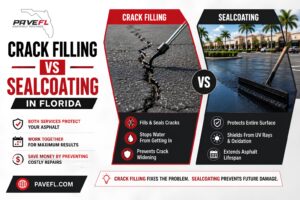
Sealcoating can help protect sound asphalt from surface-level environmental deterioration, but existing cracks should generally be repaired before sealcoating.
Pave FL’s process includes crack sealing and repair before sealant application.
A better maintenance sequence is:
Inspect → Clean → Repair cracks → Sealcoat → Cure → Monitor
This allows the protective treatment to be applied to a properly prepared surface.
5. Helps Protect Against Oil and Automotive Fluids
Driveways and parking lots are regularly exposed to vehicles.
Cars can leave behind:
- Motor oil
- Fuel
- Grease
- Automotive fluids
- Other contaminants
Some of these substances can negatively affect asphalt when spills are allowed to remain untreated.
Pave FL identifies sealcoating as a protective barrier against oil spills, gasoline leaks, and other contaminants that can stain or deteriorate asphalt.
Regular cleaning combined with preventative sealing can therefore help maintain the surface in better condition.
6. Restores Asphalt Appearance
Not every benefit is structural.
Sealcoating can significantly improve how old asphalt looks.
Over time, exposure to sunlight and weather causes black asphalt to fade toward gray.
A properly applied sealcoat can restore a darker, more uniform appearance.
This can improve:
- Driveway appearance
- Parking lot presentation
- Property curb appeal
- Visual consistency
- Overall pavement appearance
For commercial properties, a clean, dark pavement surface can make the property appear better maintained.
Pave FL specifically describes sealcoating as a way to restore a rich black finish while providing protective benefits.
7. Helps Extend the Useful Life of Pavement
The primary purpose of sealcoating is preventative maintenance.
By reducing exposure to UV rays, moisture, oxidation, and certain contaminants, sealcoating can help slow the processes that contribute to pavement deterioration.
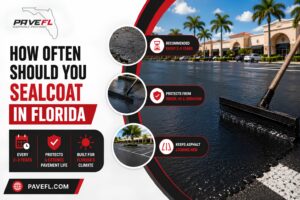
Pave FL recommends routine sealcoating as part of an overall asphalt maintenance program and generally cites a 2–3 year interval for many Florida properties, although actual frequency depends on pavement condition, traffic, weather exposure, and property type.
Important distinction
Sealcoating doesn’t make failing pavement new again.
Instead, it helps protect sound, properly maintained asphalt so that deterioration can progress more slowly.
Sealcoating Benefits at a Glance
| Benefit | How It Helps Asphalt |
|---|---|
| UV protection | Reduces direct exposure to damaging sunlight |
| Moisture resistance | Helps limit water penetration |
| Oxidation protection | Slows surface aging |
| Crack prevention support | Helps protect against environmental deterioration |
| Chemical protection | Reduces exposure to certain automotive contaminants |
| Appearance restoration | Returns a darker, more uniform finish |
| Surface preservation | Helps maintain sound asphalt |
| Preventative maintenance | Can delay more extensive deterioration |
How Florida Heat Affects Asphalt
Florida’s heat creates a particularly demanding environment for asphalt.
Pave FL reports that pavement surface temperatures can become extremely high during summer conditions, contributing to softening, rutting, and deformation.
Repeated cycles of heating and cooling can also contribute to changes in asphalt properties.
High temperatures can contribute to:
- Surface softening
- Tire scuffing
- Rutting
- Deformation
- Faster aging
Sealcoating is one part of a broader maintenance strategy designed to protect the pavement surface from environmental exposure.
Sealcoating and Florida Rainfall
Heavy rain is another major concern.
Florida’s tropical storms and frequent downpours can expose asphalt to substantial amounts of water.
If pavement already has cracks or drainage problems, water can reach the supporting layers.
Pave FL notes that heavy rainfall, flooding, and poor drainage can contribute to base erosion, cracking, and other forms of pavement deterioration.
Sealcoating helps by:
- Protecting the surface
- Reducing moisture penetration
- Supporting crack-prevention efforts
- Preserving sound asphalt
But remember: sealcoating cannot correct a failed drainage system.
Sealcoating Does Not Repair Major Damage
This is one of the most important things Florida property owners should understand.
Sealcoating is a preventative treatment, not a cure for major pavement failure.
Pave FL specifically notes that major cracks and potholes must be properly repaired before sealant is applied.
Sealcoating is appropriate for pavement that is generally:
- Structurally sound
- Relatively stable
- Free from major widespread failures
- Properly prepared
- In need of surface protection
It is not intended to fix:
- Deep potholes
- Severe alligator cracking
- Major settlement
- Failed base layers
- Extensive structural deterioration
When these problems exist, professional repair or resurfacing may be more appropriate.
Why Surface Preparation Matters
Even the best sealcoating product cannot produce a quality result if the pavement isn’t prepared correctly.
Pave FL’s process begins with inspection and surface cleaning before cracks and potholes are repaired and the sealant is applied.
Proper preparation can include:
- Inspecting the pavement
- Removing dirt and debris
- Cleaning oil spots
- Repairing cracks
- Filling appropriate surface voids
- Protecting adjacent areas
- Confirming suitable weather conditions
Surface preparation helps the coating bond properly and provides a more uniform finished surface.
How Often Should Florida Asphalt Be Sealcoated?
There isn’t one universal schedule for every property.
Pave FL generally recommends sealcoating residential driveways every 2–3 years, while commercial and high-traffic properties may require more frequent attention depending on traffic and environmental exposure.
Factors affecting frequency include:
- Traffic volume
- Pavement age
- UV exposure
- Weather conditions
- Coastal exposure
- Existing pavement condition
- Previous sealcoating
- Drainage conditions
A professional inspection is more reliable than following a calendar blindly.
Best Time to Sealcoat in Florida
Weather conditions affect sealcoating performance.
The pavement should be sufficiently dry and conditions should allow the coating to cure properly.
Pave FL notes that sealcoating should be performed under appropriate warm, dry conditions and that rain or excessive moisture can interfere with curing.
Before scheduling sealcoating, consider:
- Recent rainfall
- Forecasted rain
- Humidity
- Pavement temperature
- Traffic restrictions
- Required curing time
Florida weather can change quickly, so professional contractors should evaluate conditions before beginning the application.
Residential Sealcoating
For homeowners, sealcoating can help protect:
- Driveways
- Private parking areas
- Small access roads
- Asphalt walkways
Residential asphalt often experiences less traffic than commercial pavement, but it remains exposed to the same Florida sun, rain, humidity, and environmental conditions.
A consistent maintenance schedule can help preserve both appearance and pavement performance.
Pave FL offers driveway sealcoating and recommends regular maintenance as part of preserving residential asphalt.
Commercial Sealcoating
Commercial properties typically experience more traffic and greater surface wear.
Examples include:
- Shopping centers
- Apartment communities
- Office properties
- Retail parking lots
- Restaurants
- Business complexes
Commercial pavement can also experience frequent turning, braking, delivery vehicles, and oil exposure.
Pave FL provides commercial asphalt maintenance services including sealcoating, repairs, resurfacing, parking lot paving, and pavement marking.
For high-traffic properties, sealcoating should be integrated with inspections, crack repair, drainage maintenance, pothole repair, and pavement marking maintenance.
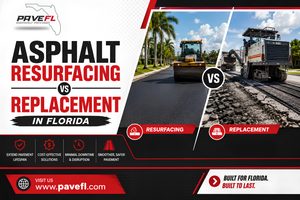
Sealcoating vs. Resurfacing
These two treatments serve different purposes.
| Sealcoating | Resurfacing |
|---|---|
| Preventative maintenance | Rehabilitation |
| Protects existing asphalt | Adds a new asphalt surface layer |
| Improves appearance | Restores worn pavement |
| Helps reduce environmental exposure | Addresses more significant surface deterioration |
| Best for sound pavement | Appropriate for pavement meeting resurfacing conditions |
| Does not add structural asphalt thickness | Adds a new pavement layer |
Pave FL describes resurfacing as a way to restore worn pavement and extend usability when the existing pavement is suitable for an overlay.
Choosing between these options requires evaluating the existing pavement rather than simply selecting the least intensive treatment.
A Complete Florida Asphalt Maintenance Strategy
Sealcoating works best when it is part of a broader maintenance program.
A strong strategy can include:
1. Regular Inspections
Identify cracks, potholes, raveling, rutting, and drainage problems early.
2. Crack Sealing
Close suitable cracks before water can penetrate deeper into the pavement.
3. Pothole Repair
Repair damaged sections before traffic and rainfall expand them.
4. Drainage Maintenance
Keep drains and runoff paths clear and correct persistent standing water.
5. Sealcoating
Apply protective coating to suitable asphalt at an appropriate interval.
6. Resurfacing
Consider resurfacing when the surface is significantly worn but the underlying pavement remains suitable.
Pave FL recommends combining preventative measures such as sealcoating, crack sealing, inspections, drainage evaluation, and timely repairs to improve pavement performance.
What Happens If You Skip Sealcoating?
Unprotected asphalt remains directly exposed to Florida’s environmental conditions.
Over time, this can contribute to:
- Faster oxidation
- Fading
- Increased brittleness
- Surface cracking
- Moisture infiltration
- Raveling
- More frequent repairs
Pave FL explains that neglected asphalt can deteriorate faster under South Florida’s combination of sun, moisture, and traffic.
Skipping one maintenance cycle doesn’t automatically mean pavement will fail, but consistently ignoring preventative maintenance can allow manageable surface problems to progress.
Signs Your Asphalt May Be Ready for Sealcoating
Look for:
- Faded gray appearance
- Dry-looking surface
- Minor surface cracking
- Early signs of oxidation
- Increased surface wear
- Loss of uniform appearance
However, if you see extensive cracking, potholes, severe rutting, or settlement, have the pavement evaluated before scheduling sealcoating.
Why Professional Sealcoating Produces Better Results
Professional sealcoating involves much more than spreading coating across the pavement.
A quality application requires:
- Proper inspection
- Thorough cleaning
- Appropriate crack repairs
- Correct application method
- Proper material coverage
- Suitable weather conditions
- Adequate curing time
- Final quality inspection
Pave FL states that its driveway sealcoating process includes inspection, cleaning, crack and pothole repair, sealant application, curing, and final inspection.
This preparation helps ensure the sealcoat is applied to a clean and suitable surface.
Why Choose Pave FL?
At Pave FL, we understand that Florida asphalt requires maintenance strategies designed around the state’s unique climate.
The company provides sealcoating, asphalt repair, resurfacing, parking lot maintenance, driveway services, and other paving solutions throughout South Florida.
Pave FL’s sealcoating approach includes pavement assessment, cleaning, crack and pothole repair, professional sealant application, curing, and final inspection.
This approach allows property owners to address existing surface problems before applying a protective coating rather than simply covering damaged areas.
Final Thoughts
The asphalt sealcoating benefits Florida property owners receive go well beyond making pavement look darker and newer. Proper sealcoating can help protect asphalt from UV exposure, oxidation, moisture, and certain surface contaminants while supporting a broader preventative maintenance strategy.
Florida’s heat, intense sunlight, heavy rainfall, humidity, storms, and year-round traffic continuously challenge asphalt pavement. Without maintenance, these conditions can accelerate aging and contribute to cracking, raveling, potholes, and other problems.
The key is to apply sealcoating at the right time and to properly prepared pavement. Cracks and potholes should be addressed first, drainage problems should not be ignored, and severely deteriorated asphalt should be professionally evaluated before deciding whether sealcoating is appropriate.
Pave FL can help South Florida property owners protect and maintain their asphalt with professional sealcoating, crack repair, pothole repair, resurfacing, paving, and ongoing pavement maintenance services. A proactive approach can help preserve pavement appearance and slow the effects of Florida’s demanding climate.