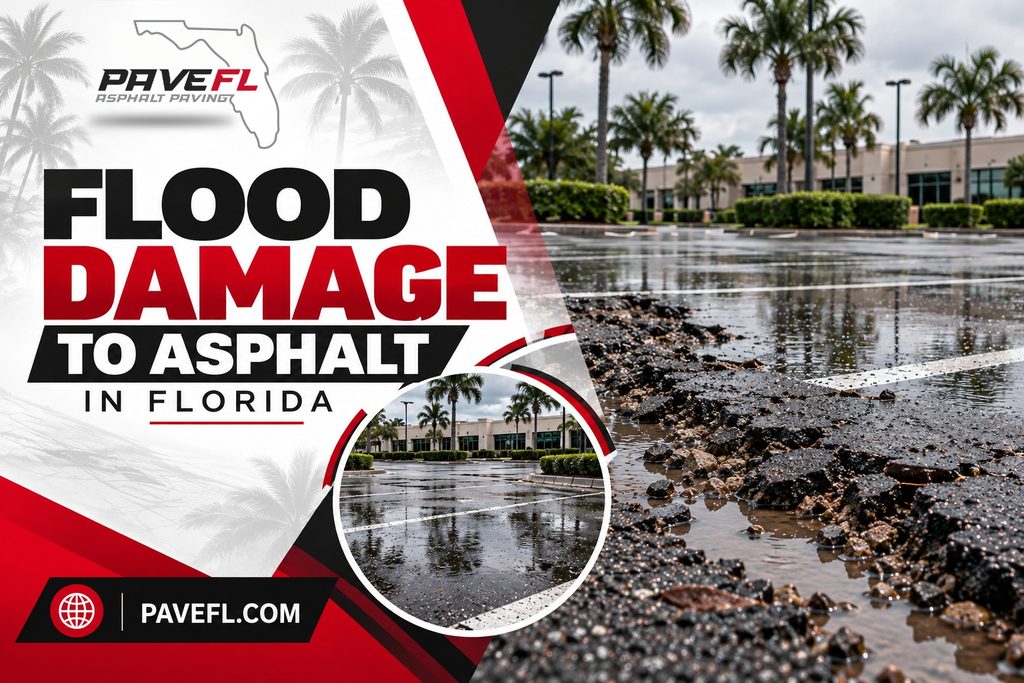
Has flooding left your asphalt driveway, parking lot, or private road cracked, uneven, or covered with potholes? In Florida, heavy rainfall, tropical storms, hurricanes, and poor drainage can cause serious damage to asphalt surfaces. What may initially look like a small crack or shallow puddle can develop into a much bigger pavement problem when water reaches the layers beneath the asphalt.
Understanding flood damage to asphalt in Florida helps homeowners, property managers, and commercial property owners identify early warning signs, prevent further deterioration, and choose the right repair solution.
Whether you need residential asphalt paving, parking lot repairs, or professional guidance on asphalt resurfacing in South Florida, knowing how flooding affects your pavement is the first step toward protecting your property.
At PaveFL, we understand the challenges Florida’s weather creates for paved surfaces. With the right assessment, drainage improvements, and appropriate paving solutions, property owners can work toward restoring pavement performance and extending its useful life.
How Does Flooding Damage Asphalt Pavement in Florida?
Asphalt is designed to withstand regular vehicle traffic and changing weather conditions. However, prolonged water exposure can weaken pavement, especially when water enters through existing cracks, damaged joints, or poorly sealed edges.
In Florida, intense rainfall and recurring storms can leave asphalt surfaces exposed to standing water for extended periods. When water moves beneath the pavement, it can weaken the supporting base and subgrade, reducing the pavement’s ability to distribute vehicle loads.
As vehicles continue to drive over the weakened surface, the asphalt may begin to crack, sink, or break apart.
Flood damage does not always become visible immediately. Some problems appear days or weeks after floodwaters recede, making a professional pavement inspection important after significant flooding.
7 Common Signs of Flood Damage to Asphalt
Recognizing flood-related pavement damage early can help prevent minor issues from developing into more extensive structural problems.
1. Potholes and Surface Breakdowns
Potholes are among the most noticeable signs of asphalt deterioration after flooding. Water can weaken the pavement’s supporting layers, while repeated vehicle traffic places additional stress on the damaged area.
As the asphalt loses support, pieces of pavement may loosen and break away, creating holes that affect vehicle safety and pavement usability.
Prompt repairs can help prevent potholes from expanding and damaging surrounding pavement.
2. Alligator Cracking
Alligator cracking appears as interconnected cracks resembling a reptile’s skin. This pattern often indicates fatigue or structural weakness in the asphalt pavement.
After flooding, weakened base materials can cause the pavement to flex under traffic loads. Over time, this repeated movement may produce interconnected cracks across the surface.
When alligator cracking is extensive, simply applying a thin asphalt overlay may not address the underlying problem. The damaged pavement and supporting layers may require further evaluation.
3. Standing Water and Poor Drainage
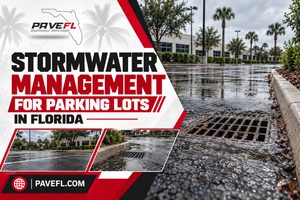
Water that remains on an asphalt surface after rainfall may indicate inadequate drainage, uneven pavement, or depressions that have developed over time.
Standing water can increase the risk of further deterioration when it enters existing cracks or damaged joints. It can also create slippery conditions and interfere with safe vehicle and pedestrian movement.
Effective drainage is particularly important for residential driveways, commercial parking areas, and private roads throughout South Florida.
4. Asphalt Cracks and Expanding Fissures
Floodwater can enter existing cracks and move into the layers beneath the pavement. When the supporting materials become weakened or eroded, cracks may widen and additional cracking can develop.
Common warning signs include:
- Longitudinal cracks running along the pavement.
- Transverse cracks extending across the surface.
- Cracks that become wider after heavy rainfall.
- Multiple cracks appearing around areas of standing water.
Sealing suitable cracks can help limit water infiltration, but cracks associated with structural failure may require more extensive repairs.
5. Sunken or Uneven Pavement
Flooding can contribute to soil movement, erosion, or loss of support beneath asphalt. When this occurs, sections of a driveway or roadway may sink or become uneven.
Depressions, soft spots, and changes in pavement elevation can indicate that the problem extends below the visible surface.
Before selecting a repair method, it is important to determine whether the damage is limited to the asphalt layer or involves the underlying base and soil.
6. Edge Deterioration
Asphalt edges can be especially vulnerable when water flows along the sides of a driveway, parking lot, or road.
Uncontrolled runoff may erode supporting soil, leaving pavement edges unsupported. Vehicle loads can then cause these edges to crumble or break away.
Proper drainage, stable edge support, and suitable pavement construction help reduce the risk of recurring edge damage.
7. Loose Aggregate and Surface Raveling
Surface raveling occurs when aggregate particles gradually loosen and separate from the asphalt.
Although raveling can result from aging, poor construction, or general wear, prolonged moisture exposure may contribute to deterioration in an already vulnerable pavement surface.
If the asphalt begins shedding material or develops rough, exposed areas after flooding, an inspection can help determine whether localized repairs or broader rehabilitation are appropriate.
What Causes Flood Damage to Asphalt in South Florida?
Several conditions can contribute to flood-related pavement problems. Understanding the cause is essential because repairing the visible damage alone may not prevent it from returning.
Heavy rainfall and tropical storms: Intense rainfall can overwhelm drainage systems and leave pavement submerged or exposed to continuous runoff.
Poor surface drainage: Incorrect slopes, blocked drainage paths, or low areas can allow water to collect on asphalt surfaces.
Weak pavement foundations: A poorly prepared or already deteriorated base may lose stability when exposed to excessive moisture.
Existing cracks and damaged joints: Openings in the asphalt provide pathways for water to enter the pavement structure.
Soil erosion and movement: Flowing floodwater can remove supporting soil, particularly near pavement edges, drainage outlets, and slopes.
Repeated traffic after flooding: Heavy vehicles can accelerate deterioration when the pavement’s supporting layers have been weakened.
Florida’s heat and intense sunlight can also contribute to long-term asphalt aging. When pavement is already weakened by water, these environmental stresses can make maintaining a durable surface more challenging.
Flood-Damaged Asphalt: Common Problems and Recommended Responses
The appropriate repair depends on the extent of the damage, the condition of the pavement foundation, and whether drainage problems remain unresolved.
| Flood-related problem | What it may indicate | Potential solution |
|---|---|---|
| Small, isolated cracks | Surface deterioration or water infiltration | Crack sealing when appropriate |
| Localized potholes | Broken asphalt and possible base weakness | Patching and evaluation of underlying support |
| Widespread alligator cracking | Possible structural pavement failure | Removal and reconstruction of affected sections, if needed |
| Standing water | Poor drainage or pavement depressions | Drainage assessment and correction of grading issues |
| Sunken pavement | Possible base failure, soil movement, or erosion | Foundation assessment and appropriate reconstruction |
| Crumbling pavement edges | Loss of edge support or water erosion | Edge repair, restored support, and drainage improvements |
| Widespread surface deterioration | Aging, moisture-related damage, or multiple pavement defects | Assessment for resurfacing or broader rehabilitation |
These are general guidelines, not a substitute for an on-site inspection. Different problems can occur together, and the visible condition of the asphalt does not always reveal the full extent of flood damage.
Should You Repair or Replace Flood-Damaged Asphalt?
One of the most important decisions after flooding is determining whether the pavement can be repaired or needs more extensive rehabilitation.
The right choice depends on how much of the asphalt has been affected and whether the supporting foundation remains stable.
When Localized Asphalt Repairs May Be Enough
Localized repairs may be suitable when the damage is limited to a few cracks, isolated potholes, or small sections of deteriorated pavement.
Before completing the repair, the affected area should be assessed to determine whether water has weakened the underlying materials. Any necessary drainage corrections should also be considered.
Addressing the cause of the damage can help reduce the likelihood of recurring problems.
When Asphalt Resurfacing May Be Appropriate
Asphalt resurfacing involves placing a new asphalt layer over an existing pavement surface that is suitable to receive it.
It may be an option when the existing pavement has widespread surface wear but retains a sufficiently stable foundation.
Property owners considering asphalt resurfacing in South Florida should first determine whether flooding has caused deeper structural damage. An overlay cannot reliably correct an unstable base, significant soil erosion, or unresolved drainage problems.
Resurfacing is most effective when the existing pavement condition supports this approach and necessary repairs are completed beforehand.
When Full-Depth Pavement Reconstruction Is Necessary
If flooding has severely damaged the asphalt foundation, caused significant erosion, or created widespread structural failure, removing and rebuilding affected pavement sections may be necessary.
This process can involve removing damaged asphalt, restoring the supporting base, addressing drainage issues, and installing new pavement.
Although the scope of reconstruction varies by property, correcting underlying problems is essential to achieving a more durable result.
Why Drainage Matters for Residential and Commercial Paving
Drainage is one of the most important considerations when protecting asphalt from repeated flooding.
Even a newly paved surface may deteriorate prematurely if water consistently collects on the pavement or enters its supporting layers.
For residential paving in South Florida, proper drainage can help protect driveways, entrances, and paved areas around homes. For commercial properties, drainage also affects parking spaces, vehicle circulation, pedestrian access, and the overall usability of the site.
A suitable drainage plan may involve:
- Evaluating pavement slopes and low spots.
- Maintaining clear drainage channels and inlets.
- Directing runoff toward appropriate drainage systems.
- Correcting grading issues where necessary.
- Protecting pavement edges against erosion.
- Reviewing drainage conditions before resurfacing or reconstruction.
Drainage improvements must be appropriate for the property and comply with applicable local requirements.
For larger projects, property owners may also need to consider how additional pavement or changes in grading affect stormwater runoff.
Asphalt Paving vs. Concrete Paving in Flood-Prone Areas
Asphalt and concrete are both used for driveways, parking areas, and other paved surfaces. However, neither material is completely immune to flood damage.
The most suitable choice depends on the intended use, site conditions, foundation preparation, drainage requirements, and expected traffic.
| Consideration | Asphalt paving | Concrete paving |
|---|---|---|
| Common applications | Driveways, private roads, parking lots, and access areas | Driveways, sidewalks, slabs, and selected parking areas |
| Typical repair approach | Crack sealing, patching, resurfacing, or reconstruction | Joint sealing, slab repairs, panel replacement, or reconstruction |
| Flood-related concerns | Water infiltration, base weakening, potholes, and surface deterioration | Subgrade erosion, slab settlement, joint deterioration, and cracking |
| Drainage requirements | Proper grading and runoff management are essential | Proper grading and runoff management are equally important |
| Suitability after flooding | Depends on asphalt condition and foundation stability | Depends on slab condition and foundation stability |
Working with experienced concrete contractors in South Florida can help property owners evaluate concrete-related repair or installation needs. Similarly, professional asphalt paving services can help assess whether an existing asphalt surface is suitable for repair, resurfacing, or replacement.
The goal is not simply to choose one material over another. It is to select a paving solution that suits the property and addresses the conditions contributing to flood damage.
How to Protect Asphalt Before and After Flooding
Although Florida’s weather cannot be controlled, property owners can take practical steps to reduce avoidable pavement deterioration.
1. Inspect the pavement regularly. Look for cracks, potholes, depressions, loose aggregate, and areas where water repeatedly collects.
2. Address drainage problems early. Clear appropriate drainage inlets and channels, and investigate recurring standing water rather than allowing it to persist.
3. Repair suitable cracks promptly. Timely crack maintenance can help limit water infiltration, although structural cracks require a more thorough assessment.
4. Avoid unnecessary heavy traffic on weakened pavement. Restricting heavy vehicles from visibly damaged areas can reduce additional stress while the pavement is evaluated.
5. Arrange an inspection after significant flooding. A professional assessment can identify surface damage, possible foundation problems, and areas requiring further investigation.
6. Choose the right repair method. Patching, resurfacing, and reconstruction serve different purposes. Selecting the appropriate option depends on the actual condition of the pavement.
7. Maintain records of repairs and inspections. Documenting recurring drainage problems and completed maintenance can help property owners make informed decisions about future pavement care.
These steps cannot eliminate every flood-related risk, but they can help property owners identify problems earlier and make more informed maintenance decisions.
When Should You Contact an Asphalt Paving Professional?
It is worth arranging a professional assessment when flooding leaves behind large potholes, widespread cracking, sunken pavement, exposed base materials, or recurring standing water.
An inspection is also advisable when the damage continues to worsen after the water recedes or when a previously stable driveway or parking area begins to feel uneven under traffic.
For homeowners, residential asphalt paving professionals can assess driveway conditions and recommend suitable repair options. For commercial properties and private roads, an evaluation may need to consider traffic loads, drainage, pavement layout, and the condition of larger paved areas.
Property owners planning road paving in South Florida should pay particular attention to foundation preparation and stormwater management. Addressing these factors during planning can help reduce the risk of premature deterioration.
The important point is to identify the cause of the damage before committing to a repair method. A solution that only covers the damaged surface may not last if water continues to undermine the pavement below.
Frequently Asked Questions About Flood Damage to Asphalt in Florida
Can flooding ruin an asphalt driveway?
Yes. Flooding can contribute to asphalt cracking, potholes, surface deterioration, soil erosion, and loss of foundation support. The severity depends on the duration of water exposure, existing pavement conditions, drainage, and traffic loads.
How soon should asphalt be inspected after flooding?
Arrange an inspection as soon as it is safe to access the property, particularly if you notice significant cracking, potholes, settlement, or erosion. Some damage may become more apparent after floodwaters recede and the affected area can be assessed safely.
Can asphalt be resurfaced after flood damage?
Yes, in some cases. Resurfacing may be appropriate when the existing pavement foundation remains stable and the damage is primarily at the surface. If the base has been weakened or eroded, those issues may need to be corrected first.
Does standing water always mean the asphalt needs replacement?
No. Standing water may result from drainage problems, surface depressions, or changes in pavement grading. The appropriate solution depends on the cause and the overall condition of the pavement.
Is concrete better than asphalt in flood-prone areas?
Not necessarily. Both materials can experience problems when water undermines their foundations or drainage is inadequate. Site conditions, installation quality, intended use, and maintenance requirements should guide the decision.
How can I prevent flood damage to my driveway in South Florida?
Maintain drainage systems, address cracks promptly, monitor low areas, and arrange an inspection after significant flooding. Correcting drainage and foundation issues can be just as important as maintaining the visible pavement surface.
Protect Your Pavement With PaveFL
Flood damage can be stressful for property owners, especially when a driveway, parking lot, or access road becomes unsafe or difficult to use. The best next step is to understand the extent of the damage, identify the underlying cause, and choose a solution that addresses the problem rather than simply covering it up.
At PaveFL, our focus is on helping property owners make informed paving decisions through attentive service, clear communication, and solutions suited to their project requirements. From evaluating damaged asphalt to discussing appropriate repair, resurfacing, or replacement options, we aim to make the process straightforward and customer-focused.
We believe customer satisfaction goes beyond completing the paving work. It also means listening to your concerns, explaining the available options, keeping you informed throughout the project, and providing support when you have questions about your pavement.
If flooding has affected your asphalt driveway, parking lot, or paved property in South Florida, visit Pave FL to learn more about our paving services and discuss the next steps toward restoring your pavement.