What Is the Best Time of Year for Asphalt Paving in Florida? Florida’s warm climate means asphalt paving can often be completed during much of the year. Unlike colder states, Florida does not have a long winter period when asphalt paving routinely becomes impractical. PaveFL identifies spring, summer, and early fall as generally favorable periods for asphalt installation.
However, choosing the right time for a paving project involves more than looking at the calendar. Florida has distinct wet and relatively dry periods, and heavy rainfall can interfere with paving operations. On the Florida peninsula, a large share of annual rainfall typically occurs from June through September, while the drier portion of the year generally extends through the remaining months.
For that reason, the best paving season Florida property owners can choose depends on the specific location, project size, weather forecast, pavement condition, and available dry-weather window.
PaveFL can help property owners evaluate their project and schedule asphalt work around Florida’s actual site and weather conditions.
1. Florida Asphalt Paving Is Possible Almost Year-Round
One of the biggest advantages of Florida’s climate is the relatively mild winter.
PaveFL explains that warm weather makes spring, summer, and early fall generally suitable for asphalt installation, while South Florida’s mild winters can also provide opportunities for paving when conditions are appropriate.
This means property owners generally have more scheduling flexibility than they would in regions where freezing temperatures and snow stop asphalt work for extended periods.
However, year-round possibility does not mean every day is suitable.
The paving crew still needs to consider:
- Rain
- Pavement temperature
- Asphalt mixture temperature
- Surface moisture
- Wind
- Existing pavement condition
- Base temperature
- Required compaction time
2. Spring Can Be a Good Paving Period
Spring can provide favorable conditions for asphalt paving in many parts of Florida.
Temperatures are generally warm enough for asphalt work, while rainfall may be less persistent than during the peak summer wet season in many areas.
Spring can therefore be useful for property owners who want to:
- Install a new driveway
- Pave a parking lot
- Resurface aging asphalt
- Repair damaged pavement
- Complete planned paving projects before summer storms
The exact conditions still matter. A rainy weather pattern or wet pavement can require the project to be rescheduled.
3. Summer Provides Warm Temperatures but More Rain
Summer is an interesting time for Florida paving.
On one hand, warm temperatures can provide favorable conditions for asphalt placement and compaction.
On the other hand, Florida’s summer is typically much wetter.
NOAA climate information describes a pronounced rainy season across much of Florida, with frequent afternoon showers and thunderstorms during the warmer months.
This means summer paving can absolutely be possible, but weather scheduling becomes especially important.
A project may have a suitable morning paving window but face afternoon thunderstorms.
4. Why Rain Matters More Than the Month
The calendar alone does not determine whether asphalt can be installed.
For example:
A dry summer morning may provide suitable paving conditions.
Meanwhile: A rainy winter day may not.
The asphalt mixture must be placed and compacted under appropriate conditions. Asphalt paving guidance explains that mixture temperature, air temperature, surface temperature, wind, and lift thickness all affect the available compaction window.
This is why experienced paving contractors monitor actual conditions rather than simply following a fixed seasonal calendar.
5. Fall Can Offer a Useful Paving Window
Fall can be another practical period for asphalt work in Florida.
In many areas, rainfall begins to decrease after the peak wet season.
NOAA climate data for central Florida, for example, describes the wet season as generally extending from late May through October, followed by a drier period beginning around late October.
For property owners, this can make late fall an attractive period for planned paving when temperatures and weather conditions remain suitable.
6. Winter Paving Is Possible in Florida
Florida winter is very different from winter in northern states.
Freezing temperatures are uncommon across much of Florida, and daytime temperatures can remain suitable for asphalt work.
PaveFL notes that South Florida generally experiences mild winters, with daytime temperatures often in the 70s°F, although occasional cold fronts can bring cooler nighttime conditions.
This means winter does not automatically mean the end of the paving season.
However, colder conditions can reduce the time available for proper compaction.
7. Why Asphalt Temperature Matters
Fresh asphalt needs to remain workable long enough to achieve proper compaction.
As asphalt cools, the binder becomes more viscous and the mixture becomes increasingly difficult to compact.
The Asphalt Paving Handbook explains that asphalt mixtures are most efficiently compacted while they are at suitable elevated temperatures, and that environmental conditions affect how quickly the mixture loses heat.
Therefore, paving professionals must coordinate:
Delivery → placement → rolling → final compaction
within the available temperature window.
8. Florida’s Heat Can Also Affect Paving
Warm weather is generally helpful for asphalt installation, but extremely hot conditions still require professional control.
Florida’s summer temperatures can become very high, particularly in direct sunlight.
PaveFL notes that South Florida pavement can experience intense heat and that asphalt surfaces can become significantly hotter than the surrounding air.
The objective is not simply to choose the hottest possible day.
Instead, professionals need to balance:
- Asphalt temperature
- Air temperature
- Surface temperature
- Mixture properties
- Compaction requirements
- Traffic conditions
- Weather stability
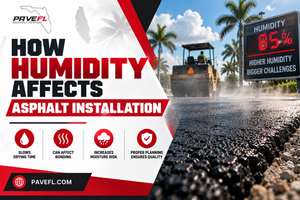
9. Humidity Should Also Be Considered
Florida’s humidity is another environmental factor.
High humidity itself does not automatically prevent paving, but surface moisture and rainfall are important concerns.
Before asphalt is placed, the existing surface should be suitable and free from conditions that could interfere with proper installation.
This is particularly important during Florida’s wetter months, when humid air often accompanies afternoon storms and frequent rainfall.
10. The Rainy Season Requires More Scheduling Flexibility
Florida’s rainy season can make paving schedules less predictable.
On the peninsula, more than half of annual precipitation commonly occurs from June through September.
Rainfall during this period can be intense and localized.
That means one property may receive a heavy storm while another nearby area remains relatively dry.
For larger projects, property owners should therefore allow some scheduling flexibility rather than expecting paving to happen on one rigid date.
11. What Happens If Rain Interrupts Paving?
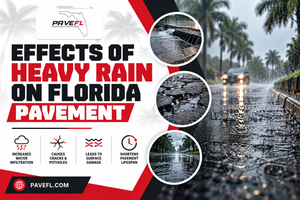
Rain can create problems when asphalt is being placed.
A wet surface can interfere with the paving process, while rain can also interrupt placement and compaction.
The project may need to pause until conditions are appropriate again.
This is one reason professional contractors monitor both current conditions and the short-term forecast before starting.
A short delay is generally preferable to proceeding under unsuitable conditions.
12. Dry Weather Can Be More Important Than the Season
When deciding on a paving date, property owners should think about the weather window, not simply the season.
A useful paving window generally provides:
- Dry pavement
- Appropriate temperatures
- Stable weather
- Adequate time for placement
- Adequate time for compaction
- Low immediate risk of heavy rain
The Asphalt Paving Handbook emphasizes that contractors must work within a temperature window that allows sufficient compaction for long-term pavement performance.
13. The Best Time Depends on the Type of Project
Not every asphalt project has identical scheduling needs.
New driveway
A residential driveway may be scheduled around a suitable dry-weather window.
Parking lot
A larger parking lot requires more planning because placement and compaction may take longer.
Asphalt resurfacing
The existing pavement needs to be properly evaluated and prepared before the overlay.
Asphalt repairs
Localized repairs may be completed when the pavement and weather conditions are suitable.
Large paving projects
Large projects may require several days of favorable conditions and therefore need more detailed scheduling.
14. Why Spring and Fall Can Be Convenient Planning Periods
For many Florida properties, spring and fall can offer a practical balance between temperature and rainfall.
Spring generally comes before the peak summer rainfall period.
Fall can provide a transition away from the wetter summer period.
That does not mean these seasons are automatically better for every Florida location.
Instead, they can provide useful planning windows when the actual forecast and site conditions cooperate.
15. Is Summer a Bad Time for Asphalt Paving?
No.
Summer can be a perfectly suitable time for asphalt paving in Florida.
The main challenge is the increased likelihood of rainfall and thunderstorms.
NOAA information indicates that summer rainfall in Florida often includes localized afternoon thunderstorms, meaning weather conditions can change relatively quickly.
Therefore, summer paving often requires more careful daily scheduling.
16. Is Winter a Bad Time for Asphalt Paving?
Not necessarily.
Florida’s relatively mild winter allows asphalt projects to continue when temperatures and surface conditions are suitable.
However, occasional cold fronts can produce cooler conditions, especially at night.
Because asphalt cooling affects compaction, contractors need to consider actual temperatures rather than assuming that every winter day is equally suitable.
17. What Should You Check Before Choosing a Paving Date?
Before scheduling asphalt work, consider:
| Factor | Why It Matters |
|---|---|
| Temperature | Influences asphalt workability and compaction |
| Rain forecast | Wet conditions can interrupt paving |
| Surface moisture | Can affect installation |
| Wind | Can influence cooling |
| Project size | Determines how long work may take |
| Pavement condition | Determines preparation needs |
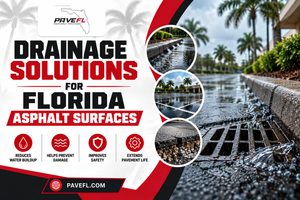
| Drainage | Helps prevent water-related problems |
| Traffic | Influences pavement requirements |
| Asphalt mixture | Determines appropriate installation conditions |
The goal is to choose a suitable weather window, not merely a convenient date.
18. How PaveFL Helps Choose the Right Paving Time
PaveFL can help property owners evaluate their paving project and consider the environmental conditions that affect installation.
This may include reviewing:
- Existing pavement condition
- Site preparation
- Drainage
- Project size
- Weather conditions
- Asphalt installation requirements
- Expected traffic
PaveFL’s own guidance emphasizes that Florida’s heat, humidity, rainfall, and seasonal conditions require paving projects to be planned around local climate conditions.
This helps property owners avoid choosing a paving date based solely on the calendar.
19. Preparing the Site Before the Paving Season
Choosing a suitable date is only part of the process.
Before paving begins, the property may need:
- Existing asphalt removal
- Base preparation
- Grading
- Drainage corrections
- Soft-spot repair
- Surface cleaning
- Edge preparation
A properly prepared site gives the asphalt a more stable foundation.
If water continues collecting beneath the pavement, simply choosing the right season will not solve the underlying drainage problem.
20. Florida Paving Requires Year-Round Maintenance
Even though asphalt can often be installed during much of the year, maintenance should not be limited to one season.
Property owners should regularly monitor:
- Cracks
- Potholes
- Standing water
- Rutting
- Surface wear
- Drainage
- Pavement edges
PaveFL notes that properly maintained asphalt can last approximately 15–20 years or more, depending on conditions and maintenance.
Regular maintenance can help property owners identify problems before they require more extensive paving work.
21. A Simple Florida Paving Season Guide
Spring
Generally favorable
Warm conditions can support paving while rainfall may be less frequent than during the peak wet season in many areas.
Summer
Possible, but weather-sensitive
Warm temperatures are favorable, but frequent thunderstorms and heavy rainfall require careful scheduling.
Fall
Often favorable
The transition toward drier conditions can provide useful paving opportunities, depending on location and temperatures.
Winter
Often possible
Florida’s mild winter climate allows paving in many areas, but occasional cooler conditions need to be considered.
22. The Most Important Rule: Watch the Conditions
There is no single month that guarantees perfect paving weather throughout Florida.
Florida is geographically large, and weather patterns differ between regions.
South Florida, Central Florida, North Florida, and the Panhandle can experience different rainfall and temperature patterns.
Therefore, the most useful approach is:
Choose the season → check the local forecast → evaluate the pavement → confirm surface conditions → schedule the work.
23. Planning an Asphalt Paving Project With PaveFL
If you are considering a new driveway, parking lot, resurfacing project, or other asphalt work, planning ahead can make scheduling easier.
PaveFL can help evaluate the pavement and determine the appropriate paving approach based on:
- Site condition
- Drainage
- Project scope
- Weather
- Traffic requirements
- Asphalt needs
Rather than waiting until pavement deterioration becomes severe, property owners can plan projects around a suitable weather window and address preparation requirements in advance.
Final Thoughts
The paving season Florida property owners should know about is not limited to one specific month. Florida’s warm climate allows asphalt paving during much of the year, with spring, summer, and early fall generally recognized as suitable periods for installation.
The main challenge is Florida’s rainfall pattern. Much of the peninsula experiences a pronounced wet season, with a substantial share of annual rainfall occurring from June through September. Summer paving is still possible, but projects may require greater flexibility because of afternoon thunderstorms and sudden rain.
Temperature also matters because asphalt must remain workable long enough for proper compaction. The Asphalt Paving Handbook explains that mixture temperature, surface temperature, wind, and other environmental factors influence the available compaction window.
PaveFL can help property owners determine when their specific paving project should be scheduled based on the property’s condition, local weather, drainage, and project requirements.
For a professional asphalt paving service Florida project, the best time is ultimately the period when the site is properly prepared, the pavement is dry, temperatures are suitable, and there is enough stable weather to complete placement and compaction correctly.
That approach is more reliable than choosing a paving date based only on the calendar.