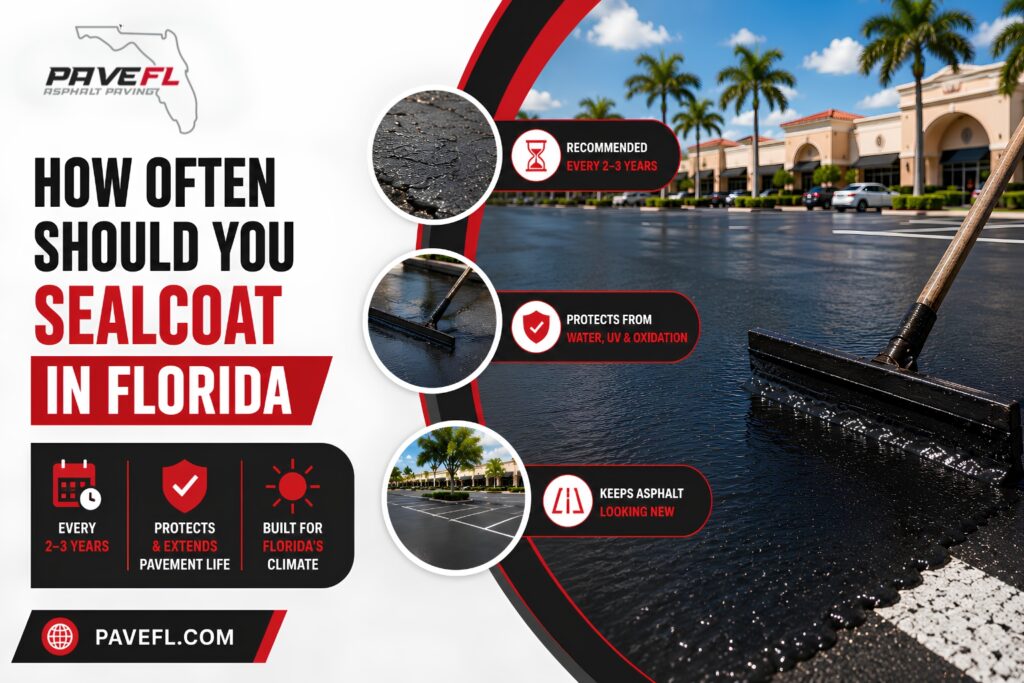
Is There a Best Time to Sealcoat Asphalt in Florida? Yes. For most residential and commercial properties, the ideal sealcoating frequency Florida property owners should follow is every 2–3 years. However, there is no one-size-fits-all schedule because factors such as traffic volume, sun exposure, rainfall, pavement age, and overall condition all influence how often asphalt should be resealed. Florida’s year-round sunshine, high humidity, frequent rainstorms, and heavy vehicle traffic accelerate asphalt aging much faster than in many other states. Regular sealcoating acts as a protective barrier against these environmental conditions, helping preserve pavement strength, appearance, and long-term durability while reducing the likelihood of cracks, potholes, and premature surface deterioration.
If you’re searching for sealcoating frequency Florida, understanding the right maintenance schedule can help you protect your investment and extend the life of your driveway or parking lot. At Pave FL, every sealcoating project begins with a professional pavement inspection to evaluate surface condition, existing damage, traffic patterns, and environmental exposure before recommending the most appropriate maintenance plan. This customized approach ensures each asphalt surface receives the protection it needs to perform well in South Florida’s demanding climate.
Why Sealcoating Is Essential in Florida
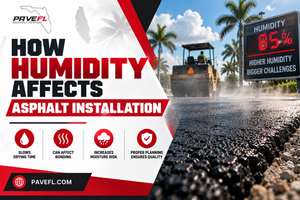
Florida presents unique challenges for asphalt pavement. Unlike northern states that experience snow and freeze-thaw cycles, South Florida’s climate exposes pavement to continuous heat, ultraviolet radiation, humidity, and heavy rainfall throughout the year.
These conditions gradually break down the asphalt binder that holds the pavement together. As oxidation increases, asphalt becomes brittle, fades from black to gray, and becomes more vulnerable to cracking and moisture intrusion.
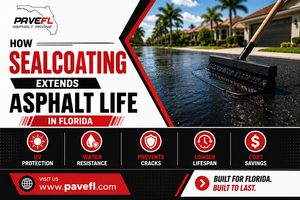
Sealcoating helps slow this natural aging process by creating a protective layer over the pavement surface.
It helps protect asphalt from:
- Intense UV rays
- Oxidation
- Heavy rainfall
- Moisture penetration
- Oil and fuel spills
- Daily vehicle traffic
- Surface weathering
- Premature fading
Pave FL explains that sealcoating is not simply a cosmetic improvement—it is one of the most important preventative maintenance services for extending asphalt life in Florida’s climate.
Recommended Sealcoating Schedule
Although every property is different, most professionals recommend the following maintenance schedule.
| Property Type | Recommended Sealcoating Frequency | Why |
|---|---|---|
| New asphalt driveway | First application after 6–12 months | Allows asphalt to cure before sealing |
| Residential driveway | Every 2–3 years | Moderate traffic and weather exposure |
| Commercial parking lot | Every 1–3 years | Higher traffic and heavier wear |
| Shopping centers | Every 1–2 years | Constant vehicle activity |
| HOA communities | Every 2–3 years | Regular preventative maintenance |
| Coastal properties | About every 2 years | Greater exposure to salt air and moisture |
These timelines should always be adjusted based on actual pavement condition rather than calendar dates alone.
Factors That Affect Sealcoating Frequency
No two asphalt surfaces age at exactly the same rate. Several conditions influence how frequently sealcoating should be performed.
1. Sun Exposure
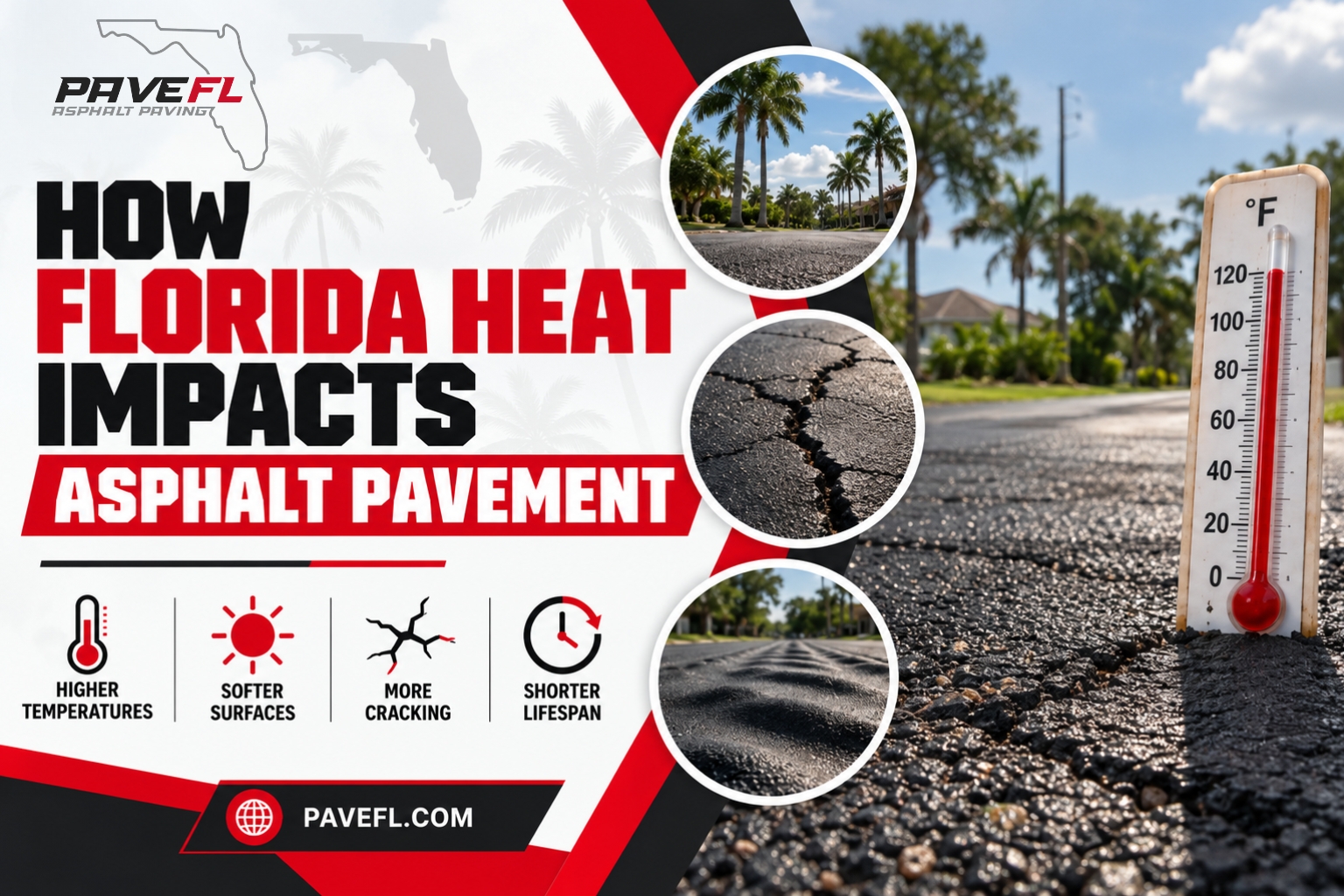
Florida receives intense sunshine throughout the year.
Ultraviolet rays gradually break down the oils within asphalt, causing oxidation.
As oxidation progresses, asphalt begins to:
- Lose flexibility
- Fade in color
- Become brittle
- Crack more easily
Properties with little shade often require more frequent sealcoating because their pavement receives continuous UV exposure.
According to Pave FL, protecting asphalt from ultraviolet damage is one of the primary reasons routine sealcoating is recommended every few years.
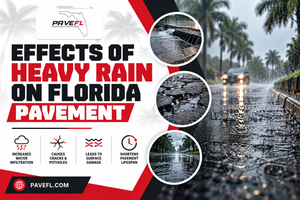
2. Heavy Rainfall and Moisture
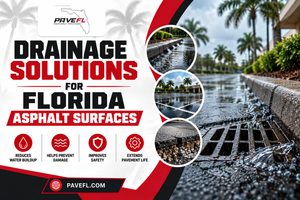
Florida experiences frequent thunderstorms, tropical systems, and extended rainy seasons.
Although asphalt is designed to resist water, small cracks eventually allow moisture to penetrate beneath the surface.
Water infiltration may cause:
- Base weakening
- Surface cracking
- Potholes
- Settlement
- Edge deterioration
Sealcoating helps create a moisture-resistant barrier that slows water penetration and protects the pavement structure.
3. Traffic Volume
Traffic has a direct impact on pavement wear.
Residential driveways usually experience moderate vehicle use.
Commercial properties often experience:
- Constant customer traffic
- Delivery vehicles
- Service trucks
- Heavy turning movements
- Daily parking activity
Higher traffic generally requires more frequent sealcoating because the protective surface wears away faster.
4. Age of the Asphalt
Asphalt naturally becomes more vulnerable as it ages.
Older pavement typically experiences:
- Greater oxidation
- Reduced flexibility
- More frequent cracking
- Increased surface wear
Routine sealcoating helps slow this aging process and can significantly extend pavement life when performed consistently.
5. Coastal Conditions
Properties located near Florida’s coastline experience additional environmental stress.
Salt air, higher humidity, and moisture exposure accelerate pavement weathering.
For coastal driveways and parking lots, contractors may recommend shorter intervals between sealcoating applications to maintain consistent protection
Signs Your Asphalt Needs Sealcoating
Rather than relying only on a schedule, property owners should also watch for visible signs that the protective coating is wearing away.
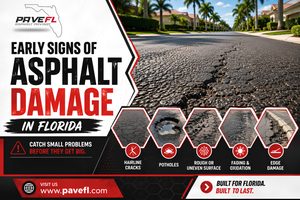
Common warning signs include:
- Pavement changes from black to gray
- Surface appears dry or rough
- Small cracks begin forming
- Water no longer beads on the surface
- Aggregate becomes more visible
- Minor raveling develops
- Asphalt loses its smooth appearance
When these symptoms appear, scheduling a professional inspection can help determine whether sealcoating is appropriate before more extensive repairs become necessary.
What Happens If You Wait Too Long?
Skipping routine sealcoating allows environmental damage to continue unchecked.
Without a protective coating, asphalt becomes increasingly vulnerable to:
- Oxidation
- Water penetration
- Surface cracking
- Potholes
- Surface raveling
- Structural deterioration
Preventative maintenance is generally much more effective than waiting until major pavement repairs become necessary.
Best Time of Year to Sealcoat in Florida
Weather conditions influence how well sealcoating cures.
Professional contractors generally look for:
- Warm temperatures
- Dry pavement
- Low chance of rain
- Favorable curing conditions
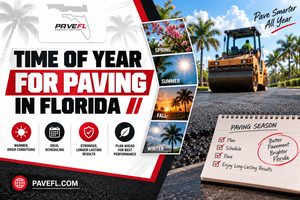
Spring, early summer, and early fall are often suitable periods for sealcoating, provided the forecast allows adequate curing time before rainfall.
Benefits of Following the Right Sealcoating Schedule
| Benefit | Long-Term Advantage |
|---|---|
| UV protection | Slower oxidation |
| Water resistance | Reduced moisture damage |
| Improved appearance | Rich black finish |
| Crack prevention | Fewer structural repairs |
| Longer pavement life | Delayed resurfacing |
| Easier maintenance | Cleaner, smoother pavement |
Following a consistent maintenance schedule helps preserve both the appearance and performance of asphalt throughout Florida’s challenging climate.
Why Professional Sealcoating Matters
Professional sealcoating provides more than simply applying a protective coating.
Experienced contractors perform:
- Pavement inspections
- Surface cleaning
- Crack repair
- Oil spot treatment
- Professional-grade sealcoat application
- Uniform coverage
- Final quality inspection
Proper preparation is essential because applying sealcoat over dirt, moisture, or unrepaired cracks can reduce its effectiveness and lifespan. Pave FL’s sealcoating process includes thorough inspection, cleaning, surface preparation, and the use of commercial-grade sealers designed for South Florida conditions.
Why Choose Pave FL?
At Pave FL, we help homeowners, businesses, HOAs, and property managers protect their asphalt investments with professional sealcoating services throughout South Florida.
Our services include:
- Asphalt sealcoating
- Driveway sealcoating
- Parking lot sealcoating
- Asphalt repair
- Crack filling
- Parking lot striping
- Asphalt resurfacing
- Preventative pavement maintenance
Every project begins with a detailed pavement evaluation so we can recommend the right sealcoating schedule based on your property’s traffic levels, weather exposure, and current pavement condition. Using premium commercial-grade sealers, professional application methods, and years of industry experience, our team delivers durable protection that helps asphalt withstand Florida’s intense sun, heavy rain, and daily traffic while maintaining a clean, attractive appearance.
Final Thoughts
Following the correct sealcoating frequency Florida schedule is one of the most effective ways to protect asphalt from Florida’s demanding climate. Regular sealcoating every 2–3 years for most properties, combined with routine inspections, crack repairs, and proper maintenance, helps preserve pavement appearance, reduce deterioration, and extend its service life.
If your driveway or parking lot is beginning to fade, develop small cracks, or lose its protective finish, Pave FL can evaluate its condition and recommend the right maintenance plan. Our experienced professionals provide high-quality sealcoating services designed specifically for South Florida, helping property owners protect their pavement investment and keep asphalt performing at its best for years to come.