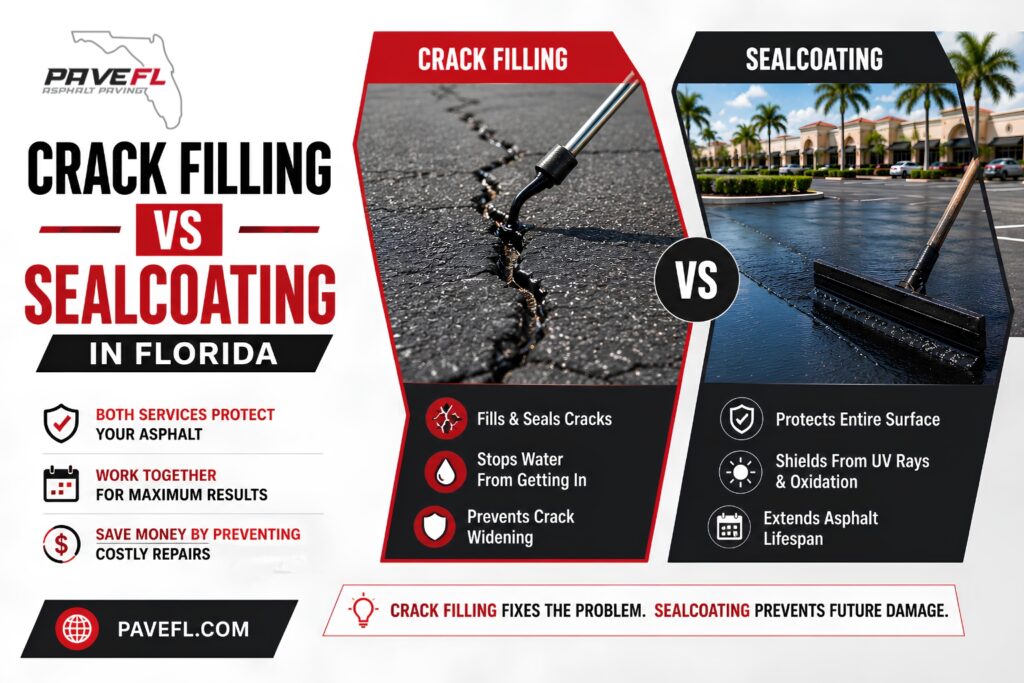
Are cracks beginning to appear in your asphalt, or has your pavement simply started to fade? Many Florida property owners assume that sealcoating alone will solve every asphalt problem, but that’s not always the case. Crack filling and sealcoating are two different maintenance services that work together to protect asphalt. Crack filling stops water from entering damaged pavement, while sealcoating shields the entire surface from UV rays, oxidation, moisture, and everyday wear. Understanding the difference between these services helps property owners choose the right maintenance strategy and extend the life of their pavement before costly repairs become necessary.
If you’re searching for crack filling Florida, it’s important to know that the best pavement maintenance plans often include both crack filling and sealcoating. At Pave FL, every asphalt maintenance project begins with a thorough inspection to evaluate the pavement’s condition, identify existing damage, and recommend the most effective treatment. By addressing cracks before applying a protective sealcoat, property owners can better preserve their driveways, parking lots, HOA roads, and commercial pavement throughout South Florida.
Understanding Asphalt Maintenance
Asphalt naturally deteriorates over time due to environmental exposure and daily traffic.
Florida pavement is constantly exposed to:
- Intense UV radiation
- Heavy seasonal rainfall
- High humidity
- Standing water
- Vehicle traffic
- Oil and fuel spills
- Heat expansion
Without routine maintenance, these conditions gradually weaken the asphalt binder, allowing cracks to form and moisture to penetrate beneath the surface.
Preventive maintenance helps slow this deterioration while extending the life of the pavement.
What Is Crack Filling?
Crack filling is a targeted repair method that seals individual cracks before they grow into larger pavement failures.
Professional crack filling helps:
- Prevent water infiltration
- Reduce crack expansion
- Protect the pavement base
- Delay pothole formation
- Extend pavement lifespan
Crack filling is considered one of the most cost-effective preventive maintenance services because it addresses problems before they become structural failures. Hot rubberized crack sealing materials are commonly used to create a flexible, waterproof seal that moves with the pavement.
What Is Sealcoating?
Sealcoating is the application of a protective coating over the entire asphalt surface.
Instead of repairing individual cracks, sealcoating protects the pavement from environmental damage.
Professional sealcoating helps resist:
- UV rays
- Oxidation
- Water penetration
- Oil stains
- Fuel spills
- Surface wear
- Daily traffic abrasion
It also restores the pavement’s rich black appearance while creating a smoother, easier-to-clean surface.
Crack Filling vs. Sealcoating
| Feature | Crack Filling | Sealcoating |
|---|---|---|
| Primary Purpose | Repair individual cracks | Protect the entire pavement surface |
| Area Treated | Specific damaged locations | Complete asphalt surface |
| Helps Prevent | Water infiltration | UV damage, oxidation, moisture |
| Restores Appearance | Limited | Yes |
| Structural Protection | Yes, for cracks | Preventive surface protection |
| Best Used | When cracks appear | After repairs are completed |
| Works Together With | Sealcoating | Crack filling |
Both services complement each other and are most effective when performed as part of a complete maintenance program.
Why Crack Filling Comes First
One of the biggest mistakes property owners make is applying sealcoating over open cracks.
Cracks should always be repaired before sealcoating because:
- Water can continue entering beneath the pavement.
- Cracks will continue expanding underneath the coating.
- The sealcoat cannot bridge large openings.
- Moisture trapped below the surface may accelerate deterioration.
- The finished appearance is greatly improved after crack repairs.
Industry guidance consistently recommends completing crack filling before applying a sealcoat to maximize protection and performance.
Why Florida Pavement Needs Both Services
Florida presents unique challenges for asphalt.
Property owners must deal with:
- Intense year-round sunshine
- Frequent heavy rainstorms
- High humidity
- Coastal salt exposure in some areas
- Heavy commercial traffic
- Rapid surface oxidation
Small cracks allow water to penetrate the pavement structure, while sunlight gradually dries and weakens the asphalt binder. Crack filling blocks moisture intrusion, and sealcoating helps shield the surface from weather and oxidation.
Together, these services provide comprehensive pavement protection.
Signs You Need Crack Filling
Professional inspections often recommend crack filling when pavement shows:
- Narrow linear cracks
- Long surface cracks
- Small edge cracks
- Isolated transverse cracks
- Early longitudinal cracking
Repairing these cracks early helps prevent more serious pavement deterioration.
Signs You Need Sealcoating
Sealcoating is usually recommended when asphalt begins showing:
- Gray or faded color
- Surface oxidation
- Dry appearance
- Minor surface wear
- Reduced water resistance
- Dull finish
Sealcoating restores appearance while protecting the asphalt from further environmental damage.
When Both Services Are Recommended
Many pavement maintenance projects require both crack filling and sealcoating.
Professional contractors often recommend this combination when pavement has:
- Minor cracking
- Surface fading
- Early oxidation
- Weather exposure
- Structurally sound asphalt
This combined approach addresses existing damage while preventing future deterioration.
Professional Maintenance Process
| Step | Purpose |
|---|---|
| Pavement Inspection | Evaluate overall condition |
| Surface Cleaning | Remove dirt and debris |
| Crack Filling | Seal existing pavement cracks |
| Surface Preparation | Prepare for sealcoating |
| Sealcoat Application | Protect entire pavement |
| Curing | Allow coating to harden |
| Final Inspection | Verify complete coverage |
Following the correct sequence helps maximize the lifespan of both repairs and protective coatings.
Benefits of Combining Crack Filling and Sealcoating
Property owners who combine both services receive several long-term advantages.
Better Moisture Protection
Filled cracks reduce water infiltration, while sealcoating protects the remaining surface from moisture.
Longer Pavement Life
Preventive maintenance slows deterioration and delays larger repair projects.
Improved Appearance
Fresh sealcoating restores a rich black finish, while repaired cracks create a cleaner, more uniform surface.
Reduced Maintenance Needs
Addressing small problems early helps minimize future repairs.
Better Property Value
Well-maintained pavement creates a positive first impression for visitors, customers, and tenants.
Common Mistakes to Avoid
Many pavement maintenance problems result from improper preparation.
Avoid:
- Sealcoating over open cracks
- Ignoring small cracks
- Waiting until severe deterioration develops
- Applying products to dirty pavement
- Choosing maintenance based only on appearance
Proper inspections help determine whether crack filling, sealcoating, or both services are appropriate.
Why Professional Maintenance Matters
Experienced contractors understand that every pavement has different maintenance needs.
Professional evaluations consider:
- Pavement age
- Crack size
- Surface condition
- Drainage
- Traffic levels
- Existing repairs
Rather than recommending a single service for every project, professionals determine the combination that will provide the greatest long-term protection.
Community discussions among paving professionals also emphasize that crack repair should be completed before sealcoating to avoid trapping untreated damage beneath the protective coating.
Why Choose Pave FL?
At Pave FL, we believe successful asphalt maintenance begins with identifying the right solution for your pavement—not simply applying a protective coating. Our experienced team carefully evaluates every driveway, parking lot, HOA roadway, and commercial property to determine whether crack filling, sealcoating, or a combination of both will provide the best long-term results.
Our professional asphalt services include:
- Crack filling
- Asphalt sealcoating
- Asphalt paving
- Asphalt resurfacing
- Parking lot paving
- Driveway paving
- Parking lot repairs
- Asphalt patching
- Line striping
- Preventive pavement maintenance
Every project starts with a comprehensive pavement inspection, followed by detailed surface preparation, professional crack repairs, and high-quality sealcoating when appropriate. Using premium materials and proven installation techniques, our team helps protect asphalt from Florida’s intense sun, heavy rainfall, humidity, traffic, and everyday wear. Whether you own a residential driveway or manage a large commercial property, Pave FL delivers reliable pavement maintenance solutions designed for South Florida’s demanding climate.
Final Thoughts
Understanding the difference between crack filling Florida and sealcoating is essential for protecting your asphalt investment. Crack filling repairs existing pavement openings and prevents water from reaching the foundation, while sealcoating shields the entire surface from UV rays, oxidation, moisture, and daily wear. Used together, these services provide a complete preventive maintenance strategy that improves appearance, extends pavement life, and helps reduce the need for major repairs.
If your driveway or parking lot is beginning to show cracks, fading, or early signs of wear, Pave FL offers professional crack filling and sealcoating services throughout South Florida. Our experienced team provides customized maintenance solutions that keep asphalt surfaces strong, attractive, and protected for years to come.