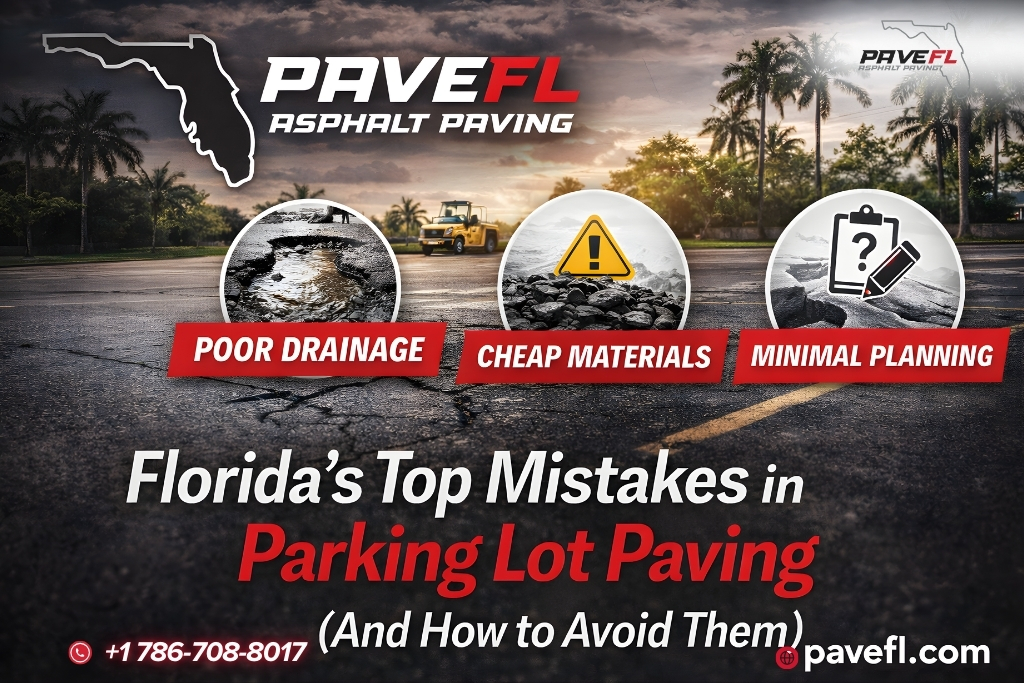
What makes parking lot paving in Florida so challenging compared to other states? Florida parking lots are exposed to some of the most demanding conditions in the country. Intense heat, heavy rainfall, high humidity, and constant traffic can rapidly deteriorate asphalt if planning or installation mistakes are made. That’s why parking lot paving Florida projects require climate-aware strategies, proper drainage design, and precise execution from the start.
Working with experienced professionals like Pave FL helps property owners avoid common pitfalls that shorten pavement lifespan, increase repair expenses, and create safety hazards. By using the right materials, preparing a stable base, and accounting for Florida’s unique environmental factors, properly designed parking lots can remain durable, safe, and visually appealing for the long term.
1. Ignoring Florida’s Climate During Planning
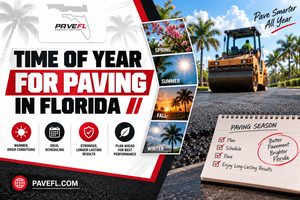
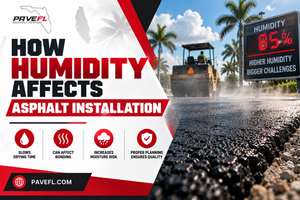
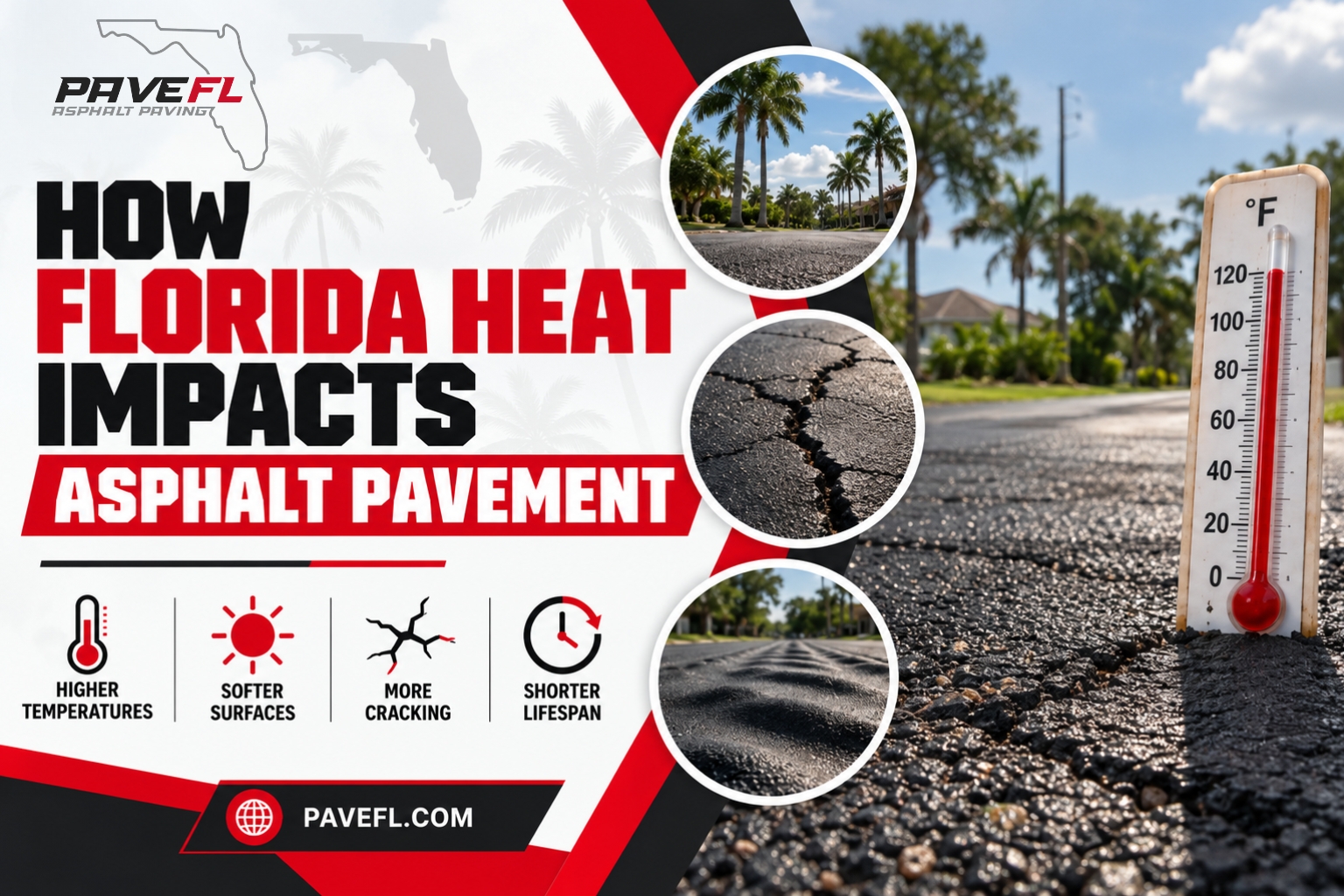
One of the most common mistakes in Florida parking lot paving is failing to account for the state’s unique climate. High temperatures soften asphalt, intense UV exposure accelerates oxidation, and frequent rainfall increases moisture intrusion into the pavement base. When paving designs don’t address these factors, asphalt deteriorates far faster than expected.
Proper planning must consider material selection, pavement thickness, drainage design, and installation timing. Using standard paving approaches designed for cooler climates often leads to premature cracking, rutting, and surface fading in Florida. Climate-aware planning ensures asphalt remains flexible, well-supported, and resistant to environmental stress.
How to avoid this mistake:
- Choose asphalt mixes suitable for high heat
- Design for heavy rainfall and runoff
- Schedule installation during optimal weather windows
2. Poor Drainage Design
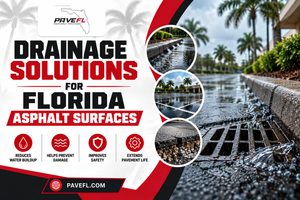
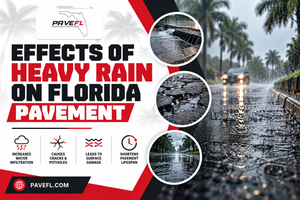
In Florida, water is asphalt’s biggest enemy. A major paving mistake is inadequate drainage planning, which allows water to pool on the surface or seep into the pavement structure. Standing water weakens the asphalt binder and saturates the base, leading to potholes, depressions, and structural failure.
Drainage problems often result from improper grading, insufficient slope, or clogged drainage systems. Once water reaches the base layer, repairs become more extensive and costly. Effective drainage design ensures water is quickly directed away from the pavement.
How to avoid this mistake:
- Ensure proper slope and grading
- Install functional drainage systems
- Maintain clear catch basins and outlets
3. Inadequate Subgrade Preparation
A strong parking lot starts from the ground up. Skipping or rushing subgrade preparation is a costly error that leads to uneven settling and premature asphalt failure. Florida soils can shift, retain moisture, or lose stability under load if not properly prepared.
Subgrade preparation includes soil testing, removing unsuitable materials, and compacting the base to meet load-bearing requirements. Without a stable foundation, even high-quality asphalt will crack and deform under traffic.
How to avoid this mistake:
- Conduct soil evaluations
- Remove weak or organic soils
- Compact base layers properly
4. Using Low-Quality Materials to Cut Costs
Attempting to save money by using inferior asphalt materials often backfires. Lower-quality mixes may lack durability, flexibility, or resistance to Florida’s heat and moisture, resulting in faster surface breakdown.
While premium materials cost more upfront, they significantly reduce long-term maintenance and repair expenses. Quality materials perform better under heavy traffic and harsh weather conditions.
How to avoid this mistake:
- Invest in climate-appropriate asphalt
- Avoid cutting corners on materials
- Focus on long-term value, not just initial cost
5. Skipping Sealcoating and Preventive Maintenance
Many property owners assume new asphalt doesn’t need maintenance for several years. In Florida, skipping early sealcoating is a major mistake. UV exposure and moisture begin damaging asphalt almost immediately after installation.
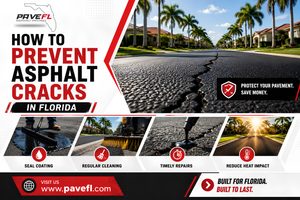
Sealcoating acts as a protective barrier, slowing oxidation and preventing water infiltration. Without it, asphalt dries out, cracks, and deteriorates rapidly.
How to avoid this mistake:
- Sealcoat within recommended timelines
- Schedule routine inspections
- Address minor issues early
6. Poor Traffic Flow and Layout Planning
Improper traffic flow design leads to congestion, uneven wear, and safety hazards. Areas with frequent turning, stopping, or heavy loads experience accelerated pavement damage.
Well-planned layouts distribute traffic evenly and reduce stress on specific sections of the lot. Clear striping and signage also help guide vehicles efficiently.
How to avoid this mistake:
- Design logical traffic patterns
- Clearly mark lanes and entrances
- Balance load distribution
7. Delaying Repairs Until Damage Worsens
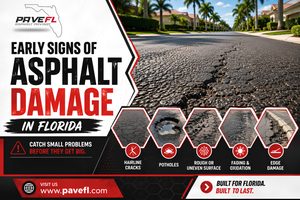
Ignoring small cracks or surface defects is one of the most expensive mistakes property owners make. In Florida’s climate, minor issues worsen quickly due to heat and moisture.
Timely crack sealing and patching prevent widespread damage and significantly reduce long-term costs.
How to avoid this mistake:
- Repair cracks as soon as they appear
- Monitor pavement condition regularly
- Act before structural damage occurs
Common Mistakes vs. Smart Solutions Table
| Common Mistake | Resulting Problem | Smart Solution |
|---|---|---|
| Poor drainage | Potholes, base erosion | Proper grading and drainage |
| Weak subgrade | Cracking, sinking | Soil prep and compaction |
| Low-quality asphalt | Rapid deterioration | Climate-appropriate materials |
| No maintenance | Short lifespan | Sealcoating and inspections |
| Delayed repairs | High costs | Early intervention |
Conclusion
Long-lasting parking lots in Florida are the result of careful planning and attention to critical construction details. Common failures often stem from inadequate drainage, unstable subgrade conditions, improper material selection, or neglecting maintenance in a harsh climate. Our team addresses these risks early to help property owners avoid premature pavement breakdown.
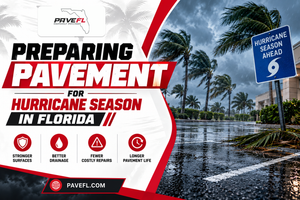
Through quality materials, disciplined installation practices, and proactive maintenance planning, Florida parking lots can withstand intense sun, heavy rainfall, and high traffic demands. With guidance from experienced professionals like Pave FL, property owners gain pavement solutions that remain safe, durable, and visually consistent for years to come.