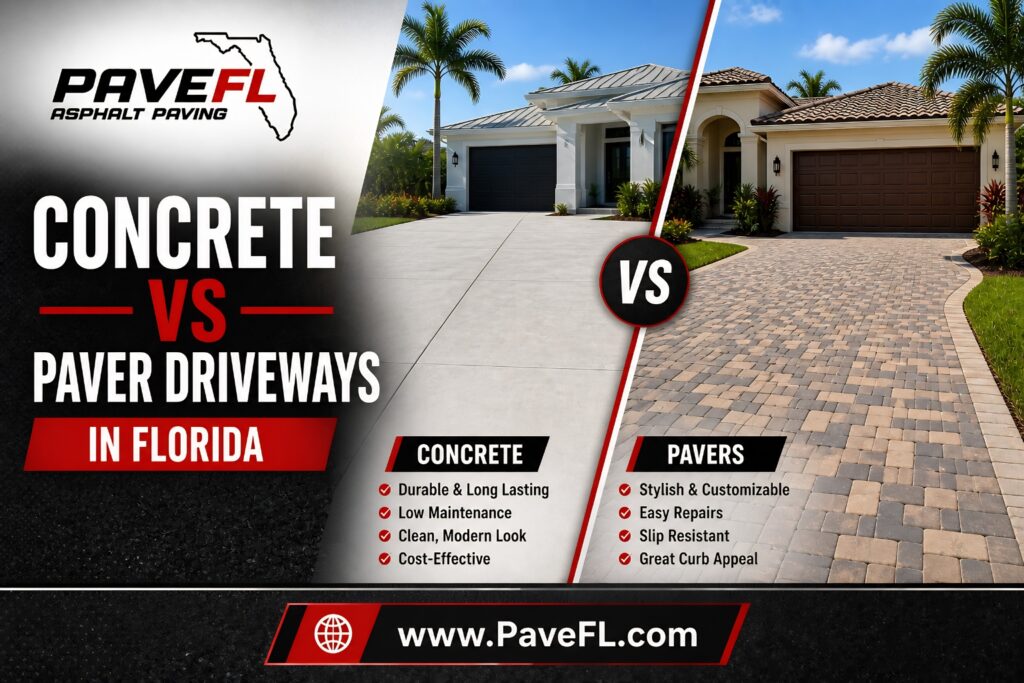
Are you deciding between a concrete or paver driveway for your Florida home? Choosing the right driveway material is especially crucial in Florida, where intense heat, heavy rainfall, high humidity, and shifting soil conditions can significantly impact long-term performance. When comparing concrete vs paver driveways in Florida, homeowners often consider factors such as durability, appearance, maintenance, heat resistance, drainage, and overall cost. Concrete driveways are known for their clean appearance, strength, and lower upfront installation costs, while paver driveways offer greater design flexibility, easier repairs, and better resistance to cracking from ground movement. Florida’s climate can be challenging for materials, particularly during periods of extreme heat, tropical storms, and heavy rainfall, which place constant stress on driveway surfaces.
Because Florida experiences frequent moisture exposure and soil movement, selecting the right driveway solution depends heavily on property conditions, budget, and long-term maintenance expectations. Concrete surfaces can develop cracks over time due to expansion, contraction, and shifting subgrade conditions, while pavers are designed to flex slightly with ground movement, reducing the visibility of damage. However, paver driveways may require more routine maintenance, such as joint sanding and weed control, to preserve their appearance and stability. Understanding the advantages and limitations of both materials helps homeowners make a more informed investment decision for long-lasting driveway performance in Florida’s demanding environment.
Why Florida Climate Matters for Driveways
Florida weather is extremely demanding on outdoor surfaces. Intense UV exposure, tropical storms, heavy rain, humidity, and shifting soil conditions constantly stress driveway materials.
Driveways in Florida must handle:
- Extreme summer heat
- Frequent rainstorms
- Moisture buildup
- Soil movement and settling
- Occasional flooding
- Mold and mildew growth
The material you choose directly affects maintenance costs, lifespan, appearance, and future repairs.
What Is a Concrete Driveway?
A concrete driveway is a solid poured slab made from cement, sand, gravel, and water. It is one of the most common driveway options because of its clean appearance and lower upfront cost.
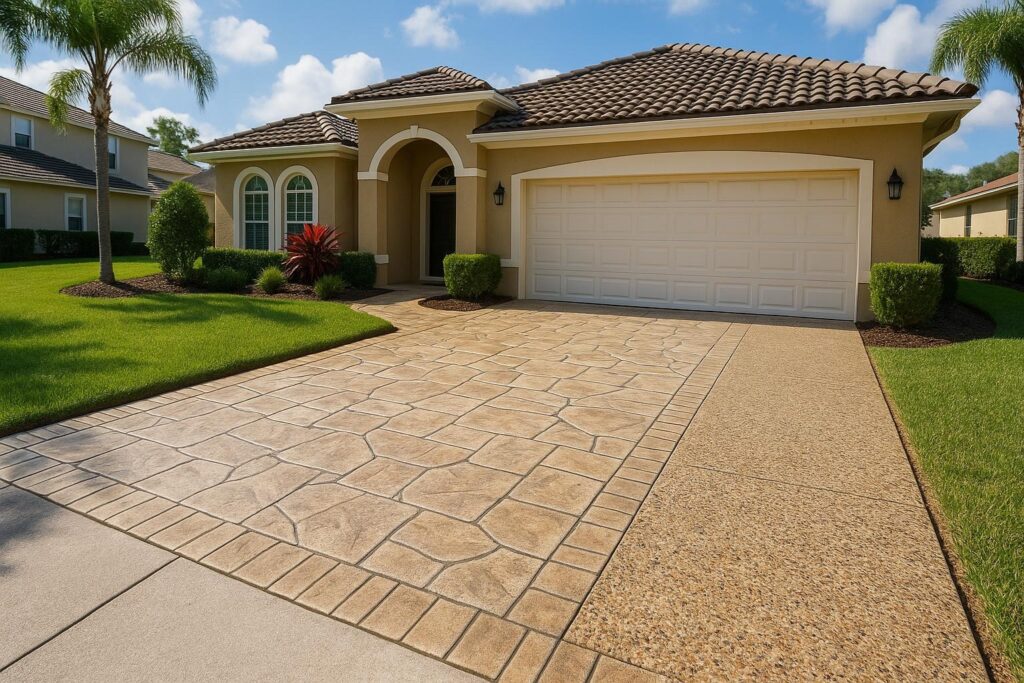
Concrete driveways can be:
- Standard gray concrete
- Stamped concrete
- Stained concrete
- Decorative textured finishes
Many homeowners choose concrete because it provides a smooth surface and requires relatively simple installation.
What Are Paver Driveways?
Paver driveways are built using individual interlocking paving stones installed over a compacted base. Unlike poured concrete, pavers are flexible systems designed to move slightly with the ground.
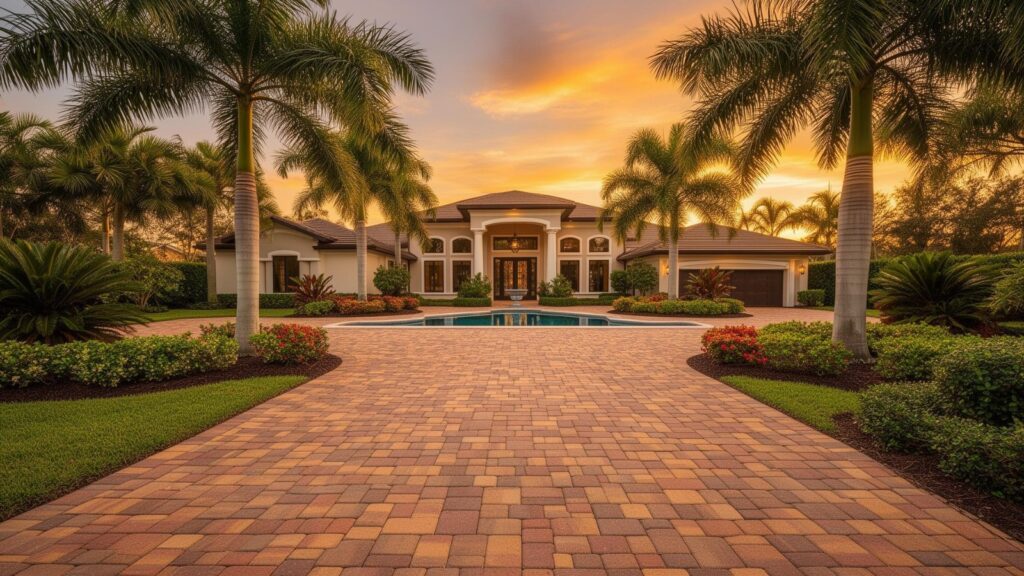
Pavers are available in:
- Concrete pavers
- Brick pavers
- Natural stone pavers
They also come in various colors, patterns, textures, and finishes, allowing greater design flexibility.
Concrete vs Pavers Florida: Durability Comparison
Durability is one of the biggest factors when comparing driveway materials in Florida.
Concrete Durability
Concrete is strong under heavy loads, but it is also rigid. Florida’s shifting sandy soil can cause slabs to crack over time. Once cracking begins, repairs are often highly visible and may continue spreading.
Common concrete issues include:
- Surface cracking
- Staining
- Fading
- Heat expansion damage
- Moisture penetration
In Florida conditions, concrete driveways typically last around 20–30 years with proper maintenance.
Paver Durability
Pavers perform differently because they are individual units rather than one solid slab. They flex with ground movement instead of resisting it, making them highly effective in Florida’s unstable soil conditions.
Benefits of paver durability include:
- Better crack resistance
- Easier repairs
- Improved drainage
- Longer lifespan
- Strong resistance to soil shifting
Well-installed paver driveways can last 30–50 years or longer in Florida.
Appearance and Curb Appeal
When it comes to aesthetics, pavers usually provide more customization options.
Concrete Appearance
Concrete offers a clean and modern look. Decorative finishes such as stamped or stained concrete can improve visual appeal, but customization remains somewhat limited compared to pavers.
Over time, concrete may fade, discolor, or develop visible cracks due to weather exposure.
Paver Appearance
Pavers offer extensive design flexibility. Homeowners can choose from numerous:
- Colors
- Shapes
- Patterns
- Textures
- Borders
- Layout styles
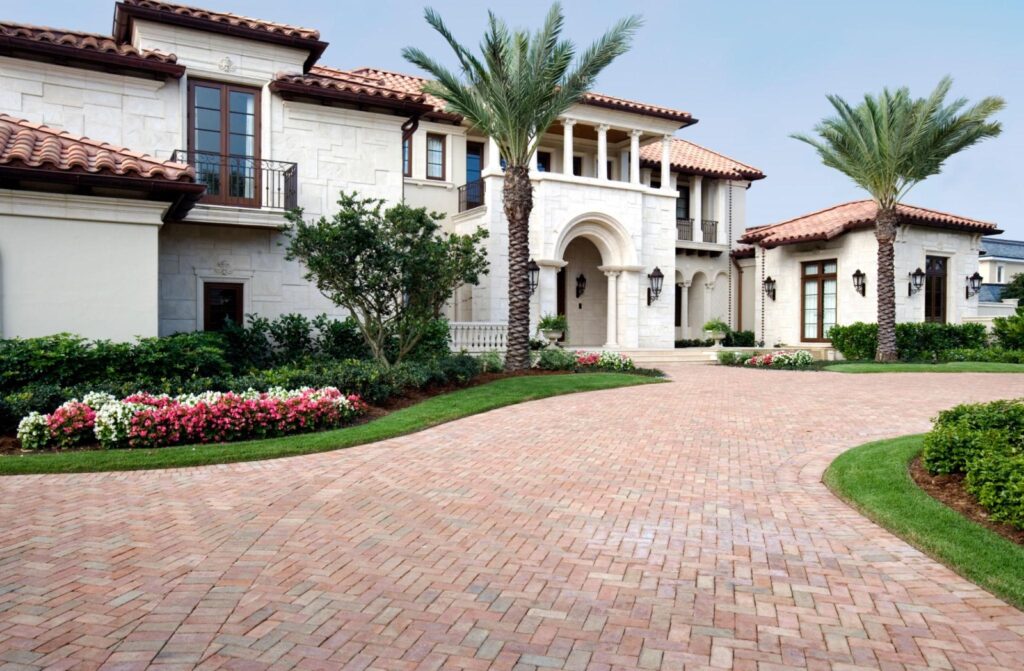
Pavers also maintain their appearance longer because individual units can be replaced without affecting the surrounding driveway.
For luxury homes in Florida, paver driveways are often preferred because they significantly enhance curb appeal and property value.
Maintenance Requirements
Maintenance is another important factor in the concrete vs pavers Florida debate.
Concrete Maintenance
Concrete typically requires:
- Sealing every few years
- Crack repair
- Pressure washing
- Stain removal
Once concrete cracks, repairs are often noticeable and difficult to blend seamlessly with the original slab.
Paver Maintenance
Pavers usually require:
- Occasional resealing
- Joint sand replacement
- Weed prevention
- Periodic cleaning
Although pavers may require slightly more routine upkeep, repairs are easier because damaged pieces can be individually replaced.
Drainage Performance in Florida
Florida receives heavy rainfall throughout much of the year, making drainage extremely important.
Concrete Drainage
Concrete is a solid surface, so water runoff depends entirely on proper slope design. Poor drainage can lead to puddling and water accumulation.
Paver Drainage
Pavers naturally allow water to move through joints between stones, improving drainage and reducing standing water issues.
This makes pavers especially beneficial in areas prone to tropical rainstorms and flooding.
Cost Comparison
One of the biggest differences between concrete and pavers is installation cost.
Concrete Driveway Cost
Concrete driveways generally cost less upfront. Standard poured concrete is often the more budget-friendly choice for homeowners focused on initial affordability.
Paver Driveway Cost
Pavers have higher installation costs because of:
- Labor-intensive installation
- Base preparation
- Material pricing
- Design complexity
However, pavers often provide better long-term value because repairs are easier and lifespan tends to be longer.
Which Driveway Option Is Better for Florida?
The best choice depends on your priorities.
Choose Concrete If You Want:
- Lower upfront cost
- Faster installation
- Simple modern appearance
- Minimal design customization
Choose Pavers If You Want:
- Better durability in Florida weather
- Higher curb appeal
- Easier long-term repairs
- Superior drainage
- Longer lifespan
- Luxury appearance
For many Florida homeowners, pavers provide stronger long-term performance because they handle soil movement and heavy rainfall more effectively.
Final Thoughts
When comparing concrete vs pavers Florida homeowners install, both materials offer advantages depending on budget, appearance goals, and maintenance expectations.
Concrete remains a practical and cost-effective option for many residential properties. However, paver driveways often outperform concrete in Florida’s demanding climate due to their flexibility, drainage capabilities, and repair advantages.
Before choosing a driveway material, homeowners should consider long-term durability, maintenance costs, and how Florida weather conditions may affect the surface over time. Working with professional paving experts in South Florida like Pave FL can help ensure the installation is properly designed for Florida’s climate and soil conditions.