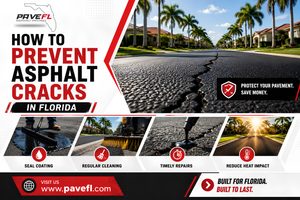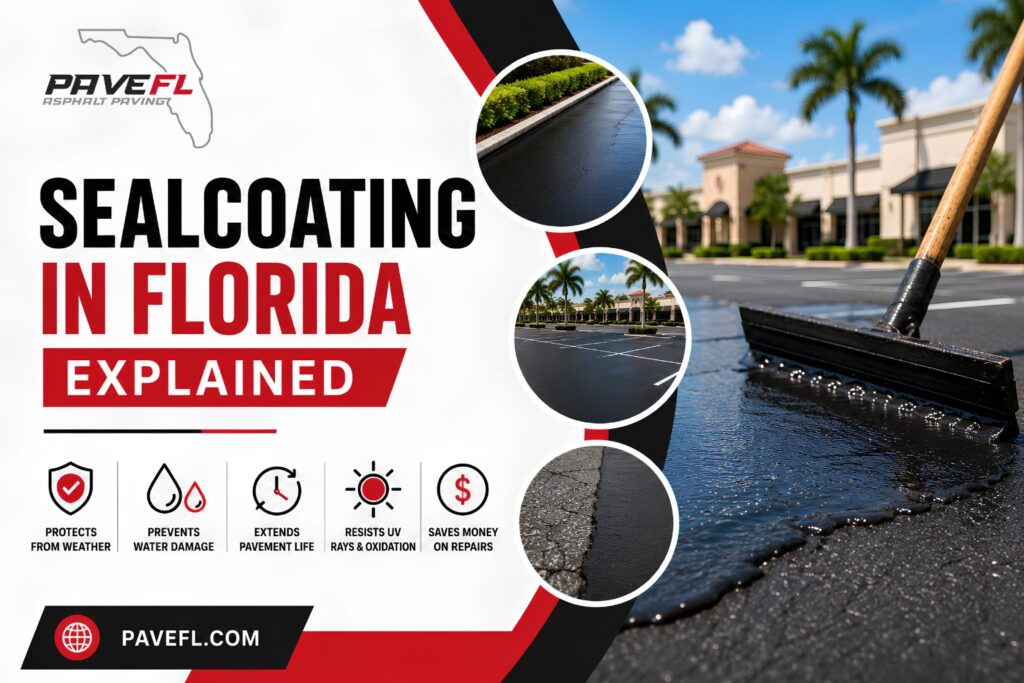
Want to keep your asphalt driveway or parking lot looking newer and lasting longer despite Florida’s harsh weather? One of the most effective ways to protect asphalt is through professional sealcoating. Florida’s intense sunlight, heavy rainfall, high humidity, and daily traffic gradually wear down asphalt surfaces, causing oxidation, fading, small cracks, and moisture damage. Sealcoating creates a protective barrier that shields the pavement from these environmental factors while restoring its rich black appearance and helping extend its service life. When performed at the right time by experienced professionals, sealcoating is an important part of a long-term pavement maintenance plan.
If you’re searching for sealcoating Florida, understanding the process helps you make better decisions about protecting your investment. At Pave FL, sealcoating is part of a complete asphalt maintenance approach that includes pavement inspections, repairs, resurfacing, line striping, and preventive maintenance for residential and commercial properties across South Florida. Every project begins with proper surface preparation to ensure the sealcoat bonds correctly and delivers long-lasting protection.
What Is Sealcoating?
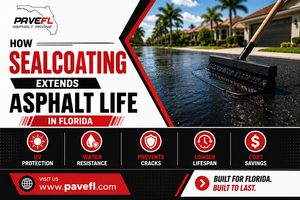
Sealcoating is the application of a protective coating over an asphalt surface.
Rather than repairing structural damage, sealcoating helps preserve asphalt by creating a protective barrier against environmental wear.
Professional sealcoating helps protect pavement from:
- UV rays
- Water penetration
- Oxidation
- Vehicle fluids
- Daily traffic wear
- Surface aging
The result is a smoother, darker, and better-protected asphalt surface that maintains its appearance and performance longer. Pave FL includes professional seal coating as part of its asphalt maintenance services to help protect pavement from water, UV exposure, and cracking.
Why Florida Asphalt Needs Sealcoating
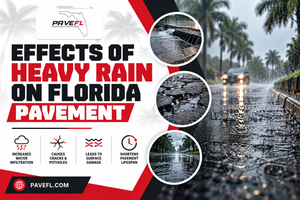
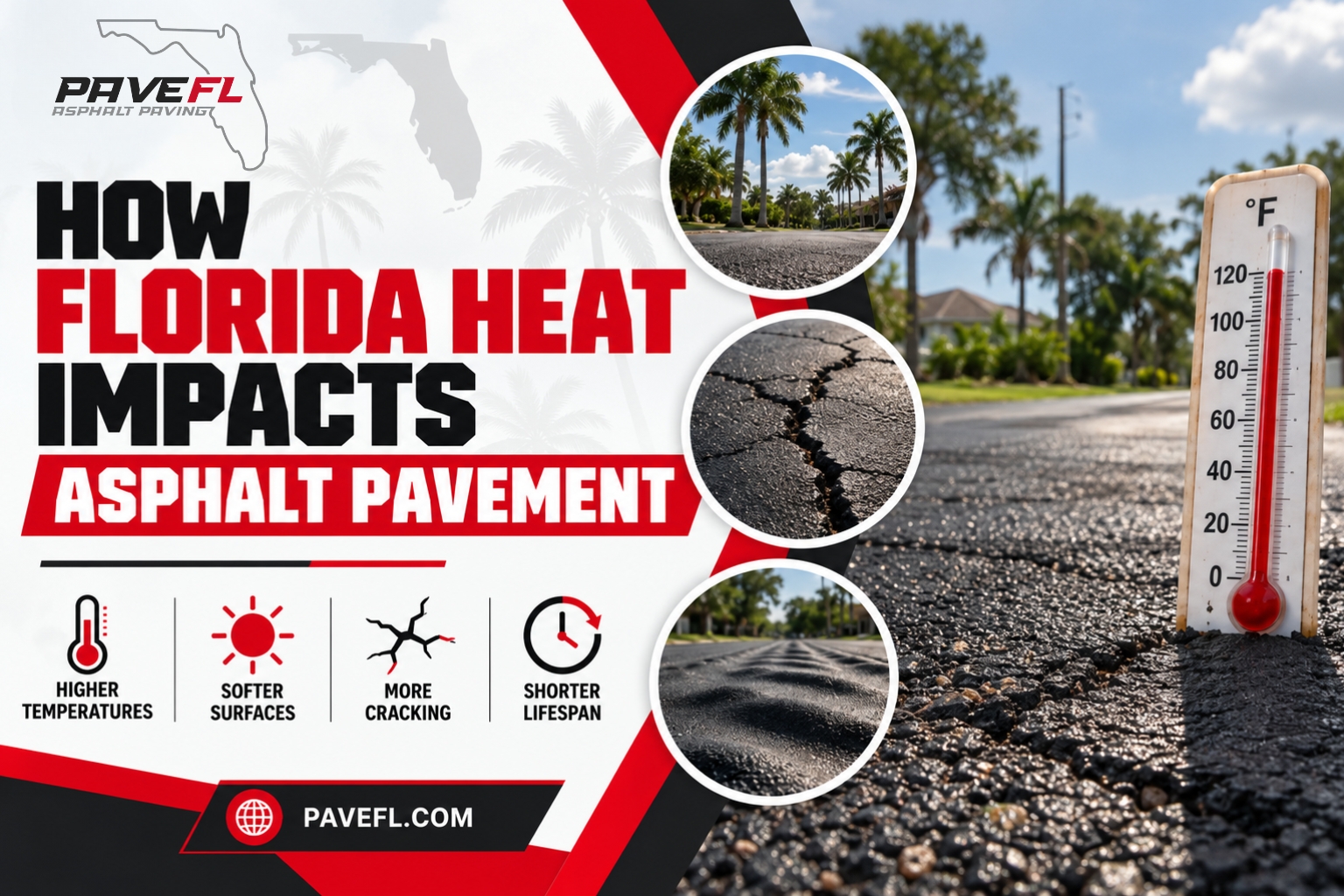
Florida’s climate is much different from many other parts of the country.
Instead of snow and ice, asphalt is constantly exposed to:
- Intense sunlight
- High temperatures
- Heavy seasonal rainfall
- Humidity
- Salt air in coastal regions
- Frequent vehicle traffic
These conditions gradually break down asphalt binders, allowing the pavement to become brittle and more vulnerable to cracking.
Professional sealcoating slows this process while improving the overall durability of the pavement.
Benefits of Sealcoating
| Benefit | Long-Term Advantage |
|---|---|
| UV Protection | Slows oxidation |
| Water Resistance | Reduces moisture penetration |
| Rich Black Finish | Improves curb appeal |
| Surface Protection | Reduces wear from traffic |
| Easier Cleaning | Dirt and debris remove more easily |
| Longer Pavement Life | Delays major repairs |
| Improved Appearance | Makes pavement look newer |
| Preventive Maintenance | Helps reduce future deterioration |
How Sealcoating Protects Asphalt
Sealcoating acts as a protective shield over the asphalt surface.
Instead of allowing the pavement to absorb moisture and sunlight directly, the protective coating absorbs much of the environmental exposure.
Sealcoating helps reduce:
- Surface fading
- Oxidation
- Minor surface wear
- Moisture penetration
- Oil and fuel staining
- Small surface cracks
Although sealcoating is not a structural repair, it plays an important role in preventive pavement maintenance.
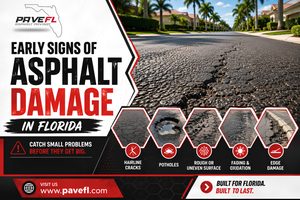
Signs Your Asphalt May Need Sealcoating
Professional inspections often identify pavement that is ready for sealcoating before major damage develops.
Common signs include:
- Faded gray appearance
- Dry-looking asphalt
- Minor surface cracks
- Rough texture
- Reduced water resistance
- Early oxidation
- Loss of rich black color
Applying sealcoating before severe deterioration develops helps preserve the pavement and delay larger repair projects.
The Professional Sealcoating Process
| Step | Purpose |
|---|---|
| Pavement Inspection | Evaluate pavement condition |
| Surface Cleaning | Remove dirt and debris |
| Crack Repair | Seal minor pavement openings |
| Oil Spot Treatment | Improve coating adhesion |
| Surface Preparation | Prepare asphalt for sealing |
| Sealcoat Application | Apply protective coating |
| Drying & Curing | Allow coating to harden |
| Final Inspection | Ensure complete coverage |
Each step contributes to better adhesion and longer-lasting results.
Step 1: Pavement Inspection
Every successful sealcoating project begins with a thorough inspection.
Professional contractors evaluate:
- Surface condition
- Existing cracks
- Drainage
- Oil stains
- Previous repairs
- Areas of heavy wear
This inspection helps determine whether sealcoating alone is appropriate or whether repairs should be completed first.
Step 2: Thorough Surface Cleaning
Proper cleaning is one of the most important parts of sealcoating.
Contractors remove:
- Dirt
- Sand
- Leaves
- Grass
- Loose aggregate
- Dust
- Surface debris
A clean surface allows the sealcoat to bond directly with the asphalt instead of sitting on contaminants.
Pave FL emphasizes proper preparation before applying protective seal coatings.
Step 3: Repairing Minor Damage
Sealcoating should not be applied over open cracks or damaged pavement.
Before sealing, contractors often perform:
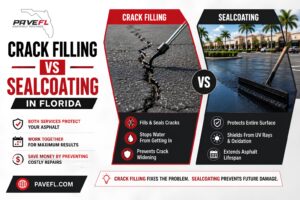
- Crack filling
- Small asphalt repairs
- Edge repairs
- Surface leveling
Repairing these issues first creates a stronger surface for the protective coating.
Step 4: Applying the Sealcoat
Once preparation is complete, the sealcoating material is applied evenly across the pavement.
Professional crews use commercial-grade equipment to achieve:
- Uniform coverage
- Consistent thickness
- Smooth finish
- Complete protection
Proper application ensures the entire asphalt surface receives consistent protection against weather and traffic.
Step 5: Curing
Fresh sealcoating requires adequate drying time.
During curing:
- Moisture evaporates
- The coating hardens
- Adhesion improves
- Surface durability develops
Traffic should remain off the pavement until the sealcoat has cured according to the contractor’s recommendations.
Common Myths About Sealcoating
Myth 1: Sealcoating Repairs Structural Damage
Sealcoating protects asphalt but does not repair severe cracking, potholes, or foundation failures.
Myth 2: New Asphalt Needs Immediate Sealcoating
Fresh asphalt should typically be allowed to cure before receiving its first sealcoat so the pavement can properly stabilize.
Myth 3: Sealcoating Is Only Cosmetic
Although sealcoating improves appearance, its primary purpose is protecting asphalt from weather, moisture, UV exposure, and oxidation.
Myth 4: Any Sealcoating Product Produces the Same Results
Professional materials, proper preparation, and experienced application make a significant difference in durability and performance.
Common Mistakes to Avoid
Many premature sealcoating failures occur because important preparation steps are skipped.
Common mistakes include:
- Applying sealcoat over dirty pavement
- Ignoring existing cracks
- Applying during poor weather
- Uneven application
- Using low-quality materials
- Opening the pavement too soon
Professional contractors follow proven procedures that help maximize the lifespan of every sealcoating application.
Why Professional Sealcoating Matters
Professional contractors understand that successful sealcoating involves much more than applying a protective coating.
Experienced crews know how to:
- Inspect pavement
- Repair minor damage
- Clean surfaces properly
- Select quality materials
- Apply consistent coverage
- Monitor curing conditions
This attention to detail produces longer-lasting protection than rushed or poorly prepared applications.
Why Choose Pave FL?
At Pave FL, we provide professional sealcoating Florida services designed to protect asphalt from South Florida’s demanding climate. Whether you own a residential driveway, commercial parking lot, shopping center, HOA roadway, or private road, our experienced team delivers customized maintenance solutions that help extend pavement life and improve curb appeal.
Our asphalt services include:
- Professional sealcoating
- Asphalt paving
- Asphalt resurfacing
- Asphalt repairs
- Parking lot paving
- Driveway paving
- Milling and resurfacing
- Line striping
- Concrete paving
- Preventive pavement maintenance
Every project begins with a detailed inspection of your pavement to determine its condition and identify any repairs that should be completed before sealcoating. We focus on proper surface preparation, quality materials, and professional application techniques to deliver long-lasting protection against Florida’s intense sun, heavy rainfall, humidity, and daily traffic. Whether your goal is preserving a residential driveway or maintaining a large commercial property, Pave FL provides reliable asphalt solutions built for South Florida.
Final Thoughts
Understanding sealcoating Florida helps property owners see why preventive maintenance is one of the best ways to protect asphalt from premature deterioration. By shielding pavement from UV rays, moisture, oxidation, and everyday traffic, sealcoating helps maintain appearance, improve durability, and extend the life of asphalt surfaces. When combined with proper inspections, crack repairs, and routine maintenance, professional sealcoating keeps driveways and parking lots performing their best year after year.
If you’re looking to preserve your asphalt investment, Pave FL offers expert sealcoating services throughout South Florida. From residential driveways to commercial parking lots, our experienced professionals provide high-quality pavement maintenance designed to protect your property, enhance curb appeal, and deliver long-term performance in Florida’s unique climate.