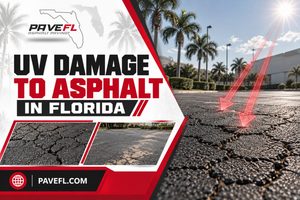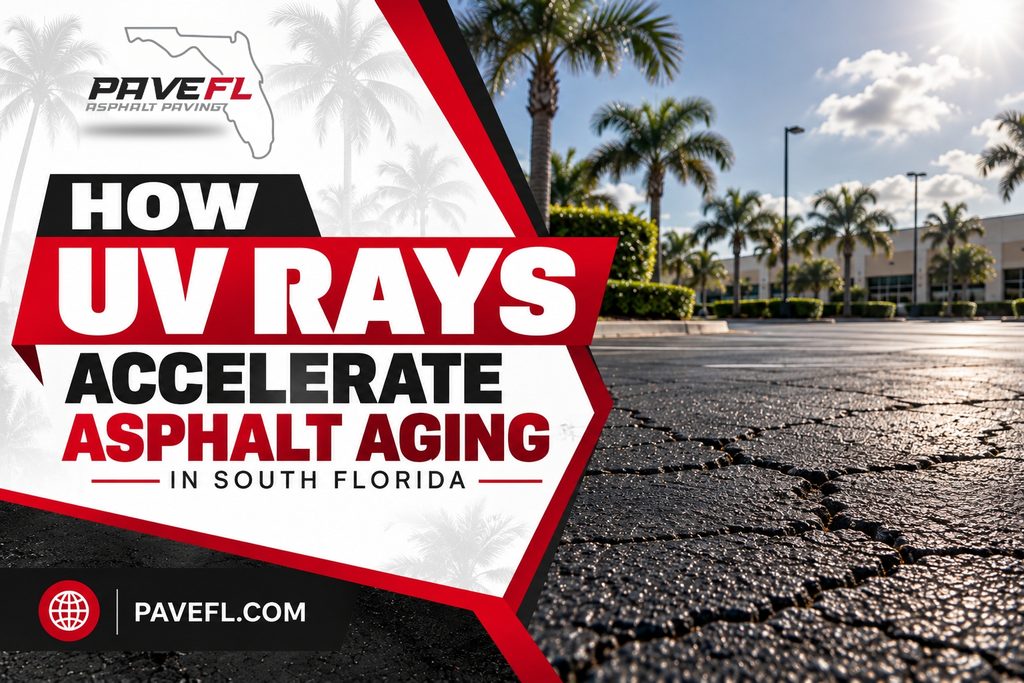
Have you noticed your once-black asphalt driveway turning gray, looking dry, or developing small cracks? These changes can be early signs of asphalt aging caused by prolonged exposure to sunlight, oxygen, and heat.
Understanding how UV rays accelerate asphalt aging in South Florida helps homeowners and commercial property managers recognize these changes before the pavement develops more serious problems.
Asphalt is designed to support regular traffic and withstand changing weather conditions. However, its protective binder gradually changes as it ages. Strong sunlight contributes to this process, while South Florida’s high temperatures and frequent rainfall can create additional challenges.
The result may be a pavement surface that becomes less flexible, more vulnerable to cracking, and harder to maintain over time.
At Pave FL, we understand the importance of protecting asphalt driveways, parking lots, and other paved surfaces in South Florida’s climate. For homeowners considering residential asphalt paving, recognizing the early signs of UV damage can help them choose appropriate maintenance before deterioration becomes more extensive.
How Do UV Rays Accelerate Asphalt Aging in South Florida?
To understand the effects of sunlight, it helps to know how asphalt pavement works.
Asphalt contains mineral aggregates held together by a binding material called asphalt binder. This binder gives the pavement cohesion and helps it withstand normal traffic and environmental stress.
Over time, the binder reacts with oxygen in a process known as oxidation. Ultraviolet radiation contributes to surface aging, while heat can accelerate certain aging reactions and affect the binder’s properties.
As the binder ages, it generally becomes harder and less flexible. The pavement may then become more susceptible to cracking, surface wear, and loose aggregate.
South Florida presents particular challenges because paved surfaces can experience strong sunlight and high temperatures throughout much of the year.
Several factors contribute to asphalt aging:
- UV radiation: Contributes to the aging of the exposed asphalt binder.
- Heat: Accelerates certain aging processes and can influence pavement performance.
- Oxygen exposure: Drives oxidation, gradually changing the binder’s properties.
- Vehicle traffic: Adds repeated stress to the aging surface.
- Rain and moisture: Can enter existing cracks and contribute to deterioration beneath the pavement.
These factors often work together rather than independently. Understanding their combined effect is essential when planning asphalt maintenance in South Florida.
What Happens to Asphalt When It Is Exposed to UV Rays?
UV-related deterioration usually develops gradually. A driveway may initially show only a slight color change before other signs of surface aging appear.
1. The Asphalt Binder Begins to Oxidize
Oxidation is a natural part of asphalt aging. When the binder reacts with oxygen, its chemical composition changes.
Sunlight and heat contribute to the aging process, particularly at the exposed pavement surface. As oxidation progresses, the binder becomes harder and loses some of its original flexibility.
This change matters because the binder helps hold the aggregate together. When it becomes more brittle, the surface may be less able to accommodate movement and everyday traffic stresses.
2. The Surface Gradually Loses Its Dark Color
Fresh asphalt typically has a dark, relatively uniform appearance. Over time, exposure to sunlight, oxygen, and traffic can make the surface look gray, faded, or dull.
Color change alone does not prove that the pavement has suffered structural damage. However, fading combined with roughness, loose aggregate, or cracking may indicate that the surface needs attention.
Property owners should look at the overall condition of the asphalt rather than judging it by color alone.
3. Asphalt Becomes More Brittle
As the binder ages, the pavement may become less flexible. This can make it more vulnerable to cracking under traffic loads and other environmental stresses.
Small cracks may develop first. If the underlying cause remains unaddressed, the cracks can widen or connect with nearby defects.
At this stage, identifying the pavement’s condition can help determine whether preventive maintenance or a more extensive repair is appropriate.
4. Surface Aggregate May Begin to Loosen
The binder helps keep the mineral aggregate in place. When the surface deteriorates, small stones may begin to loosen or break away.
This process can leave the asphalt rougher and less uniform. Loose aggregate can also indicate that the surface is experiencing wear beyond simple color fading.
A pavement assessment can help determine whether the problem is related to surface aging, material deterioration, installation issues, or another underlying cause.
Signs of UV Damage to Asphalt in Florida
Recognizing early warning signs is an important part of maintaining asphalt pavement. Although these symptoms can have multiple causes, they can help property owners identify when closer inspection is needed.
| Warning Sign | What It May Indicate | Recommended Action |
|---|---|---|
| Black asphalt gradually turns gray | Surface aging and oxidation | Inspect the overall pavement condition. |
| Surface looks dry or rough | Binder aging or general surface wear | Check for additional signs of deterioration. |
| Small cracks appear | Reduced flexibility, traffic stress, or pavement movement | Assess the cracks and determine whether treatment is appropriate. |
| Loose stones appear on the surface | Loss of surface cohesion or aggregate deterioration | Evaluate the severity before choosing maintenance. |
| Cracks continue to widen | Ongoing pavement stress or underlying movement | Investigate the cause rather than covering the cracks. |
| Potholes or depressed areas develop | More extensive surface or structural deterioration | Arrange an appropriate pavement assessment. |
Important: A faded surface does not automatically require resurfacing or replacement. The appropriate treatment depends on the pavement’s age, construction, foundation, traffic, and maintenance history.
Why South Florida’s Climate Can Speed Up Asphalt Deterioration
UV radiation is an important contributor to asphalt aging, but it is not the only environmental factor affecting pavement in South Florida.
Sunlight, heat, moisture, and traffic can interact in ways that make asphalt maintenance more challenging.
Prolonged Sun Exposure
Many driveways and parking lots remain exposed to direct sunlight for much of the day. Without suitable surface protection and regular maintenance, the exposed binder continues to age.
Properties with extensive areas of unshaded pavement may therefore show visible surface changes over time.
High Pavement Temperatures
Dark asphalt absorbs solar energy, so its surface can become considerably hotter than the surrounding air.
Heat can soften asphalt under certain conditions, especially when the pavement materials or structure are not suited to the traffic loads. Repeated vehicle loading on hot pavement may contribute to deformation, although rutting can also result from inadequate compaction, weak supporting layers, or other factors.
This is why asphalt performance should be evaluated in the context of both temperature and pavement construction.
Heavy Rainfall and Moisture
UV-related aging can become more concerning when cracks develop and allow water to enter the pavement.
Moisture may weaken susceptible supporting materials, while erosion or poor drainage can contribute to settlement and further cracking.
As a result, asphalt maintenance in South Florida should consider both surface protection and the condition of the pavement underneath.
Frequent Vehicle Traffic
Driveways, parking lots, and access roads experience different levels of vehicle stress.
Repeated turning, braking, acceleration, and heavy vehicle loads can place additional pressure on an aging surface. Traffic patterns may therefore influence where deterioration appears first.
For a more complete understanding of these environmental effects, read Pave FL’s related guide on how weather affects asphalt longevity in South Florida.
How UV Damage Develops Over Time
UV-related asphalt deterioration does not follow the same timeline on every property. Materials, traffic, drainage, installation quality, and maintenance all influence how quickly changes occur.
The following stages illustrate a common progression.
| Stage | What You May Notice | What It Means |
|---|---|---|
| Stage 1: Initial aging | Slight color fading | The exposed surface is beginning to weather. |
| Stage 2: Visible surface changes | Gray color and a dull or dry appearance | Oxidation and other forms of surface wear may be progressing. |
| Stage 3: Reduced surface integrity | Small cracks and rough texture | The pavement may be becoming more vulnerable to further deterioration. |
| Stage 4: Advanced deterioration | Loose aggregate, widening cracks, or interconnected cracking | A more detailed evaluation may be needed to determine the extent of damage. |
| Stage 5: More extensive pavement problems | Potholes, settlement, or widespread cracking | Repairs, resurfacing, or replacement may be necessary depending on the underlying condition. |
These stages are a general guide, not a fixed timetable. Some asphalt surfaces remain functional for years despite fading, while others deteriorate more quickly because of structural weaknesses or poor drainage.
The key is to identify changes early and respond according to the pavement’s actual condition.
How Can You Protect Asphalt From UV Damage?
Although property owners cannot control sunlight, suitable maintenance can help protect asphalt and address damage before it becomes more extensive.
1. Inspect the Surface Regularly
Look for fading, small cracks, rough texture, and loose aggregate. Check the pavement after periods of heavy rainfall as well, particularly where water tends to collect.
Regular inspections make it easier to compare changes over time and identify areas that need attention.
For larger paved properties, it can help to keep a simple record of inspection dates, visible defects, and completed maintenance.
2. Address Suitable Cracks Early
Cracks allow water to enter the pavement, which can increase the risk of moisture-related deterioration.
Not every crack requires the same treatment. Narrow cracks may be suitable for an appropriate crack treatment, while interconnected cracking or cracks associated with settlement may require further investigation.
Early attention helps property owners identify whether a problem is limited to the surface or linked to the underlying pavement structure.
You can read more in Pave FL’s guide to preventing asphalt cracks in Florida.
3. Keep the Pavement Clean
Remove leaves, dirt, and loose debris from asphalt surfaces. A clean surface is easier to inspect and helps make emerging defects more visible.
Cleaning alone will not reverse oxidation, but it supports routine maintenance and helps property owners notice changes before they become harder to assess.
4. Check Drainage Conditions
Water should not repeatedly collect on or beside the pavement. Persistent pooling can indicate a grading problem, blocked drainage feature, or another site-related issue.
Addressing these conditions is important because water entering damaged asphalt can worsen deterioration beneath the surface.
5. Consider Sealcoating When Appropriate
Sealcoating is a protective treatment applied to suitable existing asphalt. It helps reduce direct exposure to sunlight, moisture, and certain surface contaminants while improving the pavement’s appearance.
For suitable asphalt, sealcoating can be part of a preventive maintenance plan. However, it does not reverse advanced oxidation or repair a failed pavement foundation.
Before applying a protective coating, the surface should be assessed and any necessary repairs completed.
Pave FL provides driveway seal coating in South Florida for property owners looking to maintain suitable asphalt surfaces.
6. Schedule Maintenance Under Suitable Conditions
Protective treatments and asphalt repairs require suitable surface and weather conditions.
Rain, high humidity, and unsuitable temperatures can affect application and curing. Following the relevant preparation and curing instructions helps support a better maintenance outcome.
The right maintenance schedule should depend on the pavement’s condition rather than a fixed date alone.
Does Sealcoating Prevent UV Damage to Asphalt?
Sealcoating can help protect suitable asphalt from environmental exposure, but it is not a permanent barrier against all pavement deterioration.
A properly selected and applied coating provides a protective surface layer. This can help reduce direct exposure to UV radiation and moisture while giving the asphalt a darker, more uniform appearance.
However, sealcoating does not reverse the aging that has already occurred within the binder. It also cannot correct deep potholes, severe rutting, extensive interconnected cracks, or an unstable foundation.
Before choosing sealcoating, consider the following:
- Is the asphalt structurally sound?
- Are there cracks or potholes that require repair first?
- Does the surface show signs of widespread deterioration?
- Are drainage or grading problems contributing to the damage?
- Are weather conditions suitable for application and curing?
When the pavement remains in suitable condition, sealcoating may help preserve the surface. When deterioration is more extensive, repairs or resurfacing may be more appropriate.
To learn more, visit Pave FL’s guide on how sealcoating extends asphalt life in Florida and its article explaining how often asphalt should be sealcoated in South Florida.
When Is Asphalt Resurfacing a Better Option?
Some UV-related changes are limited to the surface. Others occur alongside structural damage, poor drainage, or deterioration of the supporting layers.
If the asphalt has faded but remains stable, a preventive maintenance treatment may be sufficient. If the surface has minor defects and the foundation remains sound, localized repairs or resurfacing may be suitable.
By contrast, extensive settlement, severe interconnected cracking, or recurring potholes can indicate a more significant problem.
Asphalt resurfacing involves placing a new asphalt layer over an existing pavement that remains structurally suitable for an overlay. It can improve surface condition and appearance, but it should not be used to cover unresolved foundation problems.
Pave FL offers asphalt resurfacing in South Florida for residential and commercial properties.
A pavement assessment can help determine whether maintenance, localized repairs, resurfacing, or replacement is the most appropriate next step.
Residential Driveways and Commercial Parking Lots: What Should Owners Watch For?
UV exposure affects both residential and commercial asphalt, but their maintenance needs may differ.
Residential Asphalt Driveways
A residential driveway may receive several hours of direct sunlight each day, alongside regular vehicle use and occasional exposure to vehicle fluids.
Homeowners should watch for fading, cracks, rough patches, loose aggregate, and water collecting near the edges.
When these changes appear, an inspection can help determine whether the driveway needs maintenance or more extensive work.
Pave FL provides residential paving in South Florida, including driveway-related paving services.
Commercial Asphalt Parking Lots
Commercial parking lots may face greater traffic demands, frequent vehicle turning, delivery activity, and localized loading.
Property managers should monitor areas near entrances, exits, turning lanes, and loading zones. These sections may experience more mechanical stress in addition to sun exposure.
Maintenance planning should account for both the surface condition and the way the pavement is used.
Regular inspections can also help property managers identify repairs that should be considered before the damage spreads across a larger area.
A Practical Asphalt Maintenance Checklist for South Florida
Use this checklist to help monitor the condition of your pavement throughout the year.
- Check for gray or faded areas that were not previously noticeable.
- Look for small cracks and changes in surface texture.
- Identify loose aggregate or sections that appear to be breaking apart.
- Check for potholes, depressions, or signs of settlement.
- Inspect drainage conditions after heavy rainfall.
- Keep records of repairs, sealcoating, and other maintenance.
- Arrange an assessment if deterioration becomes widespread or continues to return.
- Confirm that the pavement is suitable before applying any protective treatment.
This routine helps property owners focus on visible conditions and respond when further evaluation is needed.
It also helps avoid the common mistake of choosing a treatment based solely on appearance.
Frequently Asked Questions About UV Damage to Asphalt
1. How do UV rays accelerate asphalt aging in South Florida?
UV radiation contributes to the aging of the exposed asphalt binder. Together with oxygen and heat, it can accelerate oxidation, making the binder harder and less flexible. Over time, the pavement may become more vulnerable to cracking and surface deterioration.
2. Why does asphalt turn gray after years in the sun?
Fresh asphalt usually has a dark appearance. As the binder ages through oxidation and the surface experiences weathering, the pavement may become gray or dull. Fading alone does not confirm structural failure, but it can be a sign of surface aging.
3. Can UV rays cause asphalt cracks?
UV-related aging can make asphalt less flexible, increasing its susceptibility to cracking under traffic and environmental stress. However, cracks can also result from settlement, weak foundations, moisture, heavy loading, or installation problems.
4. Does sealcoating protect asphalt from UV rays?
Sealcoating can help reduce direct exposure to sunlight and moisture when applied to suitable asphalt. It supports preventive maintenance but does not reverse advanced aging or repair major structural defects.
5. How often should asphalt be sealcoated in South Florida?
There is no universal schedule for every driveway or parking lot. The appropriate timing depends on pavement age, traffic, sunlight exposure, existing coating condition, and the need for repairs. Inspect the pavement before deciding whether another application is appropriate.
6. Can faded asphalt be restored without resurfacing?
Sometimes. If the pavement remains structurally sound and the main concern is surface appearance or early aging, preventive maintenance may be sufficient. If the surface has widespread cracking, loose aggregate, or other significant defects, additional repairs may be needed.
7. When should I contact Pave FL about aging asphalt?
Consider seeking an assessment if your pavement develops recurring cracks, widespread surface deterioration, loose aggregate, potholes, or areas of settlement. The appropriate service depends on the condition of the existing asphalt.
Final Thoughts: Protect Your Asphalt From South Florida’s Intense Sun
UV exposure is a natural part of asphalt aging, but its effects can become more noticeable when strong sunlight, high temperatures, moisture, and traffic act together.
Fading, roughness, loose aggregate, and small cracks are useful warning signs. They do not always mean that pavement needs replacement, but they can indicate that an inspection or preventive maintenance may be appropriate.
The best approach is to assess the condition of the existing asphalt, address suitable cracks and other defects, and consider sealcoating or resurfacing only when the pavement is appropriate for that treatment.
At Pave FL, customer satisfaction begins with understanding your property’s needs and explaining the available paving options clearly. We aim to provide professional workmanship, responsive communication, and support throughout the process.
From discussing the condition of your pavement to planning suitable maintenance or repair work, our goal is to keep you informed at every stage. We want you to feel confident about the decisions you make and satisfied with the service you receive.
Concerned about fading, cracking, or aging asphalt? Visit Pave FL to discuss your paving needs and explore the right next step for your property.