Why Are More Florida HOAs Considering Asphalt Over Concrete? Managing a homeowners association (HOA) involves more than maintaining homes and shared outdoor spaces. Community roads, parking lots, entrances, and access lanes also need regular attention. Choosing the right paving material can make a significant difference in how these areas perform and how easily they can be maintained.
Why Florida HOAs prefer asphalt over concrete often comes down to practical considerations. Asphalt generally offers a lower initial installation cost, faster construction, and convenient repair and resurfacing options. These advantages can make it an attractive choice for residential communities that need to maintain several paved areas.
Florida’s climate adds another consideration. High temperatures, strong sunlight, frequent rainfall, and regular vehicle traffic place continuous demands on paved surfaces. HOA boards need a solution that supports everyday use while allowing manageable maintenance over time.
At Pave FL, we understand the paving requirements of residential communities across South Florida. From private roads and community entrances to parking lots and shared access areas, selecting an appropriate paving solution helps support the safety, functionality, and appearance of the entire property.
Although asphalt is a practical option for many HOA projects, concrete also has advantages in certain applications. Understanding these differences helps community managers make decisions based on their property’s actual needs.
1. Lower Initial Investment Helps HOAs Manage Community Budgets
One of the main reasons many HOAs consider asphalt paving is its relatively lower initial installation cost compared with conventional concrete in many applications.
Community associations often maintain multiple paved surfaces at the same time. These may include internal roads, visitor parking areas, entrances, shared driveways, and private access lanes.
Using a material that generally requires less initial investment can give associations more flexibility when planning improvements across the property. It can also help boards prioritize areas that need immediate attention without overlooking other maintenance responsibilities.
Budget planning should consider more than the installation itself. Preparation, pavement thickness, drainage, future maintenance, and expected traffic also influence the overall investment.
Asphalt can be an appealing option when an HOA wants a practical paved surface while keeping future maintenance planning in mind.
2. Faster Installation Can Reduce Community Disruptions
Construction activity can affect everyday life in residential communities. Residents need access to their homes, visitors need parking, and service vehicles must be able to move through the property.
Extended road closures or restricted parking can create inconvenience, especially in larger communities with interconnected streets.
Asphalt paving can offer an advantage because installation and resurfacing projects are often completed more quickly than comparable conventional concrete work, depending on project size and conditions.
For HOA communities, efficient project scheduling can help:
- Reduce the time residents need to use alternate access routes.
- Limit temporary parking restrictions.
- Maintain better access for service and delivery vehicles.
- Organize construction in manageable sections.
- Reduce unnecessary disruption to daily community activities.
Asphalt resurfacing can be especially useful when the existing pavement remains structurally sound. It may allow an HOA to improve worn roads without completely reconstructing every section.
Proper scheduling and traffic management remain important. A well-organized paving plan helps residents understand which areas are affected and when normal access can resume.
3. Asphalt Is Easier to Repair and Maintain
Maintenance is an important consideration for any HOA. Shared roads and parking areas experience continuous use, and even well-constructed pavement can develop cracks, potholes, and surface wear over time.
One advantage of asphalt is that localized problems can often be repaired without replacing the entire paved area.
Common asphalt maintenance and repair work includes:
Crack Repair: Treating suitable cracks helps reduce water entry and prevent certain surface defects from becoming more extensive.
Pothole Patching: Damaged sections can be removed and repaired to restore a smoother driving surface.
Edge Repair: Broken or unsupported pavement edges can be rebuilt where conditions allow.
Sealcoating: A suitable protective coating helps reduce exposure to sunlight, moisture, and certain surface contaminants.
Surface Resurfacing: When the existing foundation remains stable, an asphalt overlay can restore the surface without full-depth reconstruction.
These options give HOA boards several ways to manage different levels of pavement deterioration.
Pave FL provides Asphalt Repair in South Florida for residential, commercial, and HOA properties. Its repair services include pothole patching, crack repair, edge repair, and drainage-related corrections.
4. Asphalt Resurfacing Helps Extend the Usable Life of Existing Roads
Replacing every road or parking area whenever the surface begins to look worn is not always necessary.
If the existing pavement foundation remains stable, resurfacing may provide a practical alternative to complete replacement.
Asphalt resurfacing involves preparing the existing surface and installing a new asphalt layer over it. This can improve the pavement’s appearance, smoothness, and usability.
For HOA communities, resurfacing may be appropriate when internal roads show moderate surface cracks, fading, or limited deterioration but the supporting base remains in good condition.
The process may include:
- Inspecting the existing pavement.
- Identifying cracks, potholes, and damaged sections.
- Repairing areas that need attention before the overlay.
- Preparing or milling the existing surface when necessary.
- Applying a new asphalt layer.
- Compacting the pavement and completing the final surface work.
However, resurfacing is not suitable for every damaged road. Severe settlement, extensive base failure, or unresolved drainage problems may require more extensive repairs.
Pave FL specifically offers Asphalt Resurfacing in South Florida for HOAs, private communities, and commercial properties. Its services include resurfacing community roads and access lanes with attention to grading, compaction, and minimizing disruption.
5. Asphalt Works Well for Private Community Roads
Internal roads connect homes, amenities, parking facilities, and community entrances. They need to support regular vehicle movement while providing a smooth and organized driving surface.
Asphalt is commonly considered for these applications because it can be designed for different traffic conditions and maintained through localized repairs and resurfacing.
It may be suitable for:
- Private residential streets.
- Gated community roads.
- Internal neighborhood access lanes.
- Cul-de-sacs and connecting roads.
- Shared residential driveways.
- Visitor parking areas.
The pavement design should reflect the expected traffic. Roads that regularly carry garbage trucks, delivery vehicles, construction equipment, or emergency vehicles may require different structural specifications from lightly used residential streets.
Proper base preparation, pavement thickness, grading, and material selection are essential for reliable performance.
For community associations planning improvements, professional Road Paving in South Florida can help address the needs of internal roads and access routes.
6. Asphalt Handles Florida’s Climate With Proper Installation and Maintenance
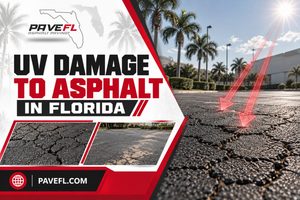
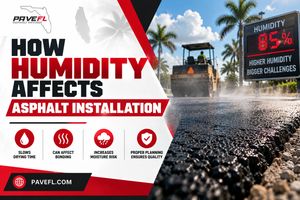
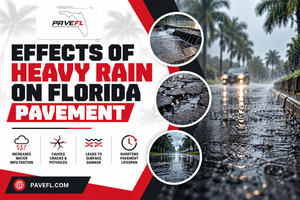
Florida’s climate presents several challenges for paved surfaces. High temperatures, ultraviolet exposure, and frequent rainfall can affect both asphalt and concrete.
Asphalt needs suitable materials and proper installation to perform well under these conditions.
When the pavement is correctly designed and maintained, it can provide a practical surface for residential roads, parking areas, and community access lanes.
However, asphalt is not maintenance-free. Extended heat exposure can contribute to aging, and high pavement temperatures combined with repeated heavy loads may increase the risk of deformation in unsuitable pavement structures.
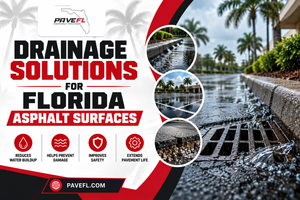
Moisture also matters. Poor drainage, standing water, and water entering existing cracks can contribute to pavement deterioration.
For HOA communities, good construction planning should include:
- Appropriate asphalt mixture selection.
- Proper base preparation and compaction.
- Suitable pavement thickness for traffic conditions.
- Effective surface grading.
- Attention to drainage and pavement edges.
- Regular inspection and timely maintenance.
These factors are more important than choosing asphalt based on climate alone.
7. A Consistent Appearance Helps Maintain Community Appeal
The condition of shared roads and parking areas contributes to the overall appearance of a residential community.
Faded pavement, scattered potholes, damaged edges, and uneven surfaces can make common areas look neglected. These issues may also affect how residents and visitors experience the property.
A properly maintained asphalt surface provides a clean, uniform appearance that works well with many residential community layouts.
Fresh asphalt can also provide a suitable surface for clearly defined parking spaces, directional markings, and traffic guidance.
For HOAs with shared parking facilities, professional Parking Lot Paving in South Florida can address resurfacing, asphalt repairs, grading, drainage correction, and pavement striping.
Maintaining clear markings and organized traffic flow helps make common parking areas easier to navigate.
Asphalt vs. Concrete: Which Is Better for Florida HOA Communities?
Both asphalt and concrete have advantages. The best choice depends on the location, intended use, expected traffic, maintenance preferences, and long-term plans of the association.
Here is a practical comparison for HOA boards and property managers.
| Comparison Factor | Asphalt Paving | Concrete Paving |
|---|---|---|
| Initial installation | Generally lower initial investment | Generally higher initial investment |
| Installation process | Often quicker for comparable projects | Requires formwork, finishing, and curing |
| Localized repairs | Patching and crack repairs are commonly available | Slab and joint repairs may be more involved |
| Resurfacing | Asphalt overlays are an established option when the base is stable | Concrete resurfacing requires suitable surface and structural conditions |
| Maintenance | Requires periodic crack treatment and surface maintenance | Requires attention to cracks, joints, and surface condition |
| Heat performance | Can soften or deform under unsuitable conditions and heavy loading | Generally offers stronger resistance to high-temperature deformation |
| Design appearance | Traditional smooth, dark pavement finish | More decorative finishes, textures, and colors |
| Common HOA applications | Internal roads, access lanes, parking lots, and shared driveways | Sidewalks, curbs, slabs, entrances, and selected heavy-use areas |
The comparison shows why asphalt can be attractive for many community roads and parking areas. Its installation and repair characteristics can make ongoing maintenance easier to organize.
However, concrete can be a better option for certain high-load applications and areas where decorative finishes or additional resistance to heat-related deformation are important.
Pave FL also provides Concrete Contractors in South Florida and Concrete Paving in South Florida for properties that need concrete solutions.
The goal is not to use one material everywhere. It is to select the material that best matches each part of the community.
Where Should Florida HOAs Consider Asphalt Paving?
Not every paved area within a residential community has the same requirements. An HOA may benefit from using different materials for different locations.
1. Internal Community Roads
Internal roads are among the most important shared paved surfaces in many HOA communities.
They support everyday residential traffic, deliveries, maintenance vehicles, and emergency access.
Asphalt can be a practical choice for these roads because it can be repaired and resurfaced when the existing pavement structure remains suitable.
2. Community Parking Lots
Guest parking areas, clubhouse parking, and shared parking spaces experience regular vehicle movement.
Asphalt paving provides a smooth surface that can be organized through clearly marked parking spaces and directional lines.
Pave FL offers parking lot paving and striping services for residential communities and HOA properties.
3. Community Entrances and Access Lanes
The entrance is often one of the first areas residents and visitors notice.
A clean and well-maintained paved entrance helps create a more organized appearance. It also provides a functional connection between the community and nearby roads.
Asphalt can be used for entrance drives, connecting lanes, and other shared access areas when the pavement design suits the traffic requirements.
4. Shared Driveways and Service Areas
Some communities have shared driveways, maintenance access routes, and service areas that experience regular vehicle use.
Choosing a suitable paving material for these spaces can help keep the property accessible and easier to maintain.
The required pavement design should account for vehicle weight, turning movements, and the condition of the supporting base.
How Can HOA Boards Plan an Effective Asphalt Maintenance Program?
Selecting asphalt is only one part of managing community pavement. Regular inspection and maintenance help associations understand when different roads or parking areas need attention.
Instead of waiting for major damage, HOA boards can use a planned inspection approach.
Step 1: Inspect Shared Roads and Parking Areas
Check internal streets, entrances, visitor parking, and access lanes for visible pavement damage.
Look for potholes, cracking, surface wear, uneven areas, and deteriorating edges.
Step 2: Identify Areas That Need Immediate Attention
Not every defect requires complete resurfacing.
Small potholes, localized cracks, and isolated damaged sections may be suitable for targeted repairs.
However, widespread cracking, settlement, and recurring pavement failures may require a more detailed assessment.
Step 3: Review Drainage Conditions
Standing water can contribute to pavement deterioration.
Inspect low areas, drainage paths, and pavement edges after rainfall. If water repeatedly collects in the same location, the cause should be investigated before additional paving work is planned.
Step 4: Prioritize Projects Based on Road Conditions
An HOA may have several streets and parking areas that need attention.
Prioritizing projects according to pavement condition, traffic use, and safety concerns helps organize maintenance more effectively.
Step 5: Develop a Long-Term Maintenance Schedule
Keep records of previous repairs, resurfacing work, and pavement inspections.
These records help board members and property managers understand how individual paved areas are performing and plan future maintenance.
Signs Your HOA Community May Need Asphalt Resurfacing
Over time, community roads and parking lots may show signs that the existing surface needs attention.
Recognizing these changes can help HOA boards arrange an assessment before the damage becomes more extensive.
| Warning Sign | What It May Indicate | Possible Solution |
|---|---|---|
| Faded or worn asphalt | Surface aging and weather exposure | Inspect and consider suitable maintenance. |
| Small surface cracks | Early pavement deterioration | Appropriate crack repair or sealing. |
| Isolated potholes | Localized pavement failure | Asphalt patching or deeper repair. |
| Widespread surface wear | More extensive surface deterioration | Evaluate resurfacing suitability. |
| Uneven or sunken pavement | Possible base or subgrade problems | Investigate the underlying cause. |
| Repeated standing water | Grading or drainage problems | Assess drainage and correct the cause. |
Resurfacing is generally suitable when the existing base remains stable. If the supporting structure has failed, more extensive reconstruction may be necessary.
Pave FL evaluates pavement conditions and provides repair, resurfacing, and replacement options based on the condition of the existing surface.
Why HOA Communities Choose Pave FL for Asphalt Paving in South Florida
Paving projects in residential communities require careful planning. HOA boards and property managers need a contractor who understands shared roads, parking areas, access requirements, and the importance of minimizing disruption.
Pave FL works with HOA communities, apartment complexes, private communities, and property management teams across South Florida.
Our services include:
- Private road resurfacing.
- Community road paving.
- Asphalt repair and pothole patching.
- Parking lot paving and resurfacing.
- Crack repair and edge repair.
- Grading and drainage-related pavement corrections.
- Parking lot striping and pavement markings.
We evaluate pavement conditions, explain suitable paving options, and consider factors such as grading, compaction, traffic, and existing surface conditions.
For a community that needs to maintain multiple paved areas, understanding the condition of each section helps determine the appropriate scope of work.
You can explore Pave FL’s Asphalt Resurfacing, Asphalt Repair, and Parking Lot Paving services to learn more about the available solutions.
Frequently Asked Questions About Asphalt Paving for Florida HOAs
1. Why do many Florida HOAs prefer asphalt over concrete?
Many HOAs consider asphalt because it generally has a lower initial installation cost, can be installed relatively quickly, and offers practical repair and resurfacing options. These benefits can be useful for communities that maintain private roads, parking lots, and shared access areas.
2. Is asphalt suitable for private community roads in Florida?
Yes. Asphalt is commonly used for private residential roads and community access lanes. Its suitability depends on traffic volume, vehicle loads, foundation conditions, pavement thickness, and proper installation.
3. Does asphalt require more maintenance than concrete?
Asphalt generally requires periodic crack treatment, surface maintenance, and sometimes sealcoating. Concrete has different maintenance requirements, including attention to joints and cracks. The actual maintenance needs depend on installation quality, traffic, weather exposure, and pavement condition.
4. Can an HOA resurface its existing asphalt roads instead of replacing them?
Yes, when the existing pavement base remains structurally sound. Resurfacing can restore the surface without complete reconstruction. However, major settlement, severe structural damage, or unresolved drainage issues may require more extensive repairs.
5. How long can asphalt roads last in an HOA community?
Pave FL’s FAQ states that properly maintained asphalt surfaces can last 15–20 years or more. Actual pavement life depends on construction quality, traffic, climate, drainage, and maintenance practices.
6. Is concrete a better option for heavy-use community areas?
Concrete can be a suitable choice for selected locations that experience heavy loads or need specific finishes. Loading areas, certain service zones, and decorative surfaces may benefit from concrete. Material selection should reflect the intended use of each area.
7. Can paving work be completed without disrupting the entire community?
Project scheduling and phased construction can help reduce disruption. Depending on the layout and scope, work may be organized in separate road sections or parking areas so that other parts of the community can remain accessible.
8. Does Pave FL provide asphalt paving for HOA communities in South Florida?
Yes. Pave FL provides asphalt repair, private road resurfacing, and parking lot paving services for HOA communities, apartment complexes, and other residential and commercial properties across South Florida.
Final Thoughts: Choosing the Right Paving Solution for Your Florida HOA
Why Florida HOAs prefer asphalt over concrete comes down to practical considerations such as installation, maintenance, repair flexibility, and the needs of shared community spaces.
Asphalt can be an effective option for private roads, parking lots, entrances, and access lanes where manageable maintenance and efficient pavement restoration are important.
Concrete also has a valuable role in community improvements, especially where heavy loads, specific surface requirements, or decorative finishes are priorities.
For HOA boards and property managers, the best decision starts with understanding how each paved area is used and what condition it is currently in.
At Pave FL, customer satisfaction begins with understanding each community’s requirements and providing clear guidance throughout the paving process. We focus on careful planning, professional workmanship, responsive communication, and paving solutions suited to the property’s needs.
From the initial discussion and pavement evaluation to project planning, installation, and follow-up support, our goal is to keep HOA boards and property managers informed at every stage. We want every customer to feel confident in the decisions being made and satisfied with the quality of service received.
Planning asphalt repairs, road resurfacing, or parking lot improvements for your Florida HOA community? Visit Pave FL to discuss your project and explore the right paving solution for your property.