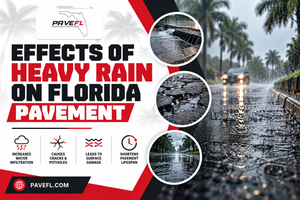
How Should Florida Property Owners Prepare Pavement for Hurricane Season? Hurricane season can expose Florida pavement to several stresses at the same time. Heavy rainfall, flooding, strong winds, storm-driven debris, and prolonged moisture can all affect asphalt surfaces and the layers supporting them.
The Atlantic hurricane season officially runs from June 1 through November 30, making preparation before major storms an important part of property maintenance.
For asphalt pavement, preparation should focus on the areas most likely to become vulnerable during severe weather: drainage, cracks, potholes, pavement edges, low spots, weak areas, and existing structural damage.
A pavement surface that already has defects before a storm may be less prepared to handle heavy rainfall and flooding. Water can enter through cracks and damaged areas, while prolonged saturation can weaken supporting materials.
PaveFL can help property owners inspect existing pavement and address appropriate maintenance or paving needs before hurricane conditions arrive.
1. Start With a Complete Pavement Inspection
The first step in hurricane preparation is understanding the current condition of the pavement.
A surface that looks acceptable from a distance may still have small cracks, depressions, drainage problems, or weakened areas.
Before hurricane season, inspect the pavement for:
- Cracks
- Potholes
- Depressions
- Rutting
- Loose asphalt
- Failed patches
- Damaged edges
- Standing-water areas
- Signs of settlement
- Drainage problems
Early identification gives property owners an opportunity to address manageable problems before severe weather places additional stress on the pavement.
PaveFL’s Florida pavement guidance similarly recommends watching for early signs such as cracking, uneven surfaces, loose aggregate, and standing water.
2. Check Drainage Before Hurricane Season
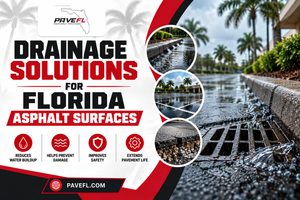
Drainage should be one of the highest priorities when preparing pavement for a hurricane.
A major storm can deliver a large amount of rain in a relatively short period. If drainage paths are blocked or inadequate, water can accumulate on and around the pavement.
Before hurricane season, check:
- Drainage inlets
- Swales
- Ditches
- Gutters
- Culverts
- Drainage channels
- Low areas
- Areas around pavement edges
Drainage areas should be kept clear so water can move away from the pavement as efficiently as possible.
Guidance on hurricane preparation also emphasizes cleaning drainage areas and addressing locations prone to flooding before the peak of hurricane season.
3. Look for Standing Water After Rain
One of the simplest ways to identify a drainage problem is to observe the pavement after rainfall.
If water repeatedly remains in the same location, there may be an issue with:
- Grading
- Pavement slope
- Settlement
- Drainage capacity
- Surface depressions
- Blocked drainage
Standing water should not simply be treated as a cosmetic issue.
Repeated moisture exposure can increase the risk of water entering cracks and reaching the pavement’s supporting layers. PaveFL’s Florida drainage guidance highlights standing water and poor drainage as contributors to pavement deterioration.
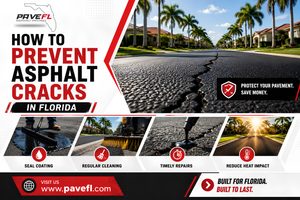
4. Repair Appropriate Cracks Before Storms Arrive
Cracks create potential entry points for rainwater.
If a pavement surface already has open cracks before hurricane season, heavy rainfall can provide repeated opportunities for water to move deeper into the pavement.
Property owners should inspect for:
Long cracks
These can develop along or across the pavement surface.
Interconnected cracks
Multiple cracks can indicate more advanced deterioration.
Cracks near edges
These may be particularly vulnerable to water movement.
Cracks around repaired areas
Previous repairs can sometimes become weak points if they deteriorate.
The appropriate treatment depends on the type, size, and cause of the cracking.
PaveFL recommends addressing suitable cracks early because water infiltration can contribute to deterioration beneath the surface.
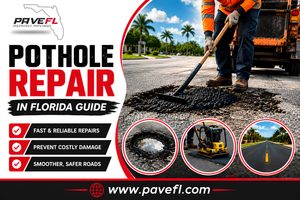
5. Repair Potholes Before Heavy Storms
Potholes are already areas of pavement failure.
If they remain unrepaired before a major storm, additional rainfall and traffic can contribute to further deterioration.
A pothole may also allow water to collect directly inside the damaged area.
Before hurricane season, inspect:
- Driveways
- Parking lots
- Entrance lanes
- Loading areas
- Private roads
- Frequently traveled sections
Small localized problems may require localized repair, while widespread potholes may indicate a deeper pavement problem.
PaveFL can evaluate the condition of damaged pavement and help determine whether localized repair, resurfacing, or more extensive paving work is appropriate.
6. Protect Vulnerable Pavement Edges
Pavement edges deserve special attention before a hurricane.
Heavy rainfall can create strong runoff, while flooding can affect soil surrounding the pavement.
If the soil supporting the edge becomes eroded or displaced, the pavement may lose some of its lateral support.
Look for:
- Crumbling edges
- Gaps between asphalt and surrounding soil
- Exposed base material
- Soil erosion
- Edge cracking
- Areas where water flows directly beside the pavement
Addressing weak edges before severe weather can help reduce avoidable damage.
7. Inspect Low Areas and Depressions
Low spots are natural locations for water to collect.
Before hurricane season, identify any area where the pavement appears lower than the surrounding surface.
These areas may be caused by:
- Settlement
- Previous pavement failure
- Poor grading
- Base movement
- Drainage problems
If a depression repeatedly collects water, simply removing the water after a storm may not solve the underlying problem.
The pavement and drainage conditions should be evaluated together.
8. Check Existing Drainage Paths for Obstructions
A drainage system can only work effectively when water has a clear path to move.
Before a major storm, inspect drainage paths for:
- Leaves
- Branches
- Sediment
- Dirt
- Trash
- Vegetation
- Other debris
Keeping drainage areas clear is a simple but important part of storm preparation.
Hurricane-preparation guidance specifically recommends maintaining drainage areas and cleaning culverts and ditches before peak hurricane activity.
9. Pay Attention to Pavement Around Buildings
Water can move toward buildings, garages, walls, and other structures during heavy rainfall.
Property owners should observe whether pavement slopes water toward or away from important structures.
Potential warning signs include:
- Water collecting near entrances
- Drainage flowing toward buildings
- Persistent moisture beside foundations
- Low pavement around garage entrances
- Erosion along building-side pavement
Proper grading and drainage can help direct water toward appropriate outlets.
10. Check Parking Lots Before Hurricane Season
Commercial parking lots can present additional challenges because they contain large paved areas that collect substantial runoff.
Before hurricane season, property managers should inspect:
- Parking spaces
- Drive lanes
- Entrances
- Loading zones
- Drainage inlets
- Pavement edges
- Low areas
- Wheel paths
Heavy traffic can also make existing pavement weaknesses more significant.
A parking lot with cracks, potholes, and drainage problems may require attention before the next major storm.
11. Prepare Driveways for Heavy Rainfall
Residential driveways also need hurricane preparation.
Homeowners should check:
- Cracks
- Potholes
- Drainage
- Edge condition
- Low spots
- Settlement
- Water pooling
A driveway does not need to be perfect to withstand rainfall, but existing problems should be identified and addressed according to their severity.
PaveFL provides driveway-related pavement services designed around Florida’s challenging climate and weather conditions.
12. Consider Existing Pavement Age
Older asphalt may have accumulated years of:
- UV exposure
- Heat
- Rainfall
- Traffic
- Surface oxidation
- Cracking
- Previous repairs
Age alone does not mean pavement needs replacement.
Instead, the property’s current condition should be evaluated.
An older but well-maintained pavement may perform better than newer pavement with poor drainage or structural problems.
13. Look for Loose Asphalt and Raveling
Raveling occurs when aggregate particles begin loosening from the pavement surface.
Signs can include:
- Rough texture
- Loose stones
- Small pieces of asphalt collecting near edges
- Increasing surface roughness
- Areas that appear to be breaking apart
PaveFL identifies loose aggregate and rough texture as early warning signs that Florida property owners should monitor.
If raveling is already significant, a hurricane can add rainfall and traffic stress to an already deteriorating surface.
14. Address Failed Repairs Before Hurricane Season
Previous patches and repairs should also be inspected.
A repair that is breaking apart may become another point where water can enter.
Look for:
- Crumbling patch edges
- Cracks around patches
- Depressions
- Loose material
- Water collecting around repaired areas
Repeated failure in the same location may indicate that the underlying problem has not been fully addressed.
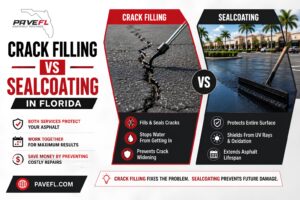
15. Do Not Rely on Sealcoating to Fix Structural Problems
Sealcoating can be useful as a preventive surface treatment for suitable asphalt.
However, it should not be considered a solution for major pavement failure.
Sealcoating does not correct:
- Deep potholes
- Major settlement
- Structural cracking
- Failed base material
- Severe rutting
- Major drainage problems
PaveFL explains that major pavement defects should be repaired before applying sealcoating and that sealcoating cannot replace proper drainage.
The condition of the pavement should therefore be evaluated before selecting a surface treatment.
16. Prepare for Flooding, Not Just Rain
Hurricanes can create conditions that are more severe than ordinary rainfall.
Flooding can saturate pavement layers and surrounding soil for extended periods.
It can also contribute to:
- Base erosion
- Edge washout
- Settlement
- Surface cracking
- Displaced materials
- Drainage failure
Research on Florida flooding and pavement performance indicates that flooding can substantially affect pavement-layer strength and performance.
This makes flood-prone areas particularly important to inspect before hurricane season.
17. Watch for Soil Erosion Around Asphalt
Heavy stormwater can move soil around pavement.
This is particularly important where asphalt borders:
- Lawns
- Slopes
- Drainage channels
- Open ground
- Landscaped areas
If soil disappears from beside the pavement, the asphalt edge may lose support.
Before hurricane season, inspect the pavement perimeter for signs of erosion and address drainage paths that repeatedly concentrate water along the edge.
18. Remove Loose Objects From Around Pavement
Hurricane preparation is not limited to the asphalt itself.
Strong winds can move loose objects, branches, debris, and other materials across paved surfaces.
Before a storm, property owners should secure or remove items that could potentially damage pavement or block drainage.
Pay particular attention to:
- Loose landscaping materials
- Branches
- Outdoor equipment
- Unsecured objects
- Debris near drains
Keeping drainage areas clear is especially important because storm debris can interfere with water movement.
19. Create a Pre-Hurricane Pavement Checklist
A simple checklist can make preparation easier.
| Area to Check | What to Look For | Recommended Action |
|---|---|---|
| Asphalt surface | Cracks and deterioration | Evaluate and repair as appropriate |
| Potholes | New or expanding holes | Address before storms |
| Drainage | Blockages or poor flow | Clear and evaluate |
| Low spots | Standing water | Investigate grading or settlement |
| Pavement edges | Erosion or crumbling | Address weak areas |
| Parking areas | Rutting and surface damage | Evaluate high-traffic sections |
| Driveways | Cracks and depressions | Schedule needed maintenance |
| Drainage channels | Debris and sediment | Keep clear |
| Surrounding soil | Erosion | Correct water-flow problems |
| Previous repairs | Failed patches | Reassess recurring defects |
20. What Should You Do Immediately Before a Major Storm?
Once a hurricane or tropical system is approaching, pavement work should not be rushed simply because a storm is coming.
Instead, property owners should focus on practical preparation that can be safely completed before severe weather.
Check drainage
Make sure known drainage paths are not obstructed.
Remove debris
Keep pavement and drainage areas clear.
Inspect existing damage
Know where potholes, cracks, and weak areas are located.
Secure loose property items
Reduce the possibility of wind-driven debris.
Avoid unnecessary last-minute paving
Weather conditions need to be suitable for asphalt installation and maintenance.
PaveFL’s paving guidance emphasizes monitoring weather and stopping paving operations when rain interferes with appropriate installation conditions.
21. What Should You Check After a Hurricane?
A post-storm inspection is just as important as preparation.
Once conditions are safe, inspect the pavement for new damage.
Look for:
- New potholes
- Expanded cracks
- Standing water
- Edge washouts
- Soil erosion
- Depressions
- Loose asphalt
- Damaged drainage
- Areas affected by flooding
- New settlement
A storm may expose problems that were not visible before the event.
22. When Should You Call PaveFL After a Storm?
Professional evaluation can be useful when you notice:
- Major pavement cracking
- New or expanding potholes
- Washed-out pavement edges
- Significant settlement
- Persistent standing water
- Repeated drainage failure
- Areas that became unstable after flooding
- Damage that keeps returning after repair
PaveFL can assess the pavement condition and help determine whether the property needs localized repairs, resurfacing, drainage-related work, or new asphalt.
23. How PaveFL Can Help Prepare Your Pavement
PaveFL can help Florida property owners prepare pavement before hurricane season by focusing on the conditions that can make storm-related deterioration worse.
Depending on the pavement’s condition, preparation may involve:
- Asphalt repair
- Crack treatment
- Pothole repair
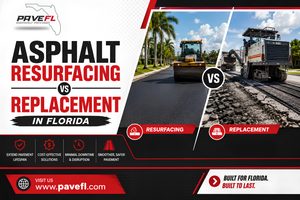
- Resurfacing
- New asphalt installation
- Drainage improvements
- Preventive pavement maintenance
The correct approach depends on the property’s existing pavement and drainage conditions.
For example, a property with minor surface cracking may need maintenance, while a property with widespread settlement and poor drainage may require a more comprehensive solution.
The goal is to address existing weaknesses before heavy rain and flooding place additional stress on the pavement.
24. Why Early Preparation Is Better Than Waiting for a Storm
Hurricane preparation should begin before a storm is approaching.
Waiting until the last minute can make it harder to address:
- Drainage problems
- Cracks
- Potholes
- Structural damage
- Pavement edges
- Flood-prone areas
More importantly, pavement work requires appropriate weather and site conditions.
Planning ahead gives property owners more time to identify problems and choose an appropriate solution.
25. Hurricane Preparation Should Include Drainage and Pavement Together
One of the biggest mistakes property owners can make is treating drainage and asphalt as completely separate issues.
Consider a parking lot with a large crack.
Repairing the crack may help reduce water entry.
But if the same parking lot has a blocked drainage inlet, heavy rainfall may still collect across the pavement.
Likewise, clearing a drain will not repair severely deteriorated asphalt.
A better approach is to evaluate:
Surface + drainage + foundation + traffic + surrounding soil
Together, these factors provide a clearer picture of how the pavement is likely to respond to severe weather.
26. Preparing New Asphalt for Florida Hurricane Conditions
If you are planning a new paving project before hurricane season, storm preparation should begin during the design and installation process.
Important considerations include:
Proper grading
The pavement should have suitable slopes that help direct water toward appropriate drainage locations.
Strong pavement foundation
The supporting layers should be properly prepared and compacted.
Appropriate asphalt structure
Pavement thickness and materials should reflect expected traffic and site conditions.
Effective drainage
Water should have a reliable path away from the pavement.
Quality installation
Proper preparation, placement, and compaction can influence long-term pavement performance.
PaveFL’s Florida paving guidance emphasizes site assessment, base preparation, grading, drainage, and weather-aware scheduling as important components of successful paving.
27. How Weather and Pavement Work Together During Hurricane Season
Florida pavement can experience several stresses simultaneously:
Heat → asphalt aging
Heavy rain → moisture infiltration
Flooding → foundation saturation
Traffic → repeated loading
Wind and debris → surface impacts
The combination can be much more significant than any individual factor.
That is why hurricane preparation should not focus only on cleaning the property after a storm. Existing pavement weaknesses should be addressed before severe weather arrives.
28. Simple Hurricane-Season Pavement Maintenance Schedule
A practical schedule can make pavement preparation easier.
Before hurricane season
Inspect the entire pavement and identify drainage problems, cracks, potholes, and weak areas.
Several weeks before peak storm activity
Complete appropriate repairs and maintenance where conditions allow.
Before an approaching storm
Clear drainage areas and remove loose debris.
Immediately after a major storm
Once conditions are safe, inspect pavement and drainage.
After flooding
Look for settlement, erosion, potholes, and changes in pavement condition.
Throughout the season
Continue monitoring areas that have previously experienced drainage or pavement problems.
Final Thoughts
Preparing pavement for hurricane season is about more than making asphalt look clean before a storm. Florida’s combination of heavy rainfall, flooding, drainage challenges, traffic, heat, and wind-driven debris can place substantial stress on pavement that already has weaknesses.
The most important preparation steps are to inspect the pavement early, maintain drainage, address appropriate cracks and potholes, protect pavement edges, monitor low areas, and evaluate existing structural problems before severe weather arrives. Keeping drainage areas clear is particularly important because blocked drainage can increase flooding and water-related pavement problems.
PaveFL can help property owners evaluate their pavement before hurricane season and determine whether maintenance, repair, resurfacing, drainage-related work, or new asphalt is appropriate.
For property owners planning an asphalt paving service Florida project, hurricane preparation should be considered from the beginning. Proper grading, drainage, pavement structure, site preparation, and quality installation can help create a surface better prepared for Florida’s severe weather conditions.
The goal is not to make pavement completely immune to hurricanes—that is not realistic. The goal is to identify existing weaknesses, control water, maintain the pavement system, and address problems before a major storm has the opportunity to make them worse.