Do you know how asphalt maintenance in Florida protects your pavement? Florida’s intense sun, heavy rainfall, humidity, and frequent storms can accelerate asphalt deterioration if regular maintenance is overlooked. Routine inspections, crack sealing, sealcoating, and timely repairs help protect pavement from moisture, UV damage, and everyday wear. Understanding the essentials of asphalt maintenance in Florida helps property owners extend pavement life, improve appearance, and reduce the risk of major damage.
Whether you own a residential driveway, retail plaza, office complex, apartment community, HOA roadway, or industrial parking lot, understanding how Florida’s climate affects asphalt is the first step toward protecting your investment. This guide covers the essential maintenance strategies every property owner should know to keep asphalt surfaces safer, stronger, and more cost-effective for years to come.
Why Asphalt Maintenance Is Especially Important in Florida
Asphalt pavement faces challenges everywhere, but Florida presents a unique combination of environmental conditions that can accelerate deterioration faster than many property owners expect. While asphalt is designed to be durable and flexible, constant exposure to heat, moisture, sunlight, and traffic gradually weakens the pavement structure. Without routine maintenance, small issues can quickly become major repairs.
For this reason, asphalt maintenance Florida property owners invest in should never be viewed as optional. It is a critical part of preserving the performance, appearance, and lifespan of any paved surface.
Florida’s Intense UV Exposure Accelerates Asphalt Aging
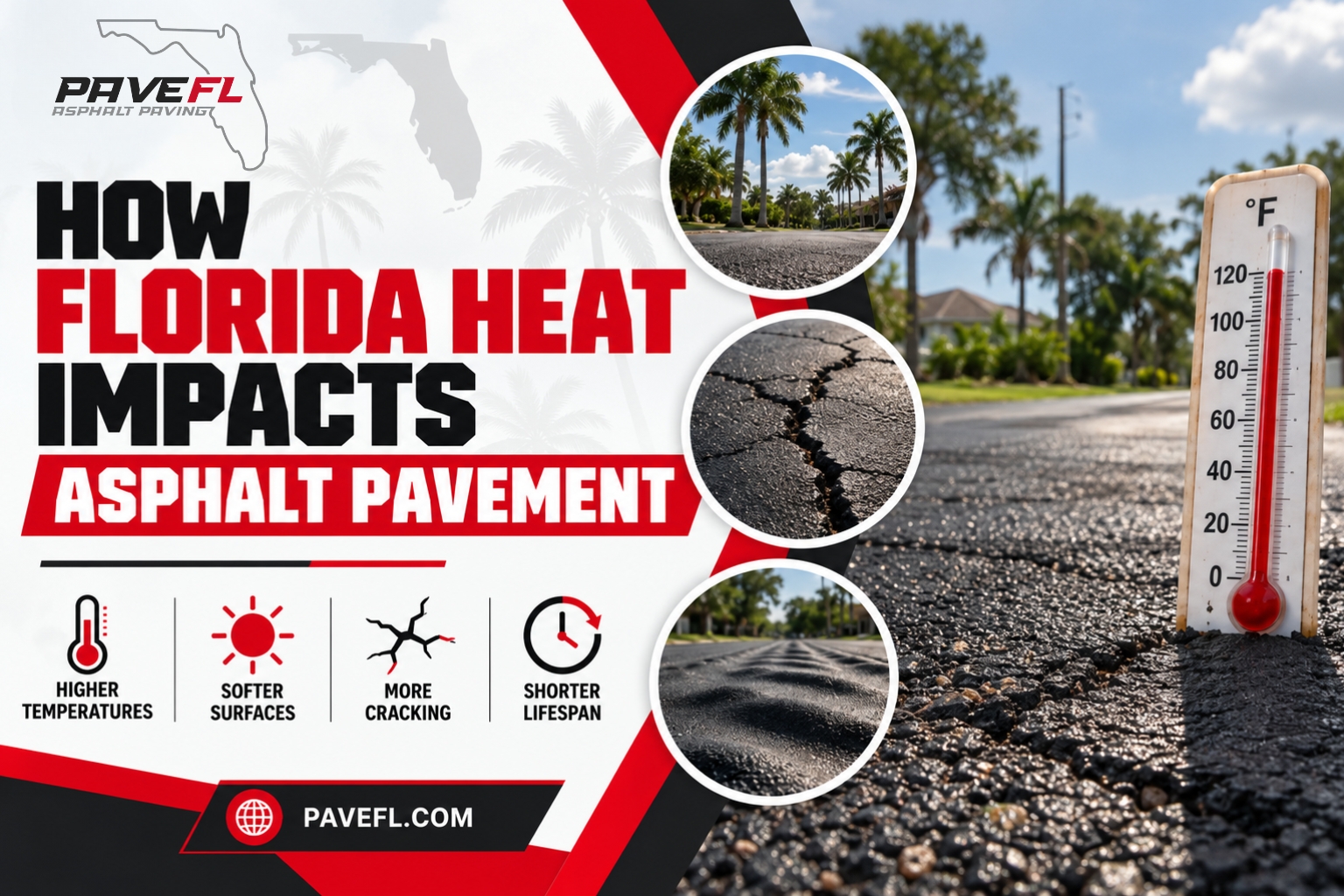
One of the biggest threats to asphalt in Florida is prolonged sun exposure. The state’s strong UV rays slowly break down the binders that hold asphalt together. As oxidation occurs, the pavement becomes dry, brittle, and less flexible.
When asphalt loses flexibility:
- Surface cracks begin to appear.
- The pavement becomes more vulnerable to water intrusion.
- Traffic loads create greater stress on weakened areas.
- Small imperfections expand into larger failures.
- The overall lifespan of the pavement decreases.
Oxidation often starts gradually, making it difficult to notice until visible cracking has already developed. Property owners who delay maintenance may unknowingly allow years of damage to accumulate beneath the surface.
Sealcoating, crack sealing, and regular inspections help protect asphalt from UV damage and slow the aging process before costly repairs become necessary.
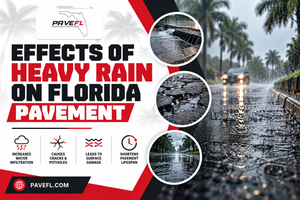
Heavy Rainfall and Moisture Are Constant Threats
Florida experiences frequent storms, tropical weather systems, and periods of intense rainfall. While asphalt is designed to shed water, standing water and poor drainage can severely damage both the pavement surface and the underlying base.
Water is often considered asphalt’s most destructive enemy because it can:
- Penetrate through cracks.
- Erode the foundation beneath the pavement.
- Cause soft spots and depressions.
- Lead to pothole formation.
- Accelerate structural failures.
- Increase repair costs significantly.
Even tiny cracks can allow moisture to enter the pavement structure. Once water reaches the base layers, the damage often spreads beyond what is visible on the surface.
This is why proactive asphalt maintenance Florida property owners implement should always include drainage management and early crack repairs.
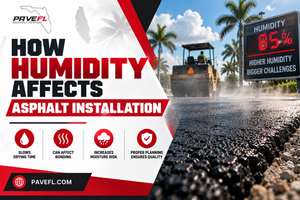
Humidity Can Increase Deterioration Over Time
Florida’s consistently high humidity creates additional challenges for pavement longevity. Moisture exposure is rarely limited to heavy storms alone. High humidity can keep asphalt surfaces damp for extended periods, especially in shaded areas.
Persistent moisture contributes to:
- Faster oxidation cycles.
- Weakened pavement edges.
- Moss and vegetation growth.
- Increased risk of water infiltration.
- Reduced effectiveness of neglected sealcoating layers.
Although humidity may not cause immediate damage, its long-term impact can significantly shorten the lifespan of poorly maintained pavement.
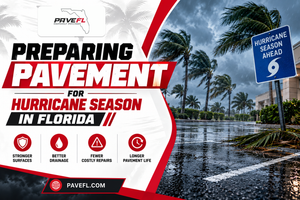
Hurricane Season Can Create Unexpected Damage
Hurricanes and tropical storms expose asphalt surfaces to extreme weather conditions. Flooding, debris, heavy vehicle traffic, and prolonged standing water can all affect pavement performance.
After severe weather events, property owners should inspect their asphalt for:
- New cracks.
- Surface raveling.
- Drainage problems.
- Depressions or settlement.
- Edge deterioration.
- Loose aggregate.
- Pothole development.
Post-storm inspections allow issues to be identified early before they evolve into more extensive repairs.
High Traffic Loads Increase Wear and Tear
Commercial properties, apartment complexes, shopping centers, and industrial facilities often experience continuous traffic throughout the year. Heavy vehicles place significant stress on asphalt surfaces, especially in Florida’s warm climate.
Common traffic-related issues include:
- Rutting.
- Surface depressions.
- Tire scuffing.
- Alligator cracking.
- Structural fatigue.
- Accelerated wear at entrances and exits.
Routine inspections and preventative maintenance help distribute costs over time instead of facing major rehabilitation projects unexpectedly.
What Happens When Asphalt Maintenance Is Ignored?
Many property owners postpone maintenance because the pavement still appears usable. Unfortunately, asphalt deterioration is often progressive, meaning minor issues continue worsening until major repairs become unavoidable.
Ignoring maintenance can lead to:
- Larger and more expensive cracks.
- Water damage beneath the surface.
- Potholes.
- Drainage failures.
- Premature resurfacing needs.
- Full pavement replacement years earlier than expected.
- Safety hazards for pedestrians and vehicles.
- Increased liability risks.
- Reduced property value.
- Negative first impressions for customers or tenants.
The difference between preventative maintenance and reconstruction can represent thousands—or even tens of thousands—of dollars in avoidable costs.
A well-maintained parking lot or driveway not only lasts longer but also creates a cleaner, safer, and more professional appearance.
How Long Should Asphalt Last in Florida?
There is no universal lifespan because every pavement experiences different traffic volumes, weather conditions, construction quality, and maintenance schedules. However, routine maintenance can dramatically influence how long asphalt remains serviceable.
| Condition | Estimated Lifespan |
|---|---|
| Little to no maintenance | 10–15 years |
| Occasional repairs only | 15–18 years |
| Consistent preventative maintenance | 20–25+ years |
| Professional maintenance plan with timely repairs | Potentially 25+ years |
The key factor is not simply the age of the pavement—it is how well the pavement has been maintained throughout its life.
Property owners who prioritize asphalt maintenance Florida strategies early often spend substantially less over the long term compared to those who wait for major failures.
Common Causes of Asphalt Damage in Florida
Understanding what causes asphalt deterioration allows property owners to address problems before they become severe. Most pavement failures are not caused by a single event; instead, they develop gradually through repeated exposure to damaging conditions.
Water Infiltration
Water entering the pavement structure is one of the leading causes of asphalt failure.
Once moisture reaches the base layers, it can weaken support and create instability. Over time, traffic loads cause the surface to crack, settle, or collapse.
Signs of water-related damage include:
- Potholes.
- Depressions.
- Edge cracking.
- Soft spots.
- Standing water.
- Surface separation.
Oxidation
Oxidation occurs when asphalt binders lose essential oils due to prolonged exposure to oxygen and sunlight.
This process causes:
- Fading.
- Brittleness.
- Reduced flexibility.
- Surface cracking.
- Faster overall deterioration.
Sealcoating can help slow oxidation and preserve the pavement’s protective surface.
Poor Drainage
Even newly installed asphalt can fail prematurely if drainage problems are not addressed.
Drainage issues commonly result in:
- Ponding water.
- Base erosion.
- Potholes.
- Rutting.
- Cracking.
- Edge failures.
Proper grading and water management are essential components of long-term pavement performance.
Heavy Vehicle Loads
Repeated traffic from delivery trucks, garbage trucks, trailers, and commercial vehicles can place enormous stress on asphalt surfaces.
This often causes:
- Rutting.
- Fatigue cracking.
- Structural failure.
- Surface deformation.
Areas with heavy traffic may require more frequent inspections and maintenance.
Tree Roots and Vegetation Growth
Roots growing beneath or alongside asphalt can create upward pressure that leads to cracking and pavement displacement.
Vegetation can also:
- Retain moisture.
- Widen existing cracks.
- Damage pavement edges.
- Reduce drainage efficiency.
Regular landscaping maintenance is an often-overlooked part of effective asphalt care.
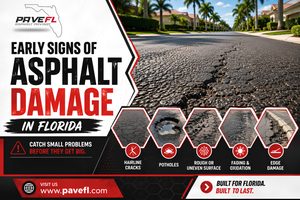
Early Warning Signs Every Florida Property Owner Should Watch For
One of the most effective ways to reduce repair costs is identifying problems while they are still small. Early intervention is almost always less expensive than major repairs.
Watch for these warning signs:
Small Cracks
Hairline cracks may appear minor, but they allow water to penetrate the pavement. Crack sealing is typically far more affordable than repairing extensive structural damage.
Fading Color
Fresh asphalt is dark and rich in color. As oxidation progresses, the surface turns gray and loses flexibility.
Standing Water
Water that remains on the pavement long after rainfall may indicate drainage problems, settlement, or structural concerns.
Loose Aggregate
If the pavement surface appears rough or small stones are becoming loose, raveling may be occurring.
Edge Cracking
Cracks along pavement edges often signal weakened support or water intrusion.
Potholes
Potholes indicate that water and traffic have already caused significant structural damage. Immediate repairs are usually necessary to prevent further deterioration.
Why Early Maintenance Always Costs Less Than Major Repairs
Preventative maintenance is one of the smartest investments property owners can make. Addressing small issues early typically requires fewer materials, less labor, and less downtime compared to major rehabilitation projects.
In many cases:
- Crack sealing costs less than extensive patching.
- Sealcoating costs less than resurfacing.
- Resurfacing costs less than reconstruction.
- Drainage corrections cost less than replacing failed pavement.
- Routine inspections reduce emergency repair expenses.
The goal of effective asphalt maintenance Florida programs is not simply to fix visible damage—it is to prevent expensive damage from happening in the first place.
By treating maintenance as an ongoing investment rather than an occasional expense, Florida property owners can maximize pavement lifespan, improve safety, and maintain the overall value of their property.
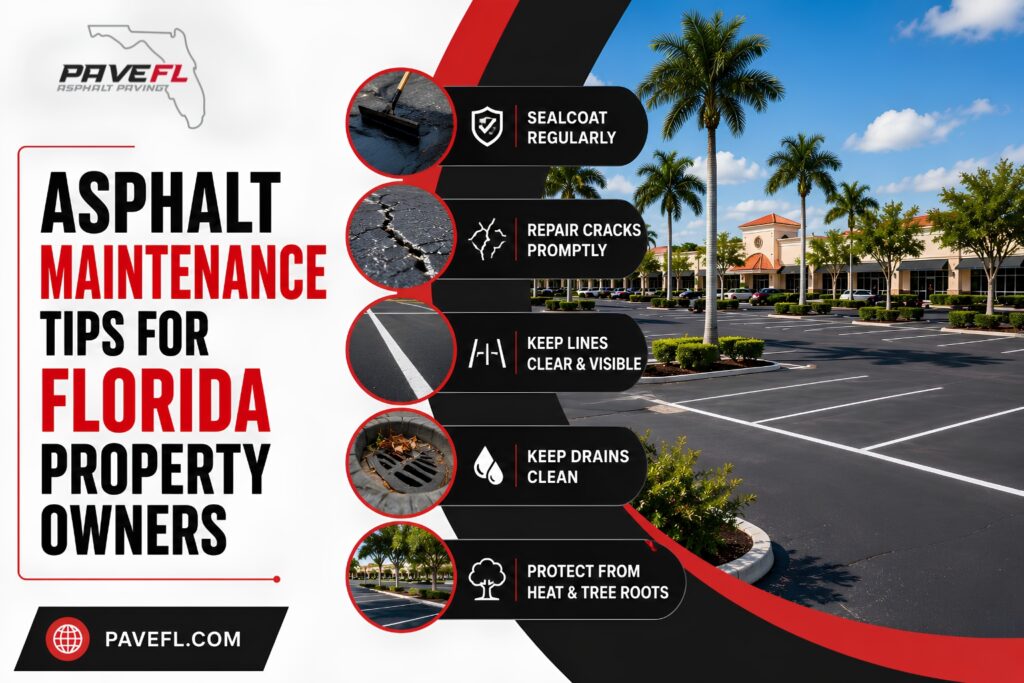
The Most Effective Asphalt Maintenance Strategies for Florida Properties
No single maintenance service can protect asphalt forever. Instead, long-lasting pavement results from combining several preventative maintenance techniques performed at the right time. Florida’s climate requires property owners to be proactive rather than reactive.
The most successful asphalt maintenance Florida plans include regular inspections, sealcoating, crack sealing, drainage management, cleaning, vegetation control, pavement markings, and timely repairs. When these services work together, they create a protective system that extends pavement life while reducing overall maintenance costs.
Below are the most important maintenance practices every Florida property owner should understand.
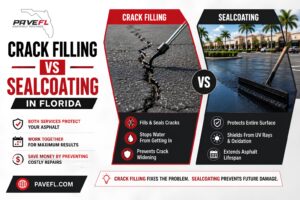
Sealcoating: Your Asphalt’s First Line of Defense
Sealcoating is one of the most valuable preventative maintenance services available for asphalt pavement. Although it does not strengthen the pavement structurally, it creates a protective barrier that shields the surface from environmental damage.
Many property owners mistakenly believe sealcoating is only for improving appearance. While it certainly restores the rich black finish of asphalt, its primary purpose is protection.
Why Sealcoating Matters in Florida
Florida’s environment is especially harsh on asphalt because of:
- Intense UV radiation
- Frequent rainstorms
- High humidity
- Oil and fuel drips
- Salt exposure in coastal areas
- Heavy traffic
Without a protective coating, asphalt oxidizes much faster. As the binder dries out, the pavement loses flexibility and becomes increasingly susceptible to cracking.
Sealcoating slows this aging process and helps preserve the pavement’s original condition.
Benefits of Sealcoating
A professionally applied sealcoat provides numerous advantages:
- Protects against UV damage
- Reduces oxidation
- Repels water
- Resists oil and gasoline spills
- Slows surface deterioration
- Improves curb appeal
- Makes cleaning easier
- Extends pavement lifespan
- Delays costly resurfacing
- Creates a uniform, professional appearance
For commercial properties, a freshly sealed parking lot also creates a positive first impression for customers, tenants, and visitors.
How Often Should Florida Asphalt Be Sealcoated?
Because of Florida’s climate, most asphalt surfaces benefit from sealcoating every 2–3 years. However, the exact schedule depends on:
- Traffic volume
- Sun exposure
- Drainage quality
- Pavement age
- Existing condition
High-traffic commercial lots may require more frequent evaluations than residential driveways.
A professional inspection can determine the ideal timing before oxidation becomes severe.
Crack Sealing: Stop Small Problems Before They Become Big Repairs
Cracks are among the earliest signs of asphalt deterioration. Although they may appear insignificant at first, even narrow cracks allow water to penetrate below the surface.
Once moisture reaches the pavement base, damage accelerates quickly.
Crack sealing is one of the highest-return maintenance services because it addresses problems before they require expensive repairs.
Why Cracks Should Never Be Ignored
Water entering through cracks can lead to:
- Base erosion
- Potholes
- Surface settlement
- Alligator cracking
- Frost-related damage in rare northern Florida cold events
- Larger structural failures
The longer cracks remain untreated, the more extensive—and expensive—the repairs become.
Common Types of Asphalt Cracks
Property owners should recognize these common crack patterns:
Hairline Cracks
Small, narrow cracks often caused by oxidation or natural aging.
Best solution:
- Monitor regularly
- Seal early
Longitudinal Cracks
Cracks running parallel to traffic lanes.
Possible causes:
- Pavement movement
- Construction joints
- Settlement
Transverse Cracks
Cracks running across the pavement.
Usually caused by:
- Temperature changes
- Shrinkage
- Aging asphalt
Block Cracking
Large rectangular crack patterns caused by aging and oxidation.
Often indicates the pavement needs more comprehensive maintenance.
Alligator Cracking
A network of interconnected cracks resembling reptile skin.
This usually signals structural failure beneath the surface and often requires more than simple crack sealing.
Benefits of Professional Crack Sealing
Professional crack sealing:
- Prevents water intrusion
- Slows pavement deterioration
- Reduces pothole formation
- Extends asphalt life
- Saves money on future repairs
- Improves pavement appearance
- Supports preventative maintenance goals
For any asphalt maintenance Florida strategy, crack sealing should be treated as a priority rather than a cosmetic repair.
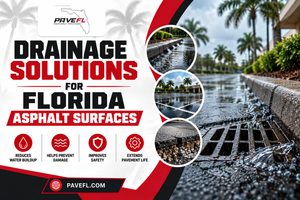
Keep Water Moving: Proper Drainage Protects Asphalt
Water is one of the leading causes of asphalt failure, making drainage management a critical part of pavement maintenance.
Even perfectly installed asphalt can deteriorate prematurely if rainwater cannot drain properly.
Why Drainage Matters
Standing water increases the risk of:
- Soft pavement
- Foundation erosion
- Potholes
- Surface cracking
- Rutting
- Premature replacement
During Florida’s rainy season, poor drainage can quickly multiply maintenance costs.
Signs of Drainage Problems
Watch for:
- Water remaining after 24 hours
- Depressions
- Erosion near pavement edges
- Mud washing onto pavement
- Water flowing toward buildings
- Uneven settlement
These issues should be addressed before they weaken the pavement structure.
Drainage Maintenance Tips
Property owners should:
- Keep storm drains clean.
- Remove leaves and debris.
- Inspect catch basins.
- Clear clogged drainage channels.
- Repair low spots promptly.
- Monitor grading after heavy storms.
- Ensure downspouts discharge away from pavement.
Proper drainage protects both the asphalt surface and the underlying foundation.
Routine Cleaning Extends Asphalt Life
Cleaning is often overlooked, yet it plays an important role in preserving asphalt.
Dirt, debris, oil, chemicals, leaves, and standing organic material gradually damage pavement surfaces.
Routine cleaning helps maintain both appearance and durability.
What Should Be Removed?
Regular cleaning should eliminate:
- Dirt
- Sand
- Leaves
- Trash
- Oil stains
- Fuel spills
- Tire debris
- Standing water
- Moss
- Algae
Keeping asphalt clean also makes inspections easier because developing cracks become more visible.
Why Oil Spills Are Harmful
Motor oil, gasoline, diesel fuel, and other petroleum products soften asphalt binders over time.
This weakens the surface and increases the likelihood of:
- Surface deterioration
- Soft spots
- Cracking
- Raveling
Oil spills should be cleaned as soon as possible using products designed for asphalt surfaces.
Vegetation Control Prevents Pavement Damage
Plants growing near asphalt may seem harmless, but roots and weeds can gradually damage pavement.
Vegetation contributes to:
- Crack widening
- Edge deterioration
- Water retention
- Drainage obstruction
- Pavement displacement
Florida’s warm climate encourages rapid vegetation growth throughout much of the year.
Best Practices
Maintain healthy pavement edges by:
- Removing weeds regularly
- Trimming nearby shrubs
- Preventing root intrusion
- Clearing drainage ditches
- Monitoring landscaping around parking lots
Well-maintained landscaping complements pavement maintenance and reduces long-term repair costs.
Pavement Striping and Markings: More Than Just Appearance
Parking lot striping eventually fades under Florida’s intense sun and heavy traffic. While repainting lines may seem cosmetic, clear markings are essential for safety, organization, and compliance.
Benefits of Fresh Pavement Markings
Well-maintained striping helps:
- Improve traffic flow
- Maximize parking capacity
- Enhance pedestrian safety
- Clearly identify accessible parking spaces
- Reduce confusion and accidents
- Present a professional appearance
Many property owners repaint parking lot lines after sealcoating to maintain a crisp, visible finish.
Regular Inspections Save Thousands in Future Repairs
Routine inspections are one of the simplest and most cost-effective ways to protect asphalt. Small issues are far easier—and less expensive—to correct when identified early.
For Florida properties, inspections are especially valuable before and after the rainy season, after tropical storms, and following periods of heavy traffic.
What Should Be Included in an Asphalt Inspection?
A thorough inspection should evaluate:
- Surface cracks
- Potholes
- Drainage performance
- Ponding water
- Edge condition
- Surface wear
- Fading and oxidation
- Loose aggregate
- Existing repairs
- Pavement markings
- Curbs and gutters
- Catch basins and drains
Keeping a record of inspections also helps track pavement condition over time and plan maintenance budgets more effectively.
Seasonal Maintenance Tips for Florida Property Owners
Florida experiences different maintenance needs throughout the year. Adjusting your maintenance routine by season can help prevent weather-related damage.
| Season | Recommended Maintenance |
|---|---|
| Spring | Inspect for winter wear (if applicable), clean debris, seal small cracks, prepare for rainy season. |
| Summer | Monitor for standing water, inspect after heavy storms, clean drains, repair drainage issues. |
| Fall | Evaluate pavement condition, schedule sealcoating if needed, refresh pavement markings, remove leaves and debris. |
| Winter | Perform inspections, repair minor damage, plan next year’s maintenance budget, address oxidation before spring. |
Following a seasonal checklist ensures that maintenance is proactive rather than reactive.
Building a Preventative Maintenance Plan
The most successful asphalt maintenance Florida programs are built around prevention instead of emergency repairs.
A comprehensive maintenance plan typically includes:
- Regular professional inspections
- Scheduled crack sealing
- Sealcoating every 2–3 years (as appropriate)
- Prompt pothole repairs
- Drainage inspections after major storms
- Routine sweeping and cleaning
- Vegetation control
- Pavement striping when needed
- Documentation of repairs and inspections
By following a structured plan, property owners can reduce unexpected repair costs, improve safety, and maximize the return on their pavement investment.
Repair, Resurfacing, or Replacement: Which Option Is Right for Your Asphalt?
One of the most common questions property owners ask is whether damaged asphalt should be repaired, resurfaced, or completely replaced. The answer depends on the pavement’s age, condition, and the extent of the damage.
Choosing the right solution at the right time can save thousands of dollars while maximizing the lifespan of your pavement. On the other hand, delaying necessary repairs or investing in the wrong service can lead to repeated expenses and premature failure.
A professional pavement inspection is the best way to determine the most cost-effective solution. However, understanding the differences between these services helps property owners make informed decisions.
When Asphalt Repairs Are the Best Option
Asphalt repairs address localized damage while preserving the rest of the pavement. They are ideal when the overall structure remains in good condition and only isolated areas require attention.
Repairs are often recommended for:
- Small potholes
- Individual cracks
- Minor depressions
- Surface raveling
- Localized drainage issues
- Utility cuts
- Edge deterioration
- Small areas of alligator cracking
Benefits of Asphalt Repairs
Professional repairs provide several advantages:
- Lower cost than resurfacing or replacement
- Minimal disruption to daily operations
- Quick completion time
- Prevents damage from spreading
- Improves safety
- Extends pavement life
- Preserves existing pavement investment
Prompt repairs are one of the most important components of a successful asphalt maintenance Florida strategy because they prevent minor defects from developing into major structural problems.
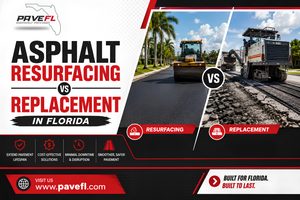
When Asphalt Resurfacing Makes Sense
Resurfacing—also called an asphalt overlay—involves placing a new layer of asphalt over an existing pavement after necessary repairs have been completed.
This option is appropriate when:
- The pavement foundation is still structurally sound.
- Surface damage is widespread.
- Numerous cracks are present.
- The asphalt has become rough or faded.
- Minor rutting exists.
- Multiple repairs have already been completed.
Resurfacing restores both appearance and functionality without the expense of complete reconstruction.
Advantages of Resurfacing
Property owners often choose resurfacing because it:
- Costs less than full replacement
- Improves ride quality
- Restores curb appeal
- Extends pavement life by many years
- Corrects minor surface imperfections
- Creates a fresh, uniform appearance
However, resurfacing is not suitable if the underlying base has failed. Placing new asphalt over a weak foundation will only delay future problems.
When Complete Asphalt Replacement Is Necessary
Sometimes repairs or resurfacing are no longer practical. If the pavement has experienced extensive structural failure, replacement becomes the most economical long-term solution.
Signs replacement may be necessary include:
- Widespread alligator cracking
- Multiple potholes across the pavement
- Significant base failure
- Extensive drainage issues
- Severe settlement
- Repeated repair failures
- Pavement that has exceeded its useful lifespan
Although replacement requires a larger initial investment, it provides a completely new pavement structure capable of delivering decades of service with proper maintenance.
Asphalt Repair vs. Resurfacing vs. Replacement Comparison
| Feature | Asphalt Repair | Resurfacing | Full Replacement |
|---|---|---|---|
| Best for | Localized damage | Moderate surface wear | Severe structural damage |
| Cost | Lowest | Moderate | Highest |
| Construction Time | Short | Moderate | Longest |
| Improves Appearance | Yes | Excellent | Excellent |
| Extends Pavement Life | Several years | 10–15 years | 20–25+ years with maintenance |
| Fixes Structural Problems | Limited | Only if base is sound | Yes |
| Business Disruption | Minimal | Moderate | Highest |
As a general rule, the earlier pavement problems are addressed, the more affordable the solution becomes.
Florida Asphalt Maintenance Schedule
Florida’s weather makes routine maintenance more important than in many other parts of the country. A structured schedule helps prevent deterioration before it becomes expensive.
Recommended Maintenance Timeline
| Maintenance Activity | Recommended Frequency | Why It Matters |
|---|---|---|
| Visual inspection | Every month | Detect problems early |
| Professional pavement inspection | Every 6–12 months | Identify hidden issues |
| Sweep parking lot or driveway | Monthly (or more often for commercial sites) | Remove debris and improve drainage |
| Clean oil and fuel spills | Immediately | Prevent asphalt softening |
| Crack sealing | As soon as cracks appear | Stop water intrusion |
| Drainage inspection | After major storms | Prevent standing water |
| Sealcoating | Every 2–3 years (based on pavement condition) | Protect against UV rays and moisture |
| Repaint pavement markings | Every 1–3 years or as needed | Improve safety and appearance |
| Pothole repairs | Immediately after discovery | Prevent structural deterioration |
| Resurfacing evaluation | Every 15–20 years (depending on condition) | Extend pavement life before replacement |
Following a preventative schedule reduces emergency repairs and helps property owners budget more effectively.
Residential vs. Commercial Asphalt Maintenance
While both residential and commercial pavements require regular care, their maintenance priorities often differ.
Residential Driveways
Residential asphalt typically experiences lighter traffic but still faces Florida’s harsh weather conditions.
Recommended maintenance includes:
- Annual inspections
- Prompt crack sealing
- Routine sweeping
- Removing oil stains
- Monitoring drainage
- Sealcoating as recommended
- Trimming vegetation along edges
Because residential driveways often enhance curb appeal, maintaining a clean, smooth surface can also increase property value.
Commercial Parking Lots
Commercial properties usually experience:
- Heavy daily traffic
- Delivery vehicles
- Frequent turning movements
- Pedestrian activity
- Increased liability exposure
As a result, commercial asphalt requires more frequent monitoring.
Recommended practices include:
- Scheduled inspections
- Regular sweeping
- Immediate pothole repairs
- Routine crack sealing
- Sealcoating based on wear
- Drainage maintenance
- Pavement striping updates
- ADA-compliant parking markings where applicable
For businesses, well-maintained pavement also creates a safer and more welcoming environment for customers, tenants, and employees.
Cost-Saving Strategies for Florida Property Owners
Many owners assume pavement maintenance is an expense rather than an investment. In reality, preventative maintenance often reduces total ownership costs over the life of the pavement.
Here are practical ways to lower long-term expenses:
Address Problems Early
Small cracks are inexpensive to seal compared to repairing water-damaged pavement. Delaying maintenance allows damage to spread beneath the surface.
Schedule Routine Inspections
Professional inspections identify issues that may not be visible during everyday use. Catching problems early helps avoid emergency repairs.
Keep Pavement Clean
Removing debris, dirt, and oil protects the surface and allows maintenance crews to spot developing issues more easily.
Maintain Proper Drainage
Standing water is one of the fastest ways to shorten asphalt life. Keeping drains and gutters clear protects both the surface and the base.
Avoid Overloading Pavement
Heavy trucks parked repeatedly in the same location can create rutting and structural damage. If possible, distribute heavy vehicle traffic or designate reinforced loading areas.
Invest in Preventative Maintenance
Regular sealcoating, crack sealing, and timely repairs cost significantly less than resurfacing or replacement.
Common Maintenance Mistakes Property Owners Should Avoid
Even well-intentioned maintenance efforts can lead to bigger problems if they’re done incorrectly or delayed.
Some of the most common mistakes include:
Waiting Until Damage Becomes Severe
Many property owners postpone maintenance until potholes or widespread cracking appear. By that stage, repair costs are often much higher than if early action had been taken.
Ignoring Small Cracks
Hairline cracks may seem harmless, but they are the primary entry point for water. Sealing them promptly is one of the simplest ways to extend pavement life.
Allowing Standing Water to Remain
If puddles consistently remain after rainfall, they should be investigated rather than ignored. Persistent standing water often indicates drainage or grading problems that can weaken the pavement structure.
Neglecting Routine Cleaning
Leaves, dirt, trash, and oil spills trap moisture and hide early signs of deterioration. A clean pavement surface is easier to inspect and maintain.
Skipping Professional Inspections
Some structural issues develop beneath the surface before visible signs appear. Periodic inspections by experienced professionals help identify these problems before they require major repairs.
Planning Your Asphalt Maintenance Budget
Budgeting for asphalt maintenance is easier when work is scheduled proactively rather than in response to emergencies.
Consider setting aside annual funds for:
- Routine inspections
- Crack sealing
- Minor repairs
- Sealcoating
- Drainage maintenance
- Pavement striping
- Emergency repairs after severe storms
A planned maintenance budget helps avoid unexpected expenses while protecting one of your property’s most valuable assets.
Why Preventative Maintenance Delivers the Best Return on Investment
Preventative maintenance is not simply about fixing pavement—it is about protecting the original investment for as long as possible.
Benefits include:
- Longer pavement lifespan
- Lower lifetime maintenance costs
- Improved appearance
- Better customer and visitor experience
- Enhanced safety
- Reduced liability risks
- Fewer emergency repairs
- Better drainage performance
- Increased property value
A proactive asphalt maintenance Florida plan helps property owners maximize every dollar invested in their pavement while minimizing disruptions and costly reconstruction projects.
Conclusion
Florida’s climate is both an asset and a challenge for property owners. While warm temperatures allow asphalt to remain flexible, the combination of intense sunlight, heavy rainfall, humidity, and frequent storms can accelerate pavement deterioration if maintenance is neglected.
The good news is that most major asphalt problems begin as small, manageable issues. Hairline cracks, fading, drainage concerns, and minor surface wear are all warning signs that can be addressed before they lead to expensive repairs or replacement.
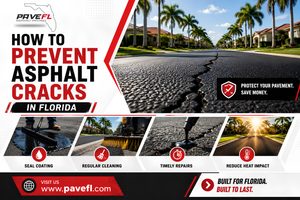
By investing in routine inspections, crack sealing, sealcoating, proper drainage management, and timely repairs, property owners can significantly extend the lifespan of their pavement while reducing long-term maintenance costs.
Whether you manage a residential driveway, commercial parking lot, HOA community, retail center, office complex, or industrial facility, a proactive asphalt maintenance Florida plan is one of the smartest investments you can make.
Protect Your Asphalt with Pave FL
Don’t wait until small cracks turn into major repairs. A proactive maintenance strategy can save money, improve safety, and keep your pavement looking its best for years to come.
Whether you need a pavement inspection, crack sealing, sealcoating, asphalt repairs, resurfacing, or a customized maintenance program, Pave FL is ready to help.
Contact Pave FL today to schedule a professional asphalt evaluation and discover how preventative maintenance can protect your investment, enhance your property’s appearance, and maximize the life of your pavement.