Planning a new driveway, sidewalk, or parking lot in Florida? You’ll likely need to navigate asphalt paving permits, local regulations, and South Florida’s unique climate challenges to get the job done right the first time. If you’re searching for reliable asphalt paving Florida services, whether it’s a fresh residential driveway in Miami, a commercial parking lot expansion in Fort Lauderdale, or full resurfacing in Boca Raton, proper planning prevents costly mistakes. At PaveFL, our team with over 15 years of experience has helped thousands of homeowners and businesses across South Florida achieve durable, beautiful, and code-compliant results.
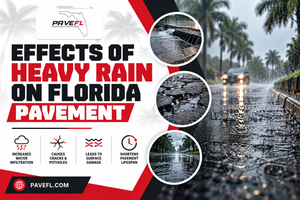
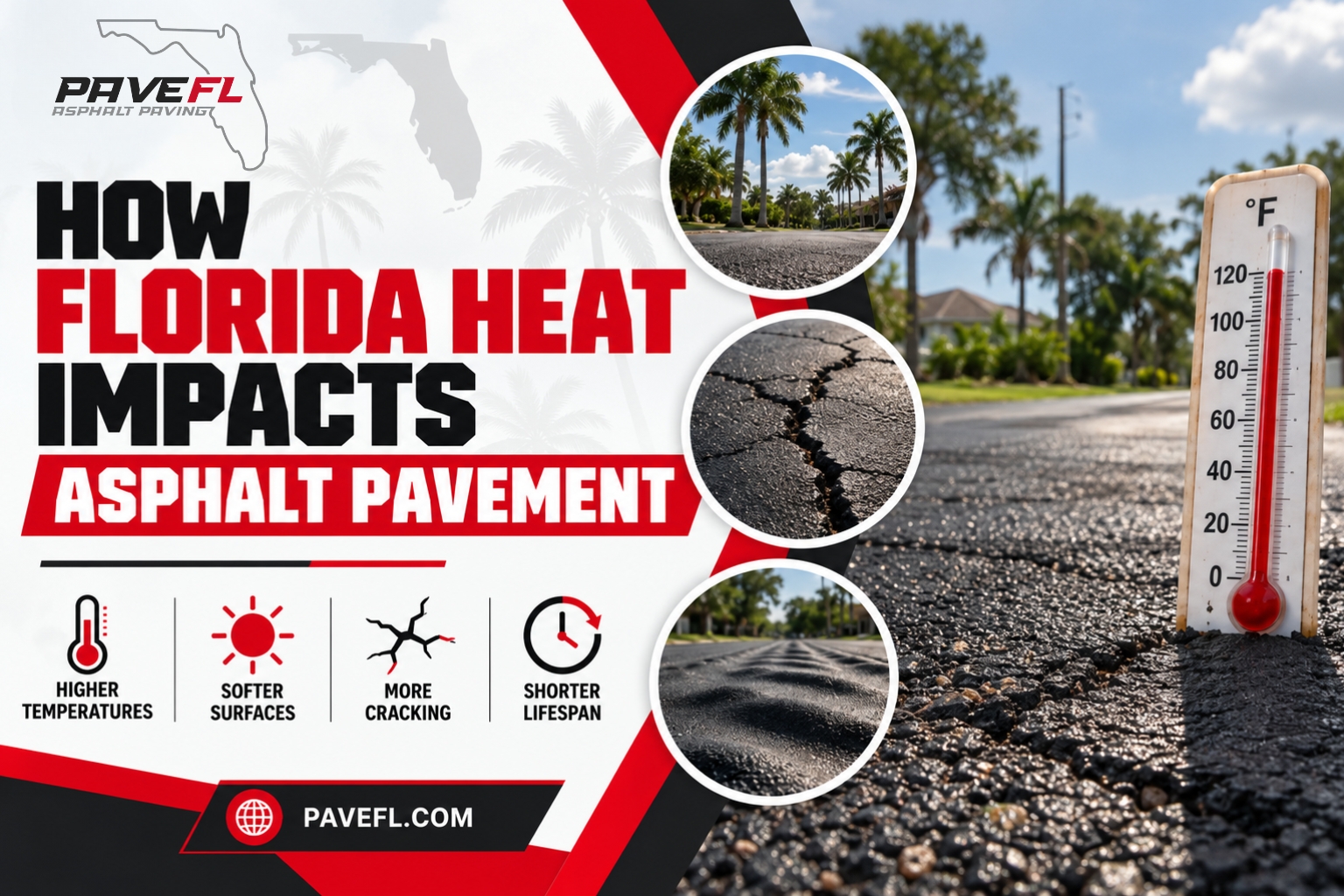
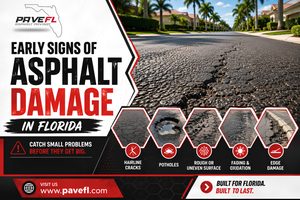
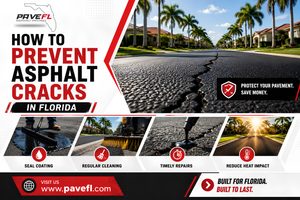
Florida’s intense heat, heavy seasonal rains, and occasional hurricanes create unique challenges for asphalt: standing water accelerates base erosion, extreme temperatures cause cracking and oxidation, and poor drainage leads to premature failure within just 5–8 years if shortcuts are taken. Professional asphalt paving Florida that meets local codes, FDOT-referenced standards, and strict stormwater rules can protect your investment for 15–25+ years while boosting curb appeal and property value.
This complete guide covers everything you need about asphalt paving Florida, including driveway regulations, paving permits, commercial parking lot requirements, ADA compliance, and technical specifications tailored to South Florida’s climate. We’ll break it down with practical, local-expert advice so you can move forward confidently.
Asphalt Paving Florida Basics: Right-of-Way (ROW) Permits vs. Private Property Paving
Florida regulations clearly separate work in the public Right-of-Way from purely private property paving. Understanding this distinction is essential for any asphalt paving Florida project to avoid delays, fines, or forced removal.
- Right-of-Way (ROW) Permits: These are mandatory for any work that touches, crosses, or disturbs public land—including driveway aprons, curb cuts, sidewalks, or the area between your property line and the street. A ROW permit in Florida protects underground utilities, ensures safe traffic flow, and directs stormwater correctly into the public system. Many municipalities and counties (especially in Miami-Dade, Broward, and Palm Beach) require engineering review, utility locates via Sunshine 811, and compliance with local stormwater ordinances. Without it, even a small apron modification can trigger stop-work orders and expensive rework. In Florida’s rainy climate, ROW work must include proper swale contouring and positive drainage to prevent flooding during tropical storms.
- Private Property Paving: Purely on your own land (behind the property line) with no public disturbance, permits are often not required for minor resurfacing or sealcoating. However, most residential driveways and commercial lots in South Florida connect directly to public roads, automatically triggering ROW or building permits. Zoning clearance may still apply for new construction, major expansions, or changes that affect setbacks, stormwater runoff, or neighboring properties—especially important in flood-prone areas where excessive impervious surfaces can violate local environmental rules and lead to fines.
Residential vs. Commercial Asphalt Paving Requirements in Florida
Requirements vary significantly between homeowners and businesses under Florida driveway regulations and stricter commercial codes. Proper planning ensures your asphalt paving Florida project withstands heat, rain, and daily traffic.
Residential Driveway Regulations Homeowners usually need a permit only when work involves curb cuts, aprons, or public right-of-way disturbance. Pure resurfacing of an existing approved driveway on private property often skips this, but new installs or expansions almost always require approval.
- Minimum Driveway Width Requirements: Most South Florida municipalities require at least 10 feet for single-car access, with 16–20 feet common for two-car garages (e.g., 18’ x 18’ minimum in unincorporated Broward for single-family homes). Wider driveways improve safety, ease of maneuvering, and emergency vehicle access while complying with zoning to avoid encroaching on setbacks or neighboring lots. In areas like Miami and Fort Lauderdale, this also helps manage stormwater runoff during heavy summer rains.
- Hard Surface Mandates: Gravel driveways are frequently prohibited in city limits; durable asphalt, concrete, or pavers are required for stormwater compliance and to prevent sediment from washing into public drains. This protects local waterways and helps homeowners avoid erosion-related violations from county environmental departments.
- Grading and Drainage Standards: A minimum 1–2% cross-slope (and proper longitudinal slope) must direct water away from the house foundation and into approved systems or swales. Poor drainage causes ponding that weakens the base during Florida’s wet season, leading to cracking, sinking, and costly repairs. Many cities require retaining rainwater on your property to reduce flooding risks for neighbors.
New installs or major repairs require local approval to fully meet Florida driveway regulations and enhance long-term performance.
Commercial Paving (Parking Lots and ADA Compliance)
Business owners face stricter oversight because parking lots serve the public and endure heavier loads from delivery vehicles and daily traffic.
- Building, Zoning, and Engineering Permits: Full stamped engineering plans, stormwater management reports (often including retention ponds or permeable features), and erosion control plans are typically required. These ensure the lot handles heavy use without rutting while complying with Florida’s strict environmental regulations on runoff and flooding.
- FDOT-Referenced Specifications for Heavy Loads: Commercial asphalt paving Florida projects often reference FDOT flexible pavement standards (similar to Item 300-series mixes) for durability under constant traffic, including proper base thickness and polymer-modified asphalt that resists rutting in hot Florida summers.
- Stormwater and Environmental Rules: Many counties mandate detention areas, swales, or permeable edges to manage heavy rainfall and reduce flooding—especially critical in low-lying South Florida where combined stormwater systems are regulated to protect the Everglades and coastal waters. Compliant designs can sometimes qualify for green infrastructure incentives.
Key Area Breakdown: Paving Permit Comparison for Major South Florida Cities/Counties
South Florida’s cities and counties each have unique rules. Here’s a comparison for Miami-Dade, Broward, and Palm Beach areas (as of 2026). Costs are typical ranges—always verify directly, as fees change.
| Area | Permit Name | Estimated Cost | When It’s Required |
|---|---|---|---|
| Miami / Miami-Dade | Driveway / ROW / Building Permit | $100–$300+ (plus plan review) | New install, curb cut, or ROW work: Yes Resurfacing existing: Often No |
| Broward County / Cities | Driveway Approach / Street Opening | $50–$250 (plus inspections) | New or major replacement: Yes Minor resurfacing: Sometimes |
| Palm Beach County / Cities | ROW / Access Permit + Zoning | $75–$200+ (engineering may apply) | New install or modification: Yes Resurfacing private: Usually No |
Note: Commercial projects often add building permit fees (based on project value) and require licensed, bonded contractors. Always call Sunshine 811 before any digging. Unincorporated areas may follow county engineer rules.
Technical Specifications: FDOT Standards and Drainage Requirements for Asphalt Paving Florida
Professional asphalt paving Florida references FDOT flexible pavement guidelines, which emphasize durable mixes suited to high temperatures and frequent rain. Key elements include proper aggregate gradation, asphalt binder types (often polymer-modified for heat resistance), compaction, and joint construction to create surfaces that resist rutting, cracking, and oxidation.
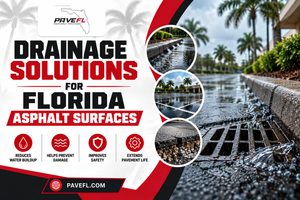
Drainage is the most critical factor in Florida’s climate:
- Minimum 1–2% cross-slope for positive drainage away from structures and into swales or stormwater systems — this prevents ponding that softens the base during the rainy season and extends pavement life significantly.
- No ponding allowed — standing water from tropical downpours quickly erodes subgrade; proper grading during permitted work eliminates this risk and complies with local flood ordinances.
- Subgrade preparation and base — achieve high compaction with 6–12 inches of suitable aggregate base to provide structural stability against Florida’s sandy soils and heavy rains.
Non-compliant drainage remains one of the top causes of early asphalt failure we see across South Florida. PaveFL exceeds standard requirements with premium materials, extra base thickness, and custom solutions tailored to local soil, traffic, and weather patterns for maximum durability.
The Permit Process: Step-by-Step Guide to Asphalt Paving Permits in Florida
Navigating permits is straightforward with the right partner. PaveFL assists clients throughout the process.
- Determine if a permit is needed using city/county portals or by contacting Public Works/Engineering.
- Gather documents: recent survey, site plan with elevations and drainage details, utility locate (Sunshine 811), contractor license/insurance.
- Contact the correct department (Building, Zoning, or Public Works).
- Submit application online or in-person with fees.
- Provide any required bonds or stormwater calculations.
- Schedule inspections (base, final, etc.).
- Perform work using approved plans and weather-appropriate conditions.
- Obtain final approval and keep records.
Typical timeline: 2–8 weeks, depending on scope and season. We handle much of this for you when you choose PaveFL.
Consequences of Non-Compliance in Asphalt Paving Florida
Skipping permits can lead to fines ($100–$1,000+ per violation plus daily penalties), stop-work orders, forced removal/redos at your expense, title issues during property sales, insurance claim denials, and faster pavement failure due to Florida’s harsh conditions.
ADA Compliance in Florida: Essential for Commercial Asphalt Paving
ADA parking lot compliance is mandatory under the Florida Building Code and federal standards. Non-compliance risks lawsuits and fines.
- Number of accessible spaces based on total spaces (typically 1 per 25).
- Car spaces: minimum 96 inches wide with 60-inch access aisle; van spaces wider.
- Maximum 2.08% (1:48) slope in all directions.
- Clear markings, signage (bottom at least 60 inches high), and a continuous 36-inch accessible route.
Resurfacing or restriping often triggers full updates. PaveFL specializes in precise grading and ADA-compliant striping for commercial projects.
Why Partner with PaveFL for Your Asphalt Paving Florida Project
With deep expertise across Miami-Dade, Broward, and Palm Beach counties, PaveFL delivers permit-ready plans, premium materials, and installations engineered to thrive in South Florida’s heat, rain, and storms. Fully licensed and insured, we prioritize clean sites, safety, and long-term performance.
Partnering with PaveFL means working with a team that truly understands South Florida’s climate challenges and regulatory requirements across Miami-Dade, Broward, and Palm Beach counties. From initial consultation to final installation, we deliver permit-ready plans, proper grading, and effective drainage solutions to prevent water damage and extend pavement life. We use premium asphalt mixes engineered to resist UV exposure, extreme heat, heavy rainfall, and storm-related wear—ensuring your surface performs reliably year-round.
As a fully licensed and insured contractor, PaveFL prioritizes safety, efficiency, and professionalism on every job site. Our crews maintain clean, well-organized work areas while following industry best practices and local codes. Whether it’s a residential driveway, commercial parking lot, or large-scale paving project, we focus on precision, durability, and a smooth, attractive finish that enhances both functionality and curb appeal.
Ready to move forward with confidence? Contact PaveFL at (786) 708-8017 or request a free quote online. Our team will carefully review your project, guide you through permitting where applicable, and provide a detailed, no-obligation estimate tailored to your timeline, budget, and long-term performance goals.