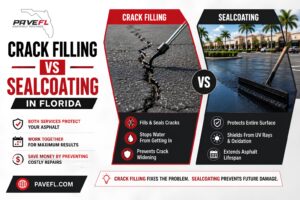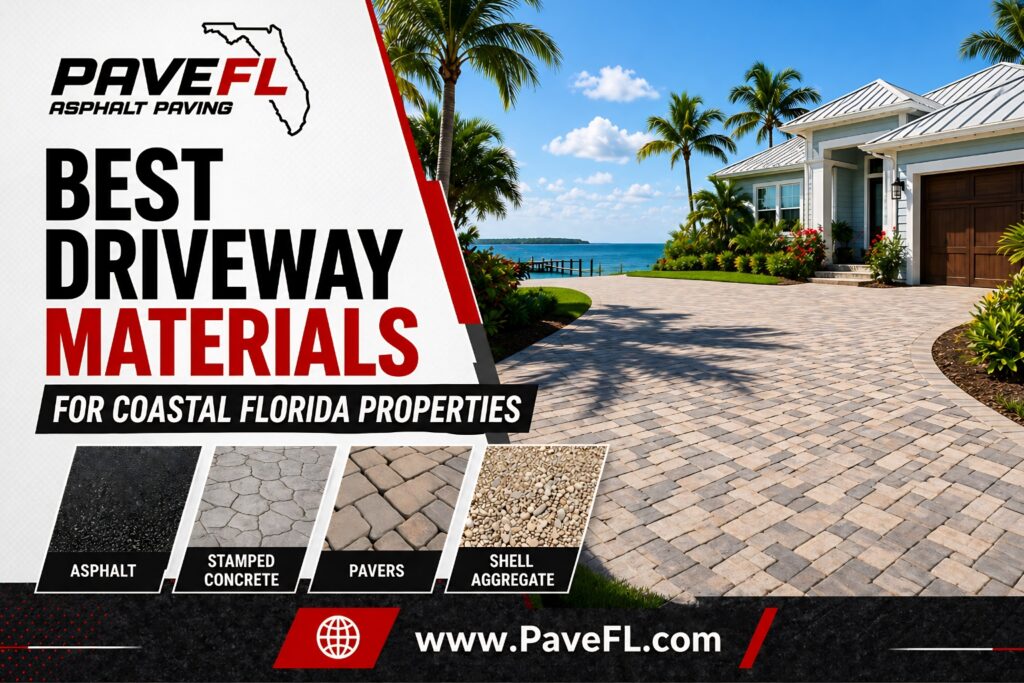
Is your coastal Florida driveway built to withstand sun, salt and storms? Choosing the right driveway materials Florida is crucial for homes and businesses near the ocean. Coastal Florida’s intense UV rays, salty air, hurricane-driven rain and sandy soils challenge driveways in ways that inland properties don’t face. This guide drills into top driveway options – asphalt, concrete, pavers, permeable surfaces, crushed shell, gravel and grass pavers – evaluating each for Florida’s coast. We examine longevity, maintenance needs, failure modes, drainage and erosion control, ADA and permit rules, landscaping appeal, and how local paving experts can help.
Executive Summary
- Coastal climate challenges: Beachside and near-coast properties endure salt spray, UV rays, high winds and flooding/storm surge. Materials must resist chloride attack and allow proper drainage.
- Top materials: Concrete, asphalt, pavers, permeable paving (porous asphalt or concrete, or paver grids), stabilized crushed shell, and crushed stone all work in Florida. Each has tradeoffs in durability, drainage, salt resistance and look.
- Design & maintenance: All coastal driveways need a compacted base and good slope (≥2–3%) for runoff. Pervious options (permeable pavements, gravel, shell) reduce flooding but need periodic vacuuming or refilling. Impervious options (asphalt, concrete) require sealants and crack repairs to block salt intrusion.
- ADA & permits: Driveways connecting to roads often require building permits and FDOT permits (for state highways). Commercial sites must meet ADA slope and ramp rules. Inspectors will verify thickness, compaction, drainage and code compliance.
- Choosing by site: Beachfront/barrier-island sites favor salt-tolerant, water-friendly options (porous pavers, crushed shell, polymer-crete). Inland coastal or high-traffic residential sites can use conventional concrete/asphalt with proper base and sealant. Commercial/industrial projects need heavy-duty mixes and certified contractors.
- Hiring experts: Work with professional paving experts in Miami, FL who know local codes and soils. Ask contractors about Florida licenses, insurance and coastal project experience. Ensure they handle permits and will follow inspection checklists (subgrade compaction, drainage grade, joint sealing, etc.).
Florida Coastal Climate Challenges
South Florida’s environment is relentless on pavements. Coastal air carries salt (chlorides) that penetrate concrete or corrode reinforcement, and moisture that can enter cracks. UV radiation and high heat oxidise asphalt and fade colors. Heavy rain and hurricane surge demand fast drainage; standing water or flooding can undermine poorly drained pavements. Florida’s sandy, shifting soils also stress driveways, leading to settlement. As one study notes, “Florida’s climate – UV rays, salt air, hurricanes and heavy rain – plays a bigger role in driveway performance than most homeowners realize”.
- Salt corrosion: Salt spray can accelerate the deterioration of concrete and metal ties. Reinforcement rust causes spalling, so coastal concrete should use corrosion-resistant (epoxy- or fiber-rebar) and low-permeability mix. Asphalt binder can also be degraded by salt-laden water.
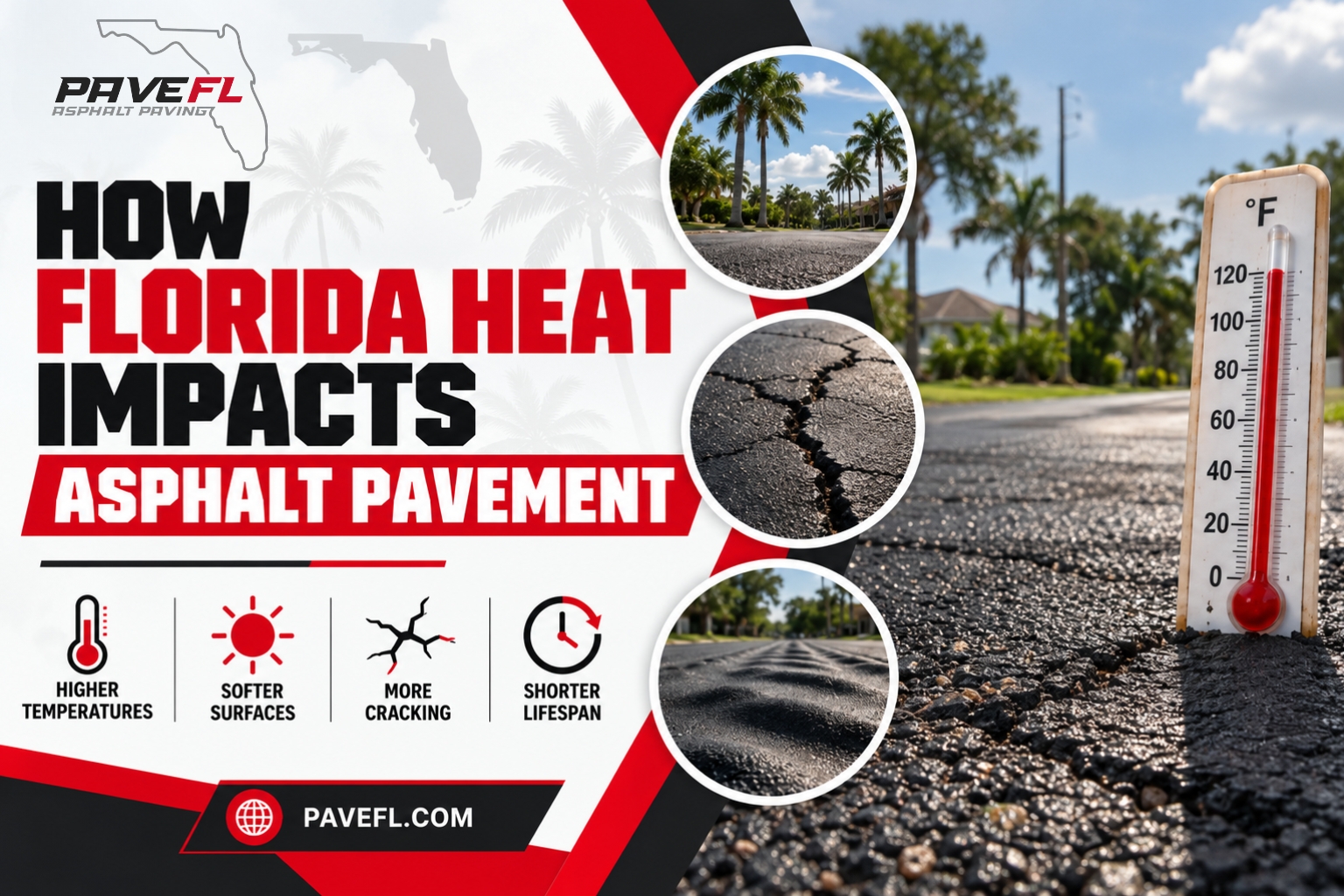
- UV & heat: Dark asphalt absorbs heat, softens, and oxidises (becoming brittle) under the Florida sun. Polymer additives in modern asphalt improve UV and heat resistance. Concrete can also weaken with repeated heating/cooling.
- Windborne debris: Strong winds carry sand and debris that abrade or scratch surfaces. Open-joint pavers may let sand through, but solid surfaces can scour over time.
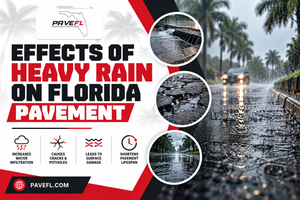
- Flooding and stormwater: Intense downpours and storm surge require driveways to drain quickly. Impervious surfaces can pond water and cause runoff to back up. Building codes and water management agencies increasingly encourage permeable paving to absorb water on-site. For example, South Florida water districts accept permeable pavements as stormwater control, even reducing retention requirements.
Given these factors, material choice is not just about looks – it must consider durability in salt/UV exposure, drainage capacity, and maintenance. The sections below evaluate each major option.
Driveway Material Options
Asphalt (Hot Mix Asphalt)
Overview: Traditional asphalt is a black, flexible pavement made from bitumen and aggregates. It’s popular for driveways because it can be installed quickly and is relatively economical. Modern hot-mix asphalts (HMA) for Florida often include polymers or anti-oxidants to resist heat and UV light.
- Suitability for coastal Florida: Asphalt’s flexibility helps it adapt to small movements in Florida’s soils. Polymer-modified mixes resist softening in heat and UV damage. However, asphalt is inherently impervious, so it drains poorly unless a permeable mix is used. Saltwater and chlorine (e.g. from pools) can make asphalt brittle over time.
- Longevity: With good installation (thorough compaction, 2–3-inch lift) and maintenance, asphalt driveways last ~15–20 years in Florida. Heavy traffic, poor drainage, or lack of sealcoat will shorten this. Proper base preparation (e.g. 4″ compacted base) and edge restraints are critical.
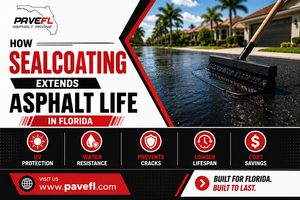
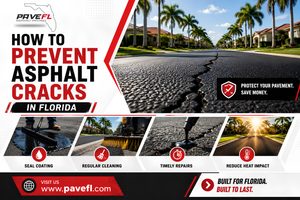
- Maintenance: Every 2–3 years, you should sealcoat the asphalt to block moisture and UV light. Reseal cracks and potholes promptly to prevent water intrusion and base failure. Keep drainage channels clear; add slope (2–3%) so water sheets off quickly.
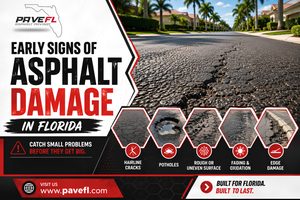
- Failure modes: Common problems include surface cracks, raveling (aggregate loss), edge wear, and potholes. In coastal areas, salt spray can cause oxidation and crumbling if sealcoat lapses. With heavy loads, asphalt can rut (especially if subbase was soft).
- Installation tips: Excavate and compact the subgrade; lay a permeable or dense-graded base (aggregate) to 4–6″ depth. Pour asphalt at the right temperature for compaction. Ensure a gentle slope (1–3%) for runoff. At property edges, install curbing or concrete edging for support. Consider porous asphalt in high-flood areas, which uses open-graded mix to let water through to a stone base.
Installing an asphalt driveway requires a compacted base (shown above) and proper slope. Coastal contractors often use polymer-modified asphalt and sealcoats to improve UV and water resistance.
Concrete (Cast-in-Place)
Overview: Concrete driveways are poured slabs of Portland cement with sand and aggregate. They form a very rigid, heavy pavement. Color, stamping or exposing aggregate can make concrete visually appealing.
- Suitability: Plain concrete is quite durable but must be correctly designed for coastal conditions. Salt (chloride) attacks reinforcing steel, so using non-corroding reinforcement (e.g. epoxy-coated rebar, welded wire, or fiberglass) is key. A high-quality mix with low water content and proper admixtures (air entrainment) will resist moisture. Concrete reflects heat (light color), which can be an advantage.
- Longevity: A well-made concrete driveway can last 25–30 years or more. In South Florida, Pave FL notes their concrete surfaces “resist cracking, weather damage, and heavy use – delivering results that last for decades”. Achieving this requires careful mix design and construction.
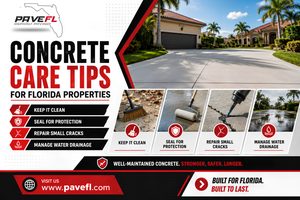
- Maintenance: Concrete is low-maintenance but not maintenance-free. You should seal the surface every 5–10 years to guard against moisture and salt penetration. Fill or seal any cracks right away to prevent water infiltration and subgrade washout. Regular power-washing keeps the surface clean of salt deposits and algae.
- Failure modes: The usual failure is cracking – from shrinkage, soil settling, or high loads. In salt air, corrosion of embedded steel can lead to spalling (chunks flaking off). Alkali-silica reaction (from reactive aggregates plus moisture) is another concern in Florida if improper aggregates (like crushed shells or some concrete) are used. Edge spalling can occur if curbs/fillers aren’t installed.
- Installation tips: Excavate to firm soil, install a 4″ compacted base (sand or crushed stone). Use fiber mesh or rebar with epoxy coating for reinforcement. Pour at a uniform 4″ thickness (minimum) and use control joints to manage cracking. Slope it at 2–3% for drainage. For coastal builds, concrete contractors often add pozzolans or water-proofing admixtures. Curb edges or wheel-stop curbs help contain the slab.
Interlocking Pavers (Brick or Concrete)
Overview: Interlocking pavers are individual brick or concrete units laid over a base. They’re popular for their curb appeal: endless patterns, colors and textures. Pavers can be concrete “clay-look” bricks or natural stone.
- Suitability: Pavers excel at handling sand and soil movement because each unit can shift slightly without cracking the entire slab. The narrow joints between pavers allow some water infiltration or can be filled for a solid surface. They are inherently flexible and can flex with Florida’s shifting ground, reducing large-scale cracking.
- Longevity: Properly installed interlocking pavers can last 30–40 years or more. Each paver is easily replaced if damaged, so maintenance is localized. Unlike concrete, a few cracked bricks don’t ruin the whole driveway.
- Maintenance: Weed control and joint care are the main tasks. Keep sand or polymeric sand in the joints, re-sanding or re-sealing every 3–5 years. Periodically, power-wash and re-level any sunken pavers. Apply a sealer every 3–5 years to protect color and prevent stain or salt intrusion. Control algae on shaded pavers by pressure-washing and algaecide.
- Failure modes: Over time, joints may wash out (especially if not sealed) or weeds may appear. An uneven base can cause small shifts or settling. In hurricanes, flying debris may chip pavers at edges.
- Installation tips: Begin with a well-compacted subbase (crushed stone) of 6–8″. Lay a geotextile fabric to prevent weed growth. Install edge restraints (concrete curbs or plastic edging) to lock the perimeter. Spread 1″ bedding sand, then lay pavers with tight joints. Compact the surface with a plate compactor and fill joints with sand or jointing compound. For better drainage, consider permeable pavers with wide joints (filled with sand or turf) over open-graded base layers. This adds sponge-like capacity (see Permeable Pavement, below).
Pavers (left) offer excellent flood drainage and flexibility – they “drain well in Florida’s frequent downpours” and “move with shifting soil to prevent cracking”. Crushed shell (right) provides a coastal look and drains easily, though it needs periodic raking and topping off.
Permeable Pavements (Porous/ Pervious)
Overview: Permeable pavements include special asphalt, concrete or paver systems designed to let water filter through the surface into the subsoil. Examples: pervious concrete, porous asphalt, and open-jointed paver systems. They reduce runoff and recharge groundwater.
- Suitability: In coastal Florida, permeable driveways can greatly reduce flooding risk by holding or draining stormwater on-site. Both the Florida DEP and EPA encourage such systems: e.g. porous concrete can reduce runoff by 50%+. Permeable pavements also trap road salts/pollutants, improving stormwater quality.
- Longevity: Pervious concrete/asphalt generally last 20–30 years with maintenance (about the same order as regular asphalt or slightly less because of porosity). Permeable pavers have lifespans similar to regular pavers (30+ years) if kept intact.
- Maintenance: Must vacuum or pressure-wash annually (or more) to keep pores/joints clear of sediment. Leaves and debris should be removed quickly. Cracks in the surface are not detrimental (they let water through), but the underlying stone bed should be checked that it has not clogged. Monitor infiltration rate: if it slows, clean it.
- Failure modes: The main risk is clogging (which reduces drainage capacity) and resultant pooling. If not maintained, sediment can create an impervious layer. Freeze-thaw is not an issue in Florida, but settlement is: if underlying soil shifts, the pavement can become uneven.
- Installation tips: Typically, permeable systems require a deep, open-graded aggregate base (often 12–18″ for driveways) and geotextile fabrics. For example, per Unilock’s details, a permeable paver driveway uses ~12–24″ base of clear stone layers with underdrains. Ensure proper overflow/drainage design in low areas. Engage engineers: many counties (SFWMD, Miami-Dade) even give permitting credits for permeable surfaces.
Stabilized Crushed Shell (Calica Driveway)
Overview: Crushed seashell (often oyster or scallop shells) is a traditional coastal Florida material. When graded and packed, the shell creates a firm, bright white surface. It’s popular for its local character and permeability.
- Suitability: Shells are naturally corrosive-free (no metals) and very permeable – water drains right through. They keep the driveway cooler (white surface) and blend with tropical landscaping. Notably, shells bind to each other under traffic, providing surprising stability when properly installed.
- Longevity: Shell driveways have a shorter life expectancy under heavy use, on the order of 5–10 years before needing major topping. However, they can be continuously refurbished: you simply add or recompact a shell as needed (making them “renewable”). Well-built shell drives can “last a long time,” according to one Florida landscape architect.
- Maintenance: Requires frequent upkeep: periodically rake flat and add fresh shells to low spots. Control weeds (spray or pull) between shells. After storms, check for washout at edges. If fenced or edged properly, the shell stays contained. It is essentially a loose material, so it must be relevelled every few years.
- Failure modes: Edges can crumble if not restrained. Heavy rainfall can wash away loose shells if slopes are steep or drainage is poor. Shell driveways may develop ruts in wheel tracks that need refilling. In general, shells are not suitable for heavy commercial use or where vehicles turn rapidly, because they shift under stress.
- Installation tips: Grade and compact the soil subgrade, then install sturdy edge restraints (treated timber, pavers, or concrete curb) to hold the loose shells. Lay a ~2–3″ layer of coarse “crusher run” shell (fine gravel) as a base, then top with 2–3″ of screened crushed shell. Compact each layer lightly (e.g., with a plate compactor or heavy vehicle). French drains at roof edges are wise to divert concentrated water (as one homeowner did). In short, treat it like gravel but with shells: pervious, local, beachy, and easy to repair.
Crushed Stone / Gravel
Overview: Generic crushed stone or gravel (often limestone in Florida) is a common rural driveway material. It’s inexpensive and drains extremely well.
- Suitability: Like shell, stone driveways allow water infiltration and cool the surface. Limestone is inert and durable against salt. However, bare gravel lacks the polished look of other choices. It suits informal or low-traffic drives.
- Longevity: A gravel drive lasts as long as you keep it leveled. The stones themselves never really wear out, but the surface will develop ruts and low spots. Expect to regrade or refill every few years. Well-constructed gravel with a proper base can last decades with periodic maintenance.
- Maintenance: Regular grading/reshaping is needed to avoid potholes and puddles. Add fresh stone when it migrates off the drive. Weed growth is common; a geotextile underlayment helps. Because gravel moves, edge restraints and occasional compaction help keep it stable. One advantage is quick repairs: you can easily add material to fix a problem.
- Failure modes: Erosion is the biggest issue: heavy rains can wash gravel away, or cars can push stones to the driveway edges. Without proper grade (crowning), water will form ruts and gullies. Also, gravel can sink into very soft soils unless a base layer is compacted.
- Installation tips: Excavate topsoil, install fabric if needed, then lay several inches of crushed rock base and compact. For driveways, often 4″ of clay-bound base (FDOT #57 limestone) plus 2″ of top gravel is used. Ensure a crowned profile and side swales for drainage. Gravel is “easy to repair” and “excellent for flood-prone zones,” as noted by local contractors. It also blends naturally into the landscape.
Reinforced Turf / Grass Pavers
Overview: Grass pavers (plastic grid panels) allow a lawn or groundcover to grow through a load-bearing support. These “green grid” systems are used for fire lanes, overflow parking or ecodrives.
- Suitability: This is the most permeable, natural option. It’s ideal where you want the look of grass or gravel with the strength to hold cars. Coastal Florida’s heat and rain generally support lush turf, but salt spray can affect grass health near the beach. It’s usually used for occasional parking – for example, a lawn that can serve as guest parking area.
- Longevity: Turf pavers can last 10–15 years. The plastic grids are durable, but the turf must be maintained. Under heavy traffic, the grass can die and need re-sodding.
- Maintenance: Mow or trim the grass regularly. Irrigate during dry spells so grass stays strong. Control mud and compaction on lawn areas. Inspect the base occasionally for sinking spots. If gravel is used between pavers (some systems allow gravel infill), replenish it as needed.
- Failure modes: The grass might wear out or get muddy under constant use. If not properly anchored, panels might pop up at edges. Not suitable for steep grades (grass will erode).
- Installation tips: Excavate and lay a level base of 6–8″ crushed stone. Install the plastic grid panels according to manufacturer. Fill with soil and lay sod (some systems support pea gravel infill too). Ensure good drainage underneath (grass will not grow in standing water).
Comparison of Materials
The table below summarizes key attributes of each material in a coastal Florida context:
| Material | Durability (yrs) | Drainage | Salt/Corrosion Resistance | Maintenance | Aesthetic Options | Coastal Suitability |
|---|---|---|---|---|---|---|
| Asphalt | ~15–20 | Poor (impervious) | Moderate (resists some salt, needs sealant) | Very durable if properly reinforced; needs a quality mix for salt. | Plain (black) | Good for moderate use; must be treated for UV & salt. |
| Concrete | 25–30+ | Poor (impervious) | Moderate/Low (steel may corrode) | Seal every 5–10 yrs, patch cracks | High (stamped, colored, exposed aggregate) | Very durable if properly reinforced; needs quality mix for salt. |
| Pavers (brick/concrete) | 30–40+ | Good (joints allow infiltration) | High (individual pavers unaffected, steel not used) | Re-sand joints 3–5 yrs, weed control | Very high (patterns/colors) | Excellent: flexible, replaceable, ideal for shifting soils. |
| Permeable Pavement | ~20–30 | Excellent (designed to infiltrate) | High (same as base material) | Vacuum annually, clear debris | Moderate (standard or open-grid styles) | Good for drainage and regs; reduces runoff by 50%+. |
| Shell (stabilized) | 5–10 (renewable) | Excellent (very pervious) | High (mineral material) | Rake & refill frequently | Moderate (white, beachy look) | Very good in low-traffic front yards; sustainable/coastal aesthetic. |
| Crushed Stone/Gravel | 5–15 (refillable) | Excellent (highly pervious) | High (rock resists salt) | Regrade/refill, weed control | Low (utilitarian) | Good for drainage, rural feel; inexpensive, but shifts over time. |
| Grass pavers | ~10–15 (with care) | Excellent (grass & gravel) | Excellent (no metal) | Mow, irrigate, re-sod | High (green, lawn-like) | Good for low-use drives or parking; eco-friendly, not for heavy loads. |
Material Selection by Property Type
Different coastal property scenarios call for different priorities:
- Beachfront / Barrier Island Homes: Top priorities: salt resistance, storm surge resilience, rapid drainage and stability under flooding. Materials like permeable pavers or reinforced turf grids allow water to pass. Shell driveways provide a classic “beachy” look and won’t corrode, but require upkeep. If using concrete/asphalt, choose corrosion-resistant admixtures and apply protective sealers. Many builders here also elevate drive surfaces slightly to cope with flooding. In any case, give extra slope away from the house and include robust edging to keep material from washing into the sand.
- Inland Coastal Properties (e.g., Gulf or bayfront within ~5 miles): Salt spray is lower, but heavy rains remain a challenge. Standard concrete or asphalt works well here if properly installed (thick base and sealant), and can handle moderate traffic. Including drainage features (broad swales, trench drains) is critical. Decorative pavers are also very suitable in an inland setting, adding curb appeal while handling downpours. Gravel/shell remains an option for a casual look, since salt impact is less severe.
- High-Traffic Residential Driveways: Driveways used daily by multiple vehicles or large trucks need durability above all. Thick concrete or high-grade asphalt with an engineered base is wise. A bond with fiber mesh or rebar is recommended for concrete, and polymer-infused asphalt is recommended for pavements under sunlight. Permeable versions can be used in portions (e.g. next to curb) to handle runoff. Here aesthetic options like stamped concrete or decorative pavers add value without sacrificing strength.
- Commercial and Multi-Family Properties: These projects face both heavy loading and stricter codes. Material choice tends toward concrete or heavy-duty asphalt built to engineering specs. ADA compliance (slopes ≤1:12, ramped transitions, detectable warnings) is mandatory for any accessible spaces. Pervious pavement is often used in overflow parking or landscaping areas to meet stormwater regulations. Contractors should coordinate with engineers on approved mixes and thickness, and ensure parking markings/drainage meet local ordinances.
Ultimately, match your material choice to the specific challenges of the site. A beachfront villa might choose stylish permeable pavers or shell, whereas a suburban coastal home might prefer the cost-effectiveness of sealed concrete.
Drainage and Stormwater Management
In Florida’s rainy climate, drainage design is as important as material. Any driveway must shed water quickly to prevent pooling and erosion. Here are key points:
- Always grade the driveway with a gentle crown or one-way slope (typically 1–3%) toward a safe outlet (street or swale).
- Include edge drains or swales if heavy runoff is expected. For example, French drains or curb inlets can collect roof or street water before it overwhelms the pavement.
- Consider permeable sections: a strip of gravel/shell at the driveway edges can act as a rain garden. Where regulations allow, large patios or circular driveways can be built with permeable blocks or grids to absorb water. Even a standard asphalt lot benefits from trench drains at low points.
- Florida regulators often reward permeable designs. The DEP and water management districts note that permeable pavements can cut runoff by 50%+ and delay peak flow. South Florida agencies even expedite permits for projects with green stormwater measures.
- For coastal properties prone to sea-level rise or storm surge, elevate the driveway at least a foot above grade, or install check valves in any drainage pipes to prevent saltwater backflow.
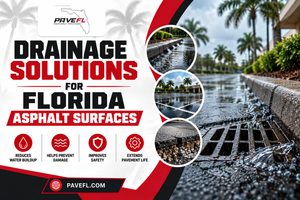
Stormwater grate on a wet pavement: coastal driveways must direct rainwater safely away. Permeable surfaces (gravel, porous pavers) and proper drainage inlets prevent standing water.
ADA, Permitting and Codes
Permits: Nearly all driveway replacements or new installations in Florida require a building permit. Broward County’s code (FBC Sec. 1820.5/R4404.5) explicitly states that exterior concrete slabs (driveways, sidewalks, minor pads) must be ≥4″ thick on a compacted base and obey permit rules. In Miami-Dade and Palm Beach, permits are similarly enforced. If the driveway ties into a state road, an FDOT driveway connection permit (per F.A.C. Rule 14-96) is required. Always check with your county building department – for instance, Orange County mandates a license for concrete or paving work on residential driveways.
Building Code: Florida’s Building Code imposes slope limits (no more than 2% for walkways, typically for driveways 1–3%), minimum thickness, and base compaction standards. For concrete, it also requires control joints and reinforcement as per Chapters 18 and R4404.6. Use an expansion joint (e.g. tar strip) where the driveway meets the foundation.
ADA/Accessibility: For commercial or public lots, ADA standards apply to parking and access routes. Any adjacent ramps must be 1:12 or gentler; detectable warning strips and signage are required. Parking aisles must meet width specs. Pave FL notes that their parking solutions include “ADA-compliant line striping, signage, and bumper installation” to ensure code compliance. Even for residential driveways, consider safe slopes for any pedestrian paths.
HOA and Local Rules: Finally, some barrier communities or HOAs have aesthetic rules (approved paver colors, etc.). Always verify any local covenants before choosing very non-standard materials like shell or color concrete.
Installation Practices for Coastal Soils
Florida’s soils (often sandy and acidic) require care under any pavement:
- Base Preparation: Remove topsoil and organic matter. Compact native soil thoroughly (using a vibratory plate or roller) before adding base materials. A strong base prevents settling and washouts.
- Sub-base Layers: Lay a 4–6″ layer of crushed stone (limestone or granite) beneath asphalt or concrete. For permeable or gravel drives, the sub-base may be thicker (8–12″ of open-graded stone). Ensure each lift is compacted. Geotextile fabric can separate soft layers and prevent contamination of your base.
- Edge Restraints: Use curbing or edge restraints for pavers/gravel/shell to prevent lateral spreading. At the pavement edges, a concrete curb or steel edging will hold shape during storms.
- Concrete Mix Design: Use air-entrained concrete (to handle any water) and a low W/C ratio. Add corrosion inhibitors if near the beach. Fiber reinforcement can reduce cracking.
- Asphalt Mix: Specify a Florida-approved hot-mix formula (often PG 70-22 binder or polymer-modified asphalt) designed for high heat and humidity. Include a proper tack coat between layers.
- Curing and Sealing: Allow concrete to cure fully (a week) before heavy use. Apply a good quality sealant to concrete and asphalt once initial curing (and again periodically) to lock out moisture and salt.
Thorough subgrade and compaction checks are crucial, especially on reclaimed or filled lots. Builders often perform density tests (per FBC) on the compacted soil. Pay particular attention to drainage: standing water under a slab leads to long-term issues.
Landscaping and Curb Appeal
The driveway is a major part of curb appeal. Choosing a material that complements landscaping and the home’s style is important:
- Color and Texture: Light-colored materials (white shell, light concrete pavers) stay cooler in the sun. Decorative patterns (e.g., herringbone pavers, stamped concrete “flagstone”) can elevate appearance. Against Florida greenery, white shell, or gray stone often looks natural.
- Sustainability: Previous drives and materials like shell or gravel are eco-friendly choices. They let trees near the drive thrive (roots get water) and reduce the need for storm drains. Using local materials (shell from local pits, local gravel) cuts transport impact. The Shrub Queen blog notes that shell driveways are “very sustainable” since most materials came from within 50 miles and most stormwater drains back into the yard.
- Resale Value: Durable, well-drained driveways can improve resale appeal. Many Florida buyers expect features like a permeable paver patio or stamped concrete entry walkway. Color finishes (concrete stains, paver sealers) can tie the driveway into the house color palette.
In design, think about adjoining landscaping: swales with plants, rain gardens next to shell/gravel drives, or uplighting at paver edges. For commercial properties, consider planters or curbs to channel flow into retention areas.
Choosing the Right Material for Your Property
- Beachfront / Island Estates: For maximum resilience, permeable pavers with polymer concrete or stabilized shell are often chosen. These withstand salt spray and hurricanes, because they allow fast drainage and pose minimal salt-holding materials. A polymer-surfaced asphalt (rather than plain blacktop) can also help, as can concrete reinforced with stainless or epoxy rebar. Driveways may be intentionally wide with a gutter to cope with a surge. Consult engineers for any needed flood vents or bulkheads.
- Inland Coastal Residences: Standard asphalt or concrete works well if properly built (thick base, sealant). Many homeowners here use colored or stamped concrete for style, or brick/concrete pavers for elegance and flex. Make sure gutters and swales direct water, as heavy rain is the main concern. A strip of pavers or shell at the edges can act as a filter for roof runoff.
- High-Traffic Homes: If many vehicles use the driveway (e.g., multi-car families, RVs, delivery trucks), lean on asphalt or concrete. Use slightly thicker lifts – for example, 3″ asphalt over 6″ base – and include fiber mesh. Decorative options are still possible: concrete offers stamped and exposed-aggregate finishes. Skimp on nothing in base prep; these drives see the most stress.
- Commercial / Multi-Unit: Projects like apartment complexes or office lots should be built by the book. Typically a 4″ concrete slab or 2–3″ asphalt overlay is put on top of a heavy subbase (as per FDOT standards). Ensure curb cuts and ramps meet ADA. Also, plan for plenty of perimeter drainage: consider channels or infiltration trenches. Materials here should be “cast in durability”: e.g., FDOT-grade concrete with admixtures, or HMA with modifiers.
In every case, match the material to usage and environment. A beachfront B&B might prefer the charm of shell, while a beachside condo complex might demand solid concrete with a seal coat. Don’t overlook site-specific factors like tree roots (which can heave pavers) or proximity to saltwater.
Working with Professional Paving Experts in Miami, FL
When you hire local professionals, look for credentials and local expertise:
- Licensing & Insurance: Verify the contractor has a valid Florida paving or contractor’s license. They should be fully licensed and insured, as Pave FL emphasizes. Ask to see qualifications (e.g., Florida Certified Contractor). Inquire about bonds or warranties on workmanship.
- Local Experience: A good Miami paving team will know local soil conditions and permit rules. Request photos or references from previous South Florida projects – ideally coastal sites. They should understand Miami-Dade, Broward, and Palm Beach regulations, and can guide you through county permitting.
- Permitting Assistance: A top contractor will handle filings. Ask if they will obtain your driveway permit and (if needed) an FDOT connection permit. They should know FBC requirements (thickness, ADA, etc.) and ensure compliance.
- Questions to Ask:
- What thickness/base will you build? (Answer should be ≥4″ concrete base, and compacted subgrade.)
- How will you handle drainage? (Expect plans for slope, drains, or pervious sections.)
- What materials and additives do they use (e.g., polymer modifiers, corrosion inhibitors, fiber reinforcement)?
- Can they perform a compaction test on-site and show results?
- What is their timeline, and how do they protect the site from erosion during construction?
- Inspection Checklist:
- Before paving, inspect the subgrade compaction and base layer thickness.
- After laying, ensure the concrete cures properly and the asphalt receives proper rolling.
- Check that slopes and cross-slopes are correct (e.g., water does not pond).
- Look for uniform joint spacing in concrete or even screed in asphalt.
- For pavers, verify edge restraints are set, and joints are filled.
- After completion, ensure final seal coats or curing membranes are applied.
- Regulatory Compliance: The contractor should know if there are any local stormwater or TMDL credits for permeable paving, and should ensure features like detectable ramps if needed. They may coordinate inspections (city/county sign-off).
Choosing professional paving experts in Miami, FL means tapping into teams familiar with Florida’s extremes. They can recommend the important materials for your site, schedule work around the weather, and ensure a durable driveway. In Pave FL’s words, a qualified contractor delivers “pavement that withstands Florida’s extreme heat, humidity, and rainfall”.
Summary
Coastal Florida demands careful selection of driveway materials. Each option – asphalt, concrete, pavers, gravel, shell, or turf – has benefits and trade-offs in salt spray, drainage, durability, and maintenance. Permeable surfaces and strong base preparation mitigate flooding. Proper permits, ADA compliance, and professional installation are non-negotiable. By understanding the unique demands of beachfront or coastal properties and working with licensed local experts, property owners can ensure a driveway that looks great and lasts for decades.