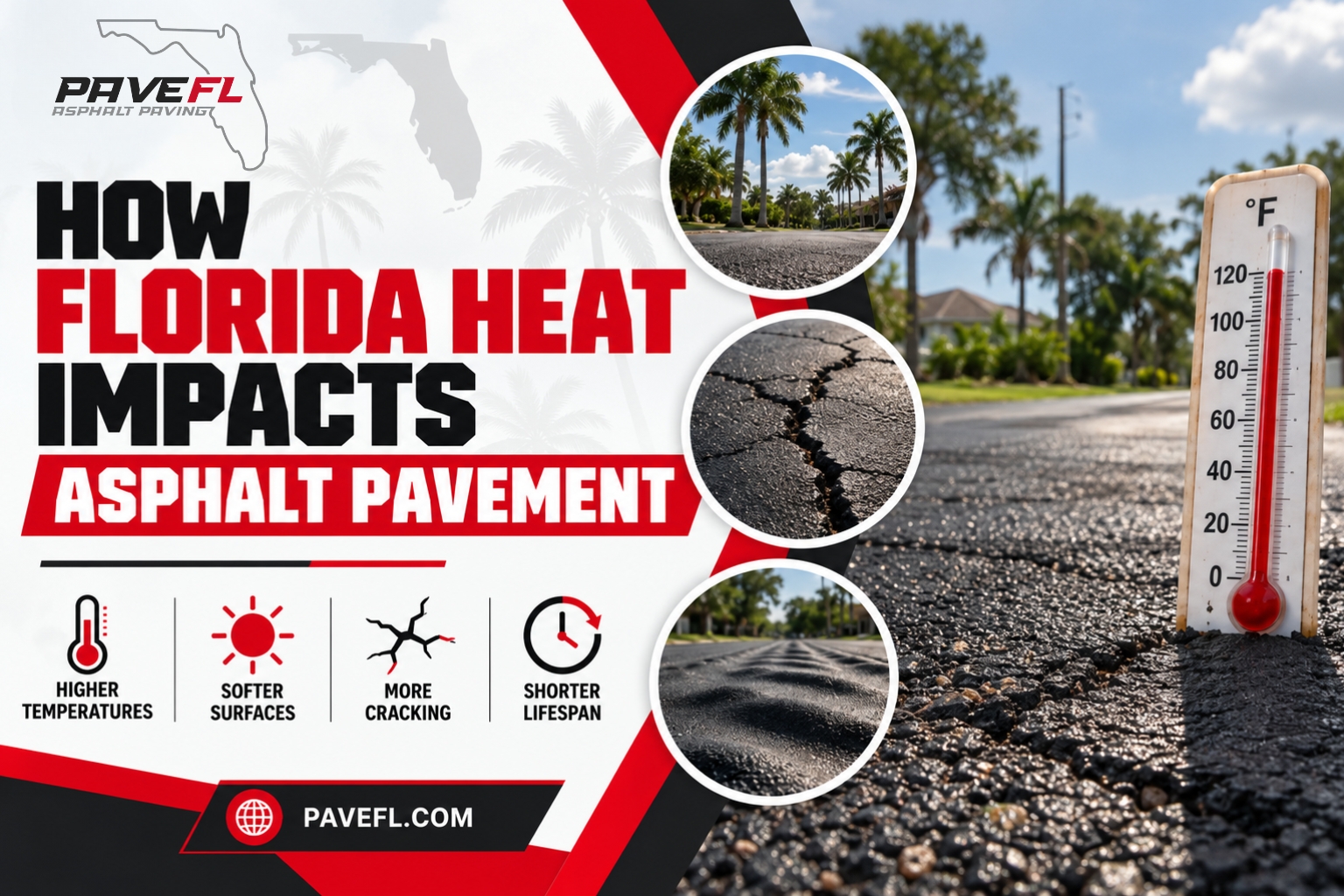
Are you noticing your asphalt driveway getting faded or cracked under the Florida sun? In Florida, especially South Florida, the intense sun and year-round heat turn what should be a durable asphalt driveway into a surface that can deteriorate much faster than in cooler climates. Asphalt heat damage Florida commonly appears as softening, rutting, cracking, oxidation, and fading, sometimes within only a few years if the pavement is not properly installed and maintained. For homeowners and property managers investing in asphalt paving in South Florida, understanding how extreme heat affects asphalt is essential for preventing expensive repairs and premature replacement. Constant UV exposure, high humidity, heavy rain, and elevated pavement temperatures place continuous stress on asphalt surfaces throughout the year.
The good news is that proper installation and maintenance can dramatically improve asphalt performance in Florida’s demanding climate. Using heat-resistant materials, ensuring proper drainage, and following a proactive maintenance schedule all help reduce long-term damage. Working with professional paving experts in Miami, FL, who understand local environmental conditions is one of the most important steps in protecting your investment and extending the lifespan of your driveway or parking lot.
Executive Summary
- High temperatures soften the binder — Asphalt becomes more pliable above 85–90°F, leading to rutting, tracking, and deformation under vehicle weight.
- UV radiation accelerates oxidation — This dries out the asphalt, making it brittle, faded, and prone to cracking.
- Daily expansion/contraction cycles — Heat during the day followed by cooler nights stresses the pavement, creating cracks that worsen with rain and traffic.
- No statewide “one-size-fits-all” solution — Local conditions in Miami-Dade, Broward, Palm Beach, and beyond require heat-resistant mixes, proper compaction, and regular sealcoating.
- Prevention beats repair — Choosing the right contractor and following a maintenance schedule can double the lifespan of your driveway.
How Florida Heat Damages Asphalt: The Science
Florida’s subtropical climate delivers relentless sun, high humidity, and temperatures that routinely exceed 90°F. Asphalt is a mixture of aggregates and bitumen (binder). Here’s what happens under extreme heat:
| Damage Type | Cause | Visible Signs | Common Locations |
|---|---|---|---|
| Softening & Rutting | Binder viscosity drops in high heat | Depressions, tire marks, wavy surfaces | Driveways, entrances, parking areas |
| Oxidation & Fading | UV rays break down oils in the binder | Color turns gray, surface becomes rough and brittle | Entire exposed surface |
| Cracking | Thermal expansion/contraction + drying | Alligator cracks, longitudinal cracks | Edges and high-traffic zones |
| Raveling | Loss of binder holding aggregates | Loose gravel on surface | Older driveways without sealcoat |
Asphalt heat damage Florida is accelerated by the combination of heat, UV exposure, and humidity. Without protection, the binder oxidizes, loses flexibility, and fails to hold the pavement together.
Asphalt Paving in South Florida: Best Practices for Heat Resistance
Professional installation makes the biggest difference. Professional paving experts in Miami, FL like those at Pave FL use strategies tailored to the climate:
- Polymer-modified asphalt mixes (e.g., PG 76-22 grade) with higher softening points to resist rutting.
- Optimal scheduling — Paving early in the morning or during cooler months to ensure proper compaction before peak heat.
- Proper base preparation and drainage — Critical in Florida to prevent water-related damage that compounds heat effects.
- Thicker lifts or adjusted compaction in hot conditions to achieve density without overheating the mix.
New driveways installed with these methods hold up far better against asphalt heat damage Florida.
Maintenance: Your Best Defense Against Heat Damage
Regular care is non-negotiable in South Florida.
Recommended Maintenance Schedule:
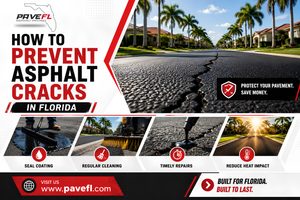
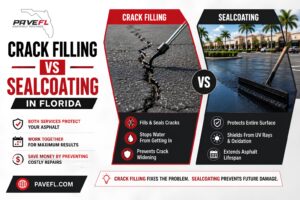
- Sealcoating — Apply within the first year after installation, then every 2–3 years. Acts as “sunscreen” to block UV rays, reduce oxidation, and maintain flexibility.
- Crack filling — Address cracks promptly before they widen or allow water infiltration.
- Regular cleaning — Remove debris, oil spills, and dirt that trap heat and accelerate damage.
- Inspect drainage — Ensure water flows away from the driveway to prevent pooling and erosion.
Pro Tips to Reduce Heat Impact:
- Park in shaded areas when possible or use lighter-colored sealcoats/reflective products.
- Avoid heavy loads or sharp turns on freshly paved or very hot surfaces.
- Choose high-quality aggregates and binders designed for tropical climates.
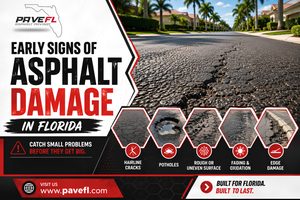
Signs Your Driveway Is Suffering from Asphalt Heat Damage Florida
- Surface feels soft or sticky on hot days.
- Dark black color fading to gray.
- Visible ruts or indentations from tires.
- Fine cracks forming a “alligator” pattern.
- Loose stones or gravel on the surface.
Catching these early and calling professional paving experts in Miami, FL can save thousands in major repairs or full replacement.
Comparison: Florida vs. Cooler Climates
In northern states, asphalt might last 20–30 years with basic care. In South Florida, without proper installation and maintenance, that lifespan can drop to 8–15 years or less due to accelerated asphalt heat damage. The difference comes down to material selection, installation expertise, and consistent sealcoating.
Compliance & Permitting Note for South Florida
While this article focuses on heat effects, remember that asphalt paving in South Florida often requires local permits, especially for larger driveways, curb cuts, or commercial work. Always verify with your city or county before starting.
Action Checklist: Protect Your Asphalt Driveway in Florida Heat
- Confirm the installer uses heat-resistant, polymer-modified mixes.
- Schedule sealcoating on time (every 2–3 years).
- Inspect for cracks and soft spots after every summer.
- Maintain proper drainage around the driveway.
- Work with experienced local professionals familiar with Miami-area conditions.
- Keep the surface clean and free of oil/chemical spills.
Best practices that reduce asphalt heat damage Florida:
- Invest in quality upfront rather than cheap shortcuts.
- Treat sealcoating as essential maintenance, not optional.
- Address minor issues immediately.
- Partner with professional paving experts in Miami, FL who know the local climate challenges.
Final Thoughts
Florida’s climate creates unique challenges for asphalt surfaces, but the right approach can significantly reduce long-term deterioration and repair costs. Extreme heat, UV radiation, moisture, and heavy traffic all contribute to faster pavement aging, making proper installation and regular maintenance essential for long-lasting performance. Understanding the causes of asphalt heat damage Florida allows homeowners and commercial property owners to take preventive action before small issues turn into major structural problems.
For residential properties, that means scheduling routine sealcoating, addressing cracks early, and ensuring proper drainage around the driveway. For commercial properties, it means maintaining safe, professional-looking pavement that can withstand daily traffic and harsh weather conditions year-round. Investing in quality materials and expert workmanship from the beginning often saves thousands in future repairs and replacement costs.
If you are planning a new driveway installation, resurfacing project, or asphalt maintenance service, Pave FL can help you evaluate your pavement condition, recommend climate-appropriate solutions, and deliver durable asphalt paving designed specifically for South Florida’s extreme weather conditions.