What is the first clue that asphalt is starting to fail in Florida? Usually, it is not a sudden pothole or a dramatic collapse. The warning signs show up earlier: fading color, small cracks, rough texture, soft spots, and areas where water begins to sit after rain. In Florida’s hot, wet climate, those early changes matter because heat, moisture, and traffic can all push a weakened surface toward bigger damage over time. Asphalt performance is strongly affected by heat, water in the subbase or subgrade, and oxidation from strong sunlight, which can make the surface more brittle and crack-prone.
For property owners comparing asphalt paving in south Florida, it helps to know that Pave FL offers asphalt paving, resurfacing, parking lots, line striping, and concrete services throughout South Florida, and the company says its work is built for the region’s heat, rain, and traffic demands. Pave FL also states that it has more than 15 years of experience and is fully licensed and insured in Florida.
Why Florida asphalt shows damage sooner
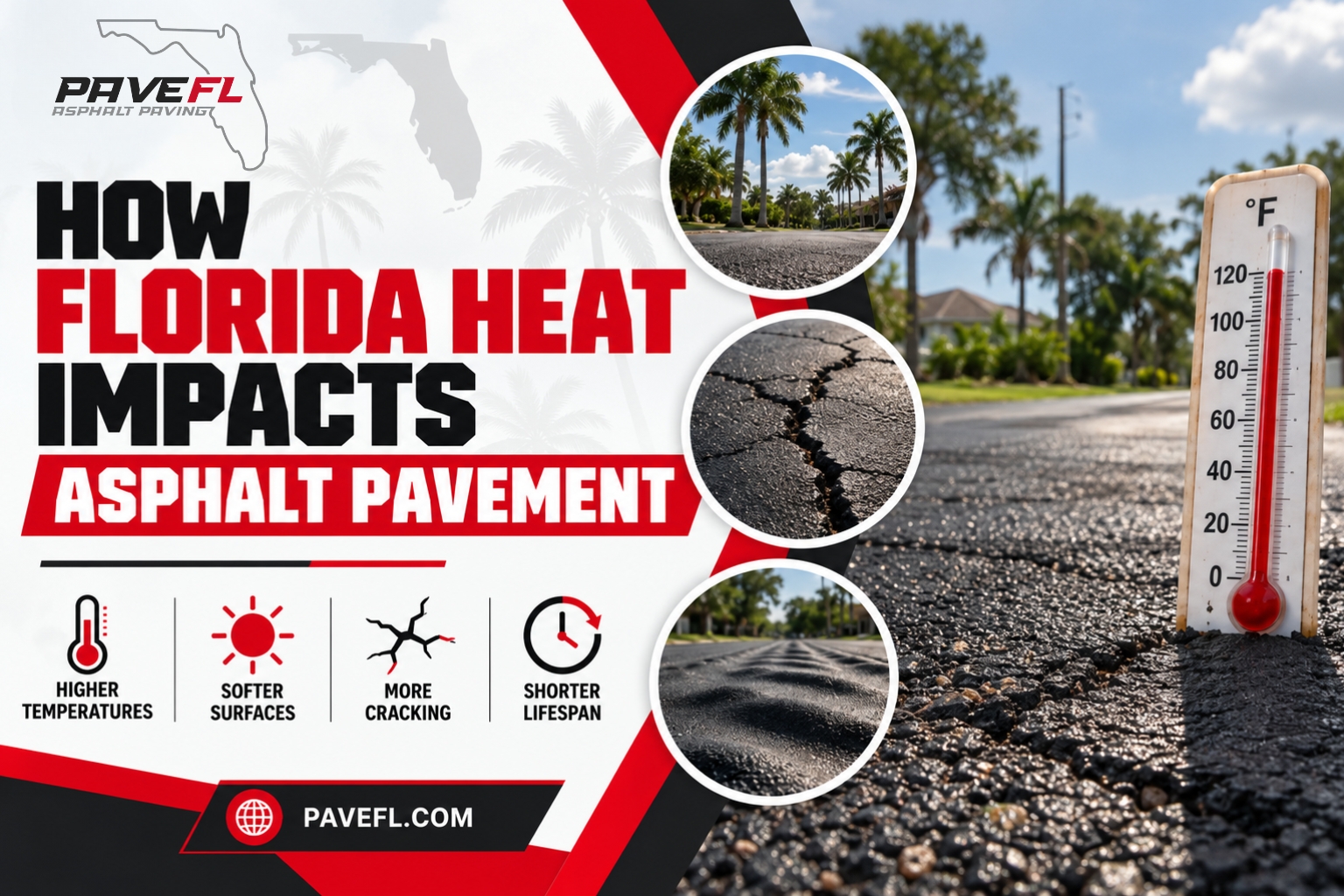
Florida pavement faces a tough mix of UV exposure, heavy rain, and daily traffic. Heat can soften asphalt binder and help heavy tire loads deform the surface into ruts, while strong sunlight also oxidizes the asphalt and makes it stiffer and less resilient. Water trapped under pavement weakens the supporting layers below, and when moisture stays in the structure, the surface becomes more vulnerable to cracking and potholes.
That is why professional paving experts in Miami, FL matter so much. Pave FL says it serves Miami and many other South Florida cities, and its commercial and residential services are designed to deliver durable surfaces that stay smooth, safe, and visually appealing in local conditions.
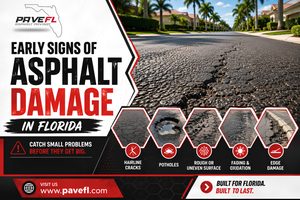
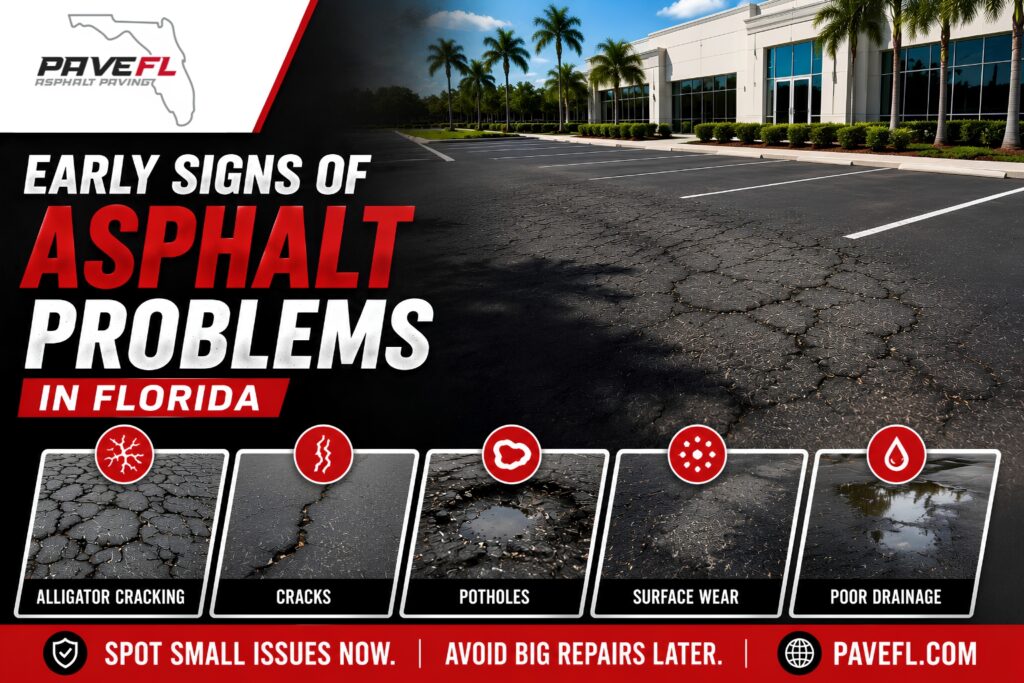
The most common early signs of asphalt problems in Florida
1. Fading or gray color
Fresh asphalt is usually dark and rich in color, but as it ages and oxidizes, the surface often becomes lighter and more faded. This is one of the earliest signs that the pavement is losing its protective oils and becoming less flexible. In hot climates, oxidation can happen faster because sunlight speeds up the stiffening process.
Fading is not just a cosmetic issue. It often means the top layer is drying out and becoming more brittle, which makes cracking more likely later. Once the surface is no longer resilient, water and traffic can do more damage with less effort.
2. Small surface cracks
Tiny cracks are one of the clearest early warnings that asphalt is beginning to fail. They may look harmless at first, but cracks allow water to enter the pavement structure. Once moisture gets in, it can weaken the base below and open the door to larger problems.
In Florida, those small cracks matter even more because heavy rain can push moisture deeper into the pavement. If the cracks are not addressed early, the damage can spread and become much more expensive to repair later.
3. Alligator cracking
Alligator cracking is a web-like pattern of connected cracks that often signals fatigue failure. It is commonly linked to sub-base failure, poor drainage, or repeated overloading, and it is a sign that the pavement is losing support underneath the surface.
This type of damage is important because it usually means the problem is no longer just on top. The surface is breaking down because the layers below are not carrying the load properly, and advanced cases can lead to potholes or premature pavement failure.
4. Potholes
Potholes are another major warning sign, and they often develop after water weakens the soil or support layers below the pavement. Traffic then breaks the poorly supported asphalt surface apart, turning a weakened area into a visible hole.
In Florida, potholes can develop quickly once water finds a weak point. Heavy rain, standing moisture, and repeated traffic all make the damage spread faster. That is why potholes are usually a sign that the pavement has already moved beyond early surface wear and into structural distress.
5. Rutting or grooves in the pavement
Rutting happens when the asphalt deforms under repeated tire pressure and leaves visible wheel paths or grooves. High heat can soften the binder and make the surface more prone to deformation, especially when the pavement is carrying constant traffic. Rutting is a common form of asphalt distress because repeated loads can permanently deform the mix.
If you begin to see wheel tracks or depressed channels in the driving path, that is a sign the pavement is no longer holding its shape as well as it should. In Florida, this often points to a surface that is aging under heat and traffic at the same time.
6. Soft spots or uneven areas
A soft spot often means the pavement or the support below it has been weakened by moisture. Water under the road softens the subbase and subgrade, and that weak support can cause the surface above to flex too much under traffic.
Uneven areas can also point to settlement problems below the surface. If part of the pavement feels lower, softer, or less stable than the rest, the base may already be losing strength and should be checked before the issue spreads farther.
7. Crumbling edges
Edges are often among the first places to fail because they tend to have less support than the center of the pavement. If the sides begin to crumble, the pavement may be suffering from poor drainage, weak base support, or repeated stress near the boundary.
Edge failure is important to catch early because it can spread inward. Once the sides start breaking down, water can enter more easily and the whole paved area becomes more vulnerable.
Early warning signs at a glance
| Sign | What it may mean |
|---|---|
| Fading gray surface | Oxidation and drying of the asphalt binder |
| Small cracks | Water entry points that can grow over time |
| Alligator cracking | Fatigue or support failure below the surface |
| Potholes | Weak subbase and traffic-driven breakage |
| Rutting | Deformation from heat and repeated loading |
| Soft spots | Moisture-weakened support layers |
| Crumbling edges | Drainage or edge-support problems |
What to do when you notice the first signs
The best response is to act early. Small cracks and fading can often be handled with maintenance, while deeper problems may need resurfacing or repair. Pave FL says its services include asphalt resurfacing, repair, parking lots, and line striping, which means the company can address both visible wear and larger pavement restoration needs.
If the damage is still at the surface level, preventative care can slow further deterioration. If the pavement is already showing structural distress such as potholes, alligator cracking, or sinking areas, the issue may require a more involved solution. Asphalt distress references note that advanced cracking and potholes can be signs of sub-base failure and repeated overload, so waiting too long usually makes repairs more difficult.
Why local expertise matters in South Florida
Florida pavement needs a contractor that understands climate, drainage, and traffic conditions. Pave FL says it has more than 15 years of experience, works across South Florida cities such as Miami, Hialeah, Fort Lauderdale, Boca Raton, and others, and focuses on paving solutions built for durability, safety, and visual appeal.
Pave FL also says it is fully licensed and insured and offers customized solutions for both residential and commercial properties. That matters because early asphalt problems are easier to manage when the contractor understands how to identify surface distress, drainage issues, and the right repair path for the property.
Final thoughts
The earliest signs of asphalt problems in Florida are usually subtle: fading, small cracks, soft spots, rutting, crumbling edges, and drainage issues after rain. Those early clues matter because Florida heat and water can turn a minor surface issue into a much larger repair if it is ignored. Asphalt distress sources show that oxidation, moisture intrusion, repeated loading, and weak support layers are all major contributors to pavement failure.
For property owners looking for help with asphalt problems Florida, the best approach is to catch issues early and work with a contractor who understands local conditions. Pave FL’s South Florida services, experience, and licensed status make it a strong fit for residential and commercial pavement care across the region.