How Often Should You Repave a Parking Lot in Florida?
How do you know when a parking lot needs more than a few repairs? Many property owners wait until cracks spread, potholes appear, or the surface starts looking uneven. But by then, the damage may already be affecting the structure underneath. The truth is, every parking lot reaches a point where resurfacing becomes the smarter long-term solution. For business owners managing parking lot resurfacing Florida projects, timing matters because resurfacing at the right stage helps protect both appearance and performance.
In Florida, parking lots deal with constant sun exposure, heavy rain, high humidity, and steady traffic. These conditions speed up wear and make maintenance even more important. That is why many commercial property owners invest in asphalt paving in south Florida to keep their lots safe, smooth, and visually appealing for customers.
If you are working with professional paving experts in Miami, FL, understanding when to repave can help you avoid more serious structural issues later. Pave FL provides asphalt paving, resurfacing, parking lot construction, milling, sealcoating, and line striping across South Florida, helping property owners maintain durable commercial surfaces.
What does repaving a parking lot mean?
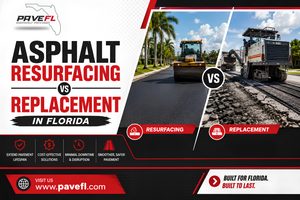
Repaving usually refers to resurfacing, where a new asphalt layer is placed over the existing pavement after repairs and preparation. It is different from full replacement because the base layer often stays in place if it is still stable.
This process can restore smoothness, improve drainage, refresh the appearance, and strengthen the top surface without rebuilding everything from the ground up.
Why resurfacing is often the preferred option
- It restores the driving surface.
A worn parking lot may still have a strong foundation underneath. Resurfacing allows contractors to rebuild the top layer without removing the entire pavement structure. - It improves curb appeal immediately.
A fresh asphalt surface makes a commercial property look cleaner, newer, and better maintained. - It helps address moderate wear before it becomes severe.
Instead of waiting until full replacement is necessary, resurfacing can extend pavement life when done at the right time.
How often should a parking lot be resurfaced in Florida?
There is no single answer because every parking lot experiences different traffic levels and weather exposure. However, many commercial lots begin showing signs of surface wear after several years of use, especially in Florida’s climate.
The right time for resurfacing depends on three main factors:
1. Traffic volume
- Heavy traffic wears asphalt faster.
Shopping centers, office complexes, and retail spaces see constant vehicle movement. That repeated stress causes the surface to wear down more quickly. - Turning vehicles create extra pressure.
Areas where vehicles turn sharply often wear faster because the asphalt experiences concentrated friction. - Parking stalls see constant weight in fixed positions.
Unlike roads, parking lots carry long-term pressure from parked vehicles, which can create surface depressions over time.
2. Florida weather exposure
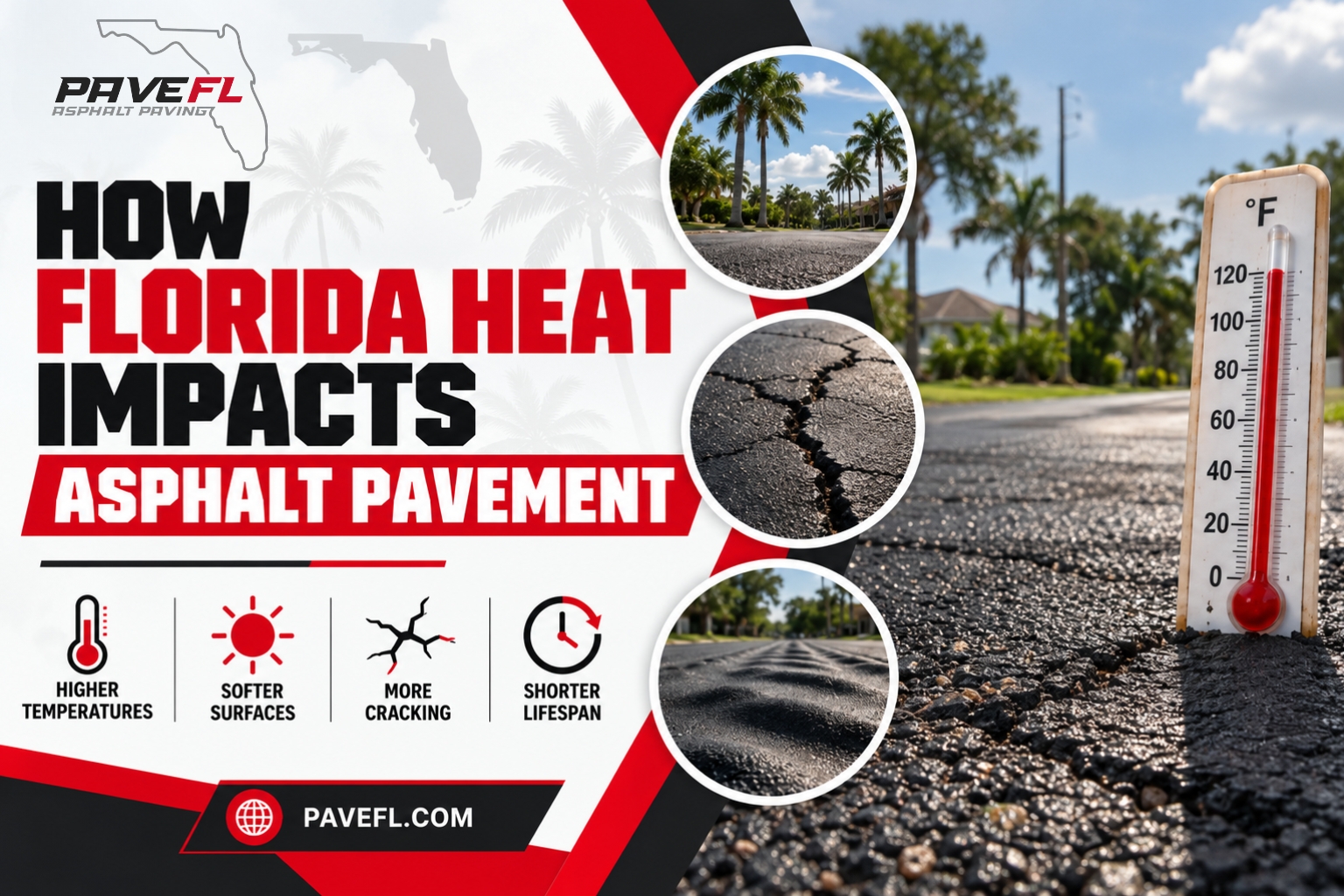
- UV rays accelerate oxidation.
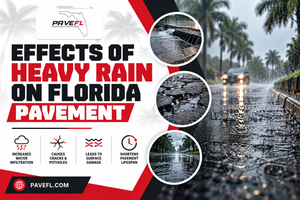
Florida’s sun can dry out asphalt quickly, causing fading and brittleness. - Heavy rain creates drainage stress.
Frequent storms can expose weak drainage points, allowing water to work into cracks and soften the base. - Heat expansion affects surface stability.
Daily heat cycles cause expansion and contraction, which slowly weaken the asphalt over time.
3. Maintenance history
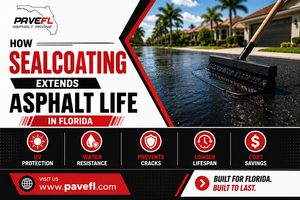
- Regular sealcoating extends surface life.
Parking lots that receive routine maintenance usually hold up longer. - Crack repairs slow structural damage.
Fixing cracks early helps prevent water from reaching deeper layers. - Striping and inspections improve overall care.
Property owners who maintain visibility and surface condition often catch issues sooner.
Signs your parking lot may need resurfacing
A parking lot usually shows clear warning signs before resurfacing becomes necessary.
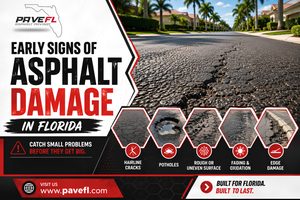
Widespread cracking
- Cracks across multiple sections mean the surface is weakening.
Isolated cracks can often be repaired, but when cracking spreads over large areas, it usually means the top layer is aging out. - Connected cracks may indicate fatigue.
If cracks start linking together, the pavement is losing flexibility and strength.
Surface fading
- Gray pavement often means oxidation.
Fading is more than cosmetic. It often shows that the surface has lost oils and protection. - Dry-looking asphalt becomes brittle faster.
Once oxidation sets in, cracking becomes more likely.
Pooling water
- Standing water points to drainage problems.
If water sits on the lot after rain, the surface may have low spots or structural settling. - Water increases long-term deterioration.
The longer water remains, the faster the surface wears down.
Rough or uneven driving areas
- Drivers feel the wear before they always see it.
Rough patches, small dips, and worn spots are often early signs of surface fatigue.
When repairs are enough vs when resurfacing is better
Not every damaged parking lot needs repaving.
| Condition | Best Solution |
|---|---|
| Small isolated cracks | Crack filling |
| Minor surface wear | Sealcoating |
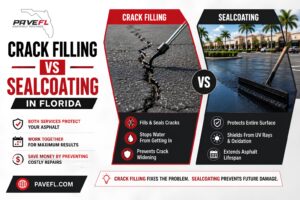
| Moderate widespread cracking | Resurfacing |
| Surface fading and roughness | Resurfacing |
| Structural sinking | Full replacement |
| Major potholes across the lot | Replacement or major repair |
This is why inspections matter. A professional contractor can determine whether the lot needs simple maintenance or full resurfacing.
Why Florida shopping centers and businesses repave sooner
Commercial lots in Florida often need resurfacing sooner because of constant exposure.
High traffic demands
- Businesses with heavy customer flow put more stress on parking lots every day.
Constant sun exposure
- Florida heat speeds up oxidation faster than many cooler regions.
Frequent storms
- Water intrusion happens more often when heavy rain is common.
This is why asphalt paving in south Florida is often designed with drainage and durability in mind.
How resurfacing improves a parking lot
Resurfacing does more than cover damage.
1. Restores appearance
- A fresh black asphalt surface improves the look of the entire property.
- Clean striping stands out better and creates a more organized layout.
2. Improves safety
- Smoother pavement reduces trip hazards.
- Better drainage lowers water buildup.
- Cleaner markings improve traffic flow.
3. Extends pavement life
- Adding a new layer protects the older structure below.
- It delays the need for full replacement.
- It gives property owners a stronger top layer for continued use.
Why professional resurfacing matters
Parking lot resurfacing is not just pouring new asphalt over old pavement. Proper resurfacing requires:
- Surface evaluation
- Crack repair
- Milling damaged sections
- Drainage review
- Proper compaction
- Final striping
That is why hiring professional paving experts in Miami, FL is important. Experienced crews understand when resurfacing will work and when deeper repairs are needed.
Pave FL specializes in parking lot paving, milling, resurfacing, line striping, and sealcoating across South Florida. Their commercial paving services help shopping centers, office complexes, and business properties maintain safe, attractive parking lots built for Florida conditions.
Our parking lot resurfacing services
At Pave FL, we help property owners extend the life of their parking lots with expert resurfacing solutions. Our team handles:
- Parking lot resurfacing
- Asphalt milling
- Full asphalt paving
- Sealcoating
- Parking lot striping
- Commercial lot repairs
We work with shopping centers, office properties, apartment complexes, and commercial facilities throughout South Florida. Whether your lot needs surface restoration or a full paving plan, our professionals can provide the right long-term solution.
Final thoughts
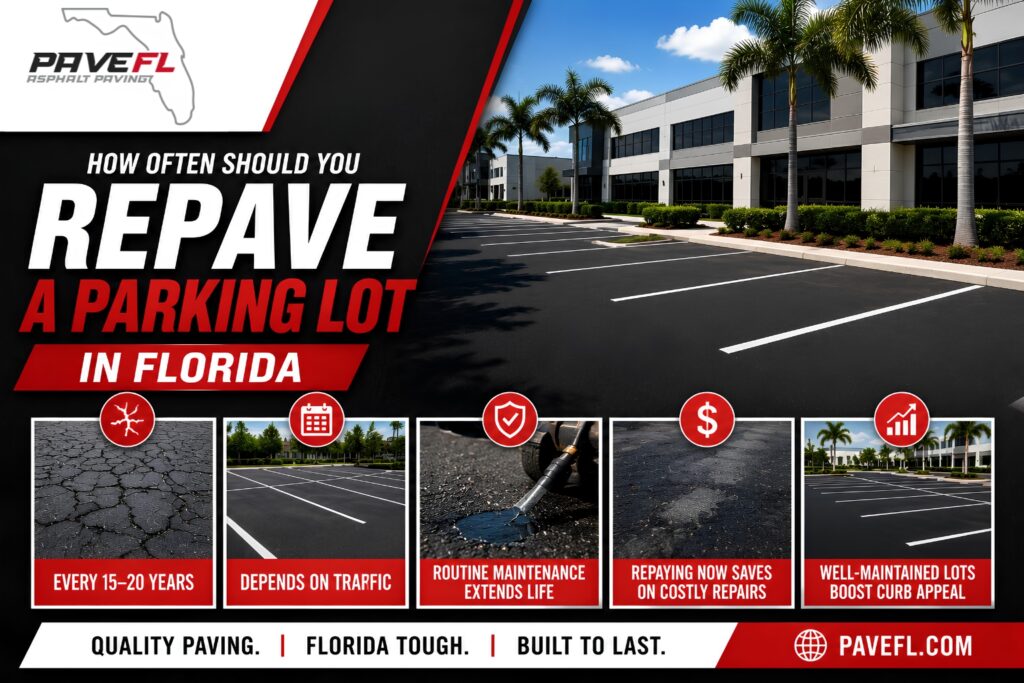
So how often should you repave a parking lot in Florida? The answer depends on traffic, weather exposure, and maintenance history. But the key is not waiting until the surface fully fails. When cracks spread, fading increases, or drainage problems appear, resurfacing is often the best way to restore the lot and protect its lifespan.
For property owners planning parking lot resurfacing Florida, acting at the right time can help avoid deeper structural issues and keep the property looking professional, safe, and well-maintained.